Motor biking in Vietnam

If you’ve seen the Top Gear Vietnam special then you might have some idea of what riding a bike in Vietnam is like, but in reality, it is way more fun than that. I certainly wouldn’t suggest riding a motorbike in Vietnam unless you are an experienced rider, it really isn’t the place to learn if you want to stay in one piece, but if you are a reasonably confident on a bike then it is a must do experience.
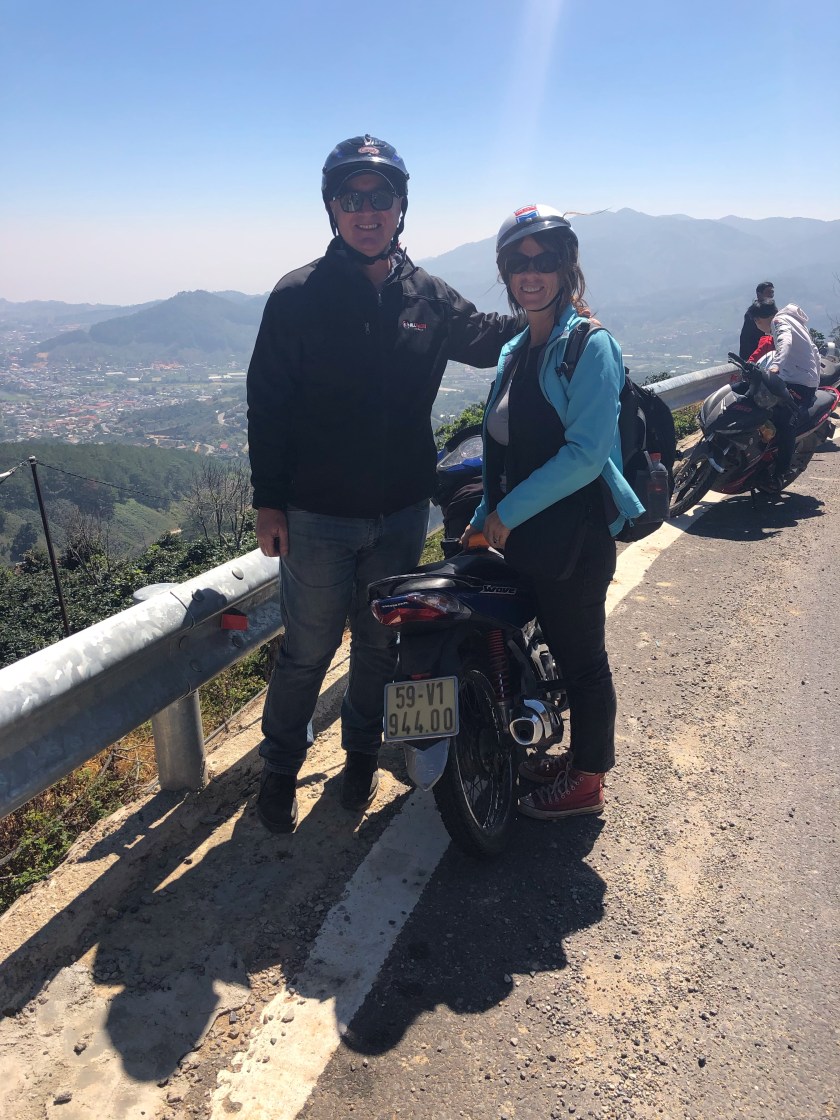
Getting hold of a bike is pretty easy, ask around just about anywhere and someone will rent you a bike for somewhere around AU$10 a day. So far on this trip I have rented bikes in the Phillipines, Cambodia and Vietnam and the only place I have been asked for a licence was in Cambodia where, ironically you don’t actually need one for anything less than 125cc (pretty hard to find anything bigger than that anyway). In the Phillipines a motorcycle licence is even required for a 50cc and in Vietnam it is required for anything over 50cc. I do hold a full motorcycle licence in Australia and the UK and I also have an international driving licence that includes my unrestricted motorcycle licence. I’m not sure that any of this means anything in Vietnam though.

There are plenty of travellers though who don’t hold a licence or have any motorcycling experience that go ahead and hire one anyway. It is very easy to get an automatic scooter that is extremely easy to ride and off you go. Maybe I am just getting old and sensible but it just doesn’t seem like a very good idea to me. OK, a licence might be largely meaningless in a country where the equivalent of a few dollars will buy you out of any problems with the police, but experience of how to ride defensively on a bike doesn’t come overnight and although plenty of people have a great time and have no problems, plenty also seem to mange to come off, mostly sustaining fairly minor injuries but some don’t fair so well, and of course, when it comes to the crunch, riding with no licence means you are not legal, which means that your travel insurance may well not cover you in the case of a serious incident.

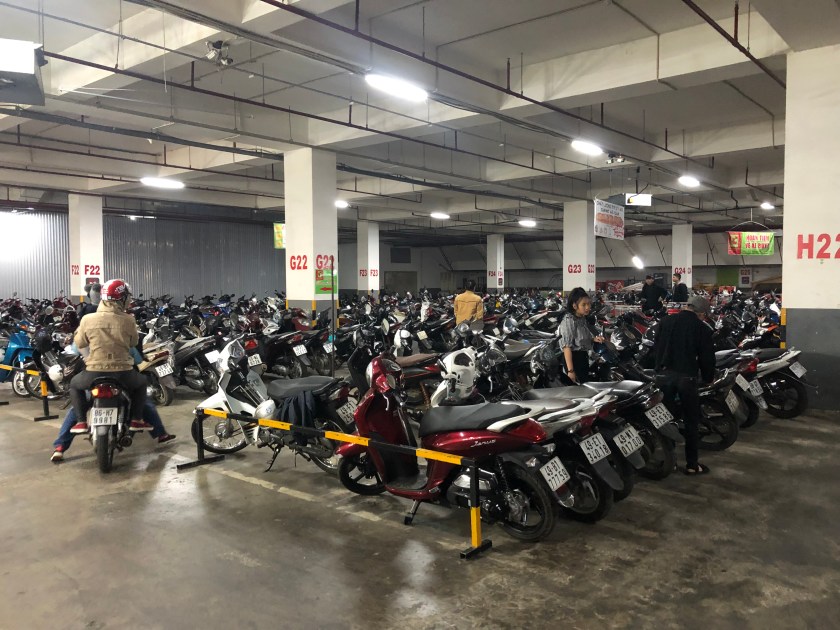
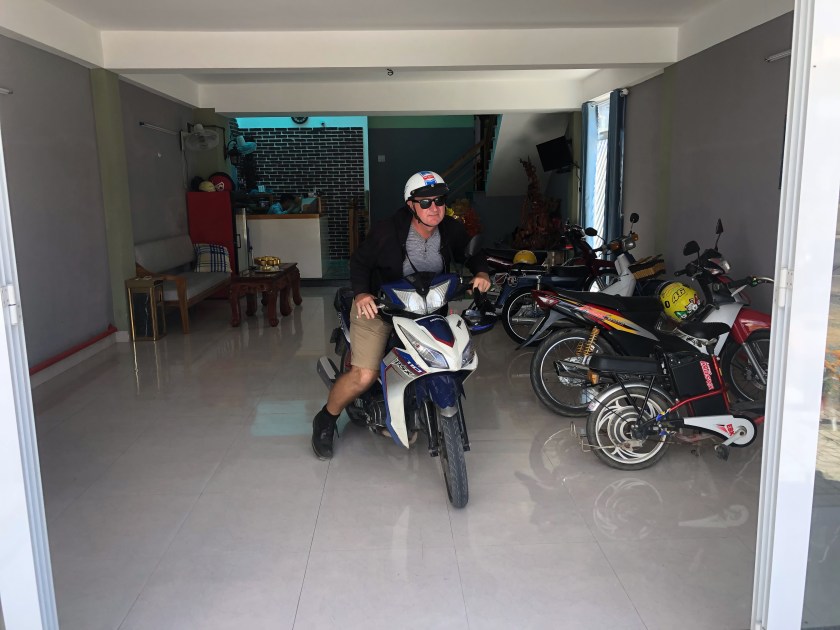
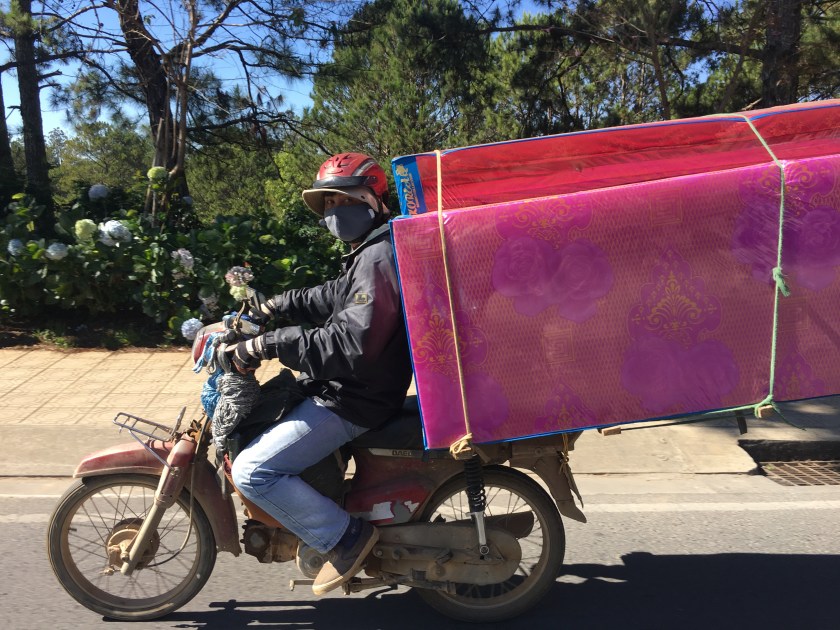
Now, all that said, if you have a bit of experience and a licence, then getting around by bike is the way to travel in Vietnam. It’s what the locals do and the country is set up for it very well. As James May said, ‘if you don’t have a motorbike in Vietnam, you are nobody ‘. There are plenty of bike only lanes in the cities, great coffee stops where you can lie in a hammock and sip an iced latte, and everywhere you go there are guarded parking facilities for bikes that work extremely well, usually costing a few cents (1000-2000 dong) but often free and you can usually park inside your hotel lobby. And as for the roads, well they may not be in the best condition but there are some truly stunning roads in the highlands and around the coastline. And it is pretty amazing to see what can be carried on a bike and how many people you can get on one….who needs a station wagon to pick up a fridge when you’ve got a bike!
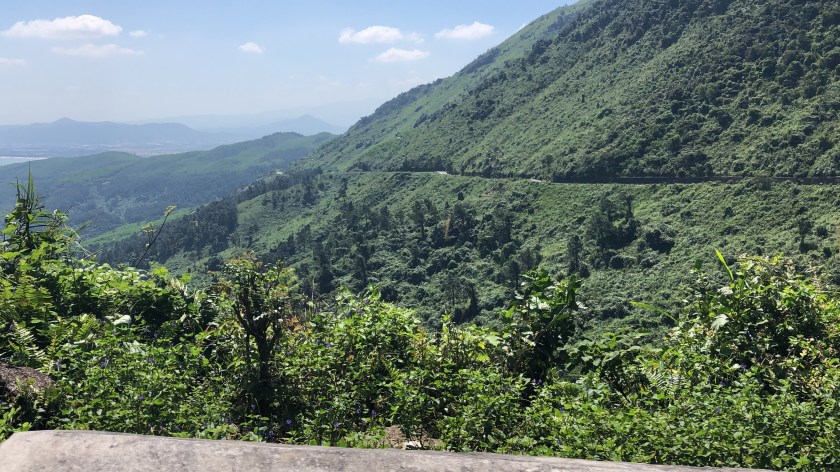
We have done plenty of day trips from a variety of cities around the county, but one of our highlights has been a three day trip from Da Lat in the central highlands. We rode from Da Lat down a stunning mountain road through the Vinh Hy-Binh Thien pass to the coast and stayed in a place called Phan Rang. At the moment this route and destination seems not to have come to the attention of western tourists but is very much on the agenda for the Vietnamese. The road was very busy with bike traffic, all loaded up with luggage for a weekend away at the beach. Phan Rang itself is a beach resort town waiting to be discovered by foreigners. It is full of hotels and resorts and is clearly a favourite destination for the Vietnamese, but we were pretty much the only westerners in town.
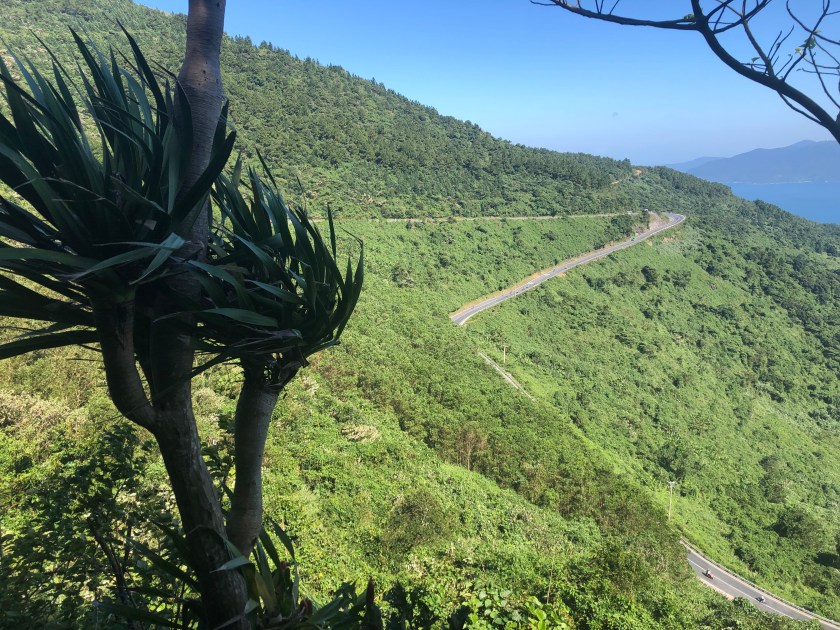
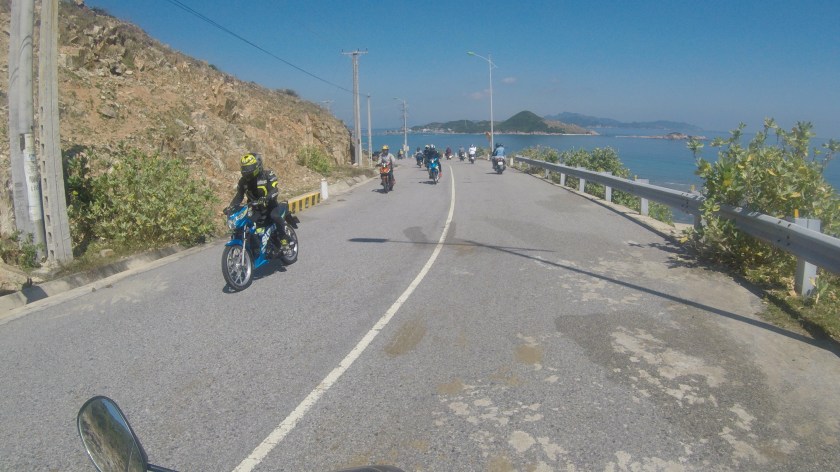
The next day we rode the coastal route from Phan Rang up to Nha Trang. This is billed by the Vietnamese as the best coastal drive in the country, but again, is not really on the tourist map for foreigners. Once again, the road was busy with Vietnamese bikers, but very few cars and no foreign tourists. This road winds it’s way along coastal cliffs through a stunning national park called Nui Chua. Nha Trang however is very much on the tourist map and is full of high rise hotels and Dong extraction schemes. It actually looks a lot like the Gold Coast except that our beaches are much cleaner.
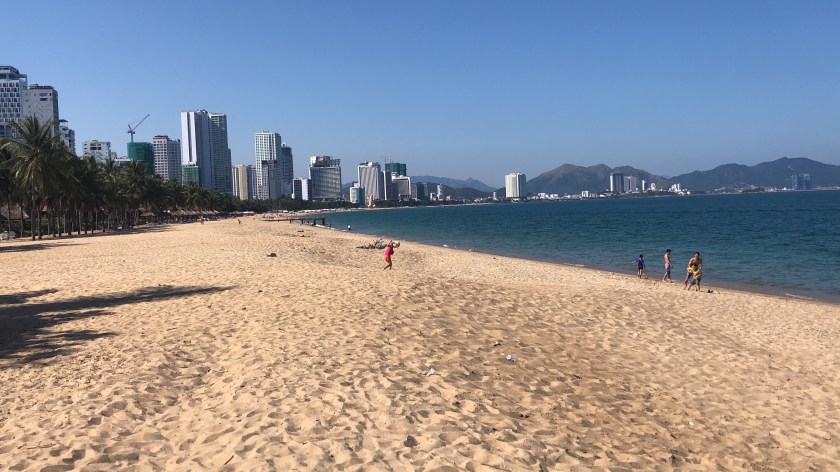
On the third day we found a different route back up the mountain to Da Lat. This was another awesome mountain road passing through small villages, rice fields and fantastic scenery.

We have some amazing roads for motorcycles in Australia, but what I have ridden in Vietnam so far at least equals if not surpasses what we have at home. Smaller bikes are definitely the way to go here though which does make for a very different experience. At home I ride a 1,000cc Ducati with an insane and largely unusable amount of torque and power (if you want to stay alive and out of jail), whereas here the biggest bike I have ridden is 150cc. Honestly though, that is big enough in Vietnam. The roads and the traffic here are just so unpredictable that more power would just lead to death. Traffic moves very slowly anyway so a big bike would just be frustrating. Speed limits in the city are only 40kmh and even out on the open road 60 seems to be the norm.

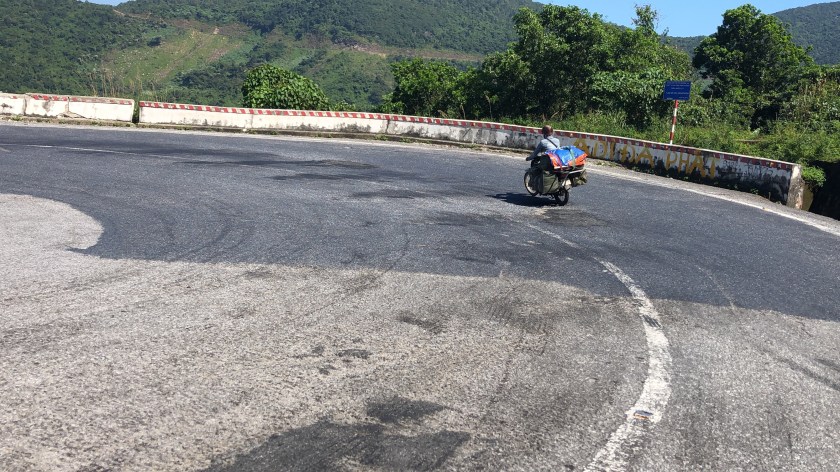
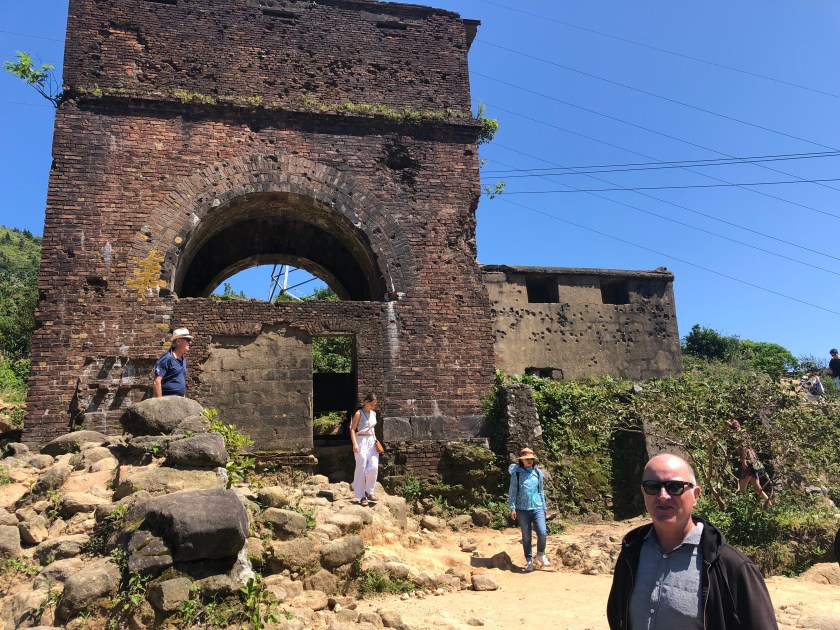
One of our many day trips was out of Hoi An to ride the Hai Van pass. This one was made famous by Top Gear and is billed as one of the most stunning roads in Vietnam. It is certainly an awesome ride, and being able stop at the stop and wander around ruins from the Vietnam war makes it even more spectacular. But, for a biker, it isn’t any better than some of the ‘undiscovered’ roads and the fact that it is full of tourist buses and backpackers riding motorbikes in shorts, t-shirts and thongs/flip flops/sandals does kind of detract from the experience a little.
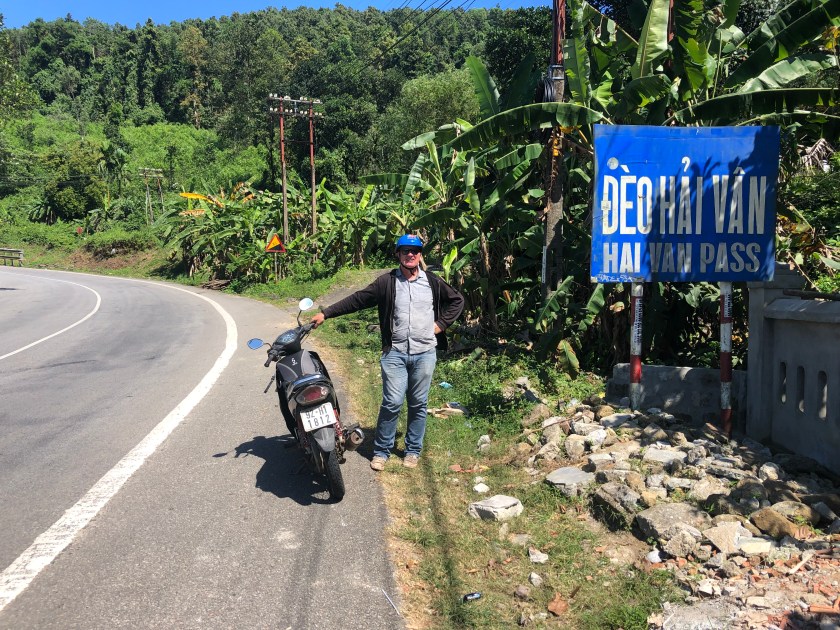
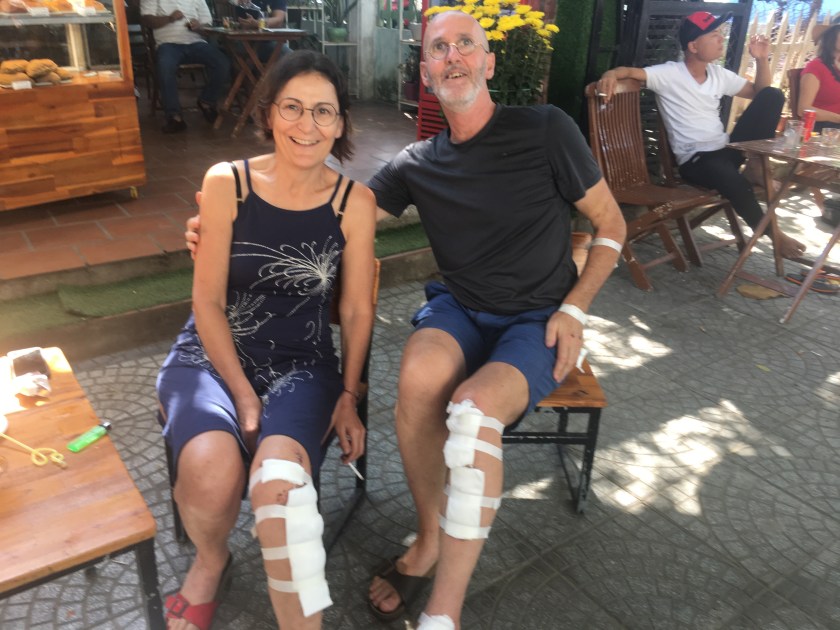
And on the subject of riding in shorts, it really isn’t a good idea. OK maybe around town at 40kmh isn’t so bad and I am guilty of that, but the result of coming off on a bend at 60 in shorts isn’t pretty and I have seen plenty of tourists limping around with less skin than they arrived in Vietnam with. In fact only this morning I was chatting to a French couple who thought it would be fun to get a bike. No licence, no experience, wearing shorts…..whoops, not such a good idea after all.
Car ownership in Vietnam is still extremely low, and long may it stay that way. The cities are already congested and chaotic with motorcycle traffic, but I just can’t imagine what it would be like if all those bikes were upgraded to cars. Ho Chi Min city (Saigon) would just be a giant car park with no room left for anything else. There would certainly be no point trying to drive anywhere as there would just be no room left for any traffic movement. Perhaps we could learn a thing or two in Australia! More bikes and fewer cars, we have the climate for it. Just imagine, easier parking, less congested cities, less pollution. On a daily commute in our Aussie cities I reckon that somewhere around 80% of vehicles have one occupant, just imagine the positive impact of replacing all those cars with bikes.
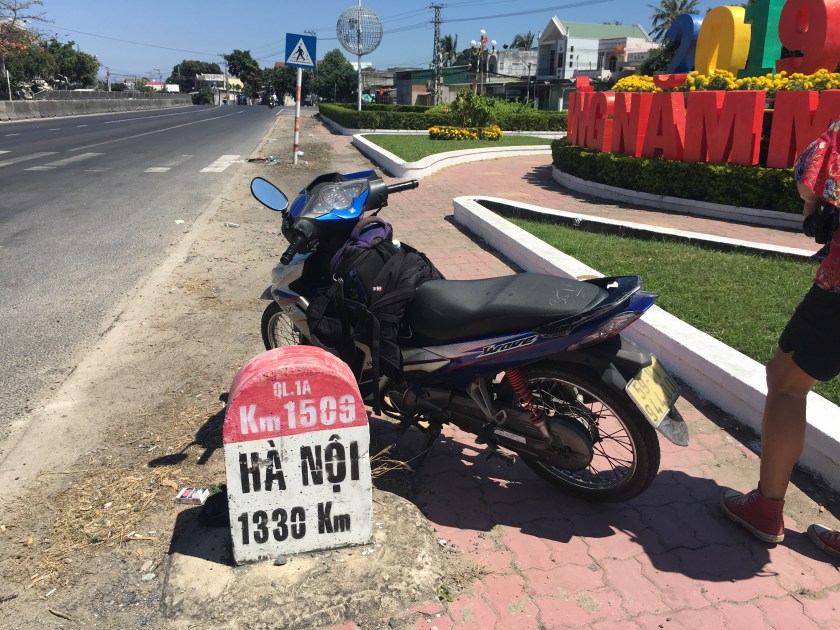
I really would love to come back here one day with some biker buddies and ride from one end of the country to the other. Next year maybe.
The Phillipines

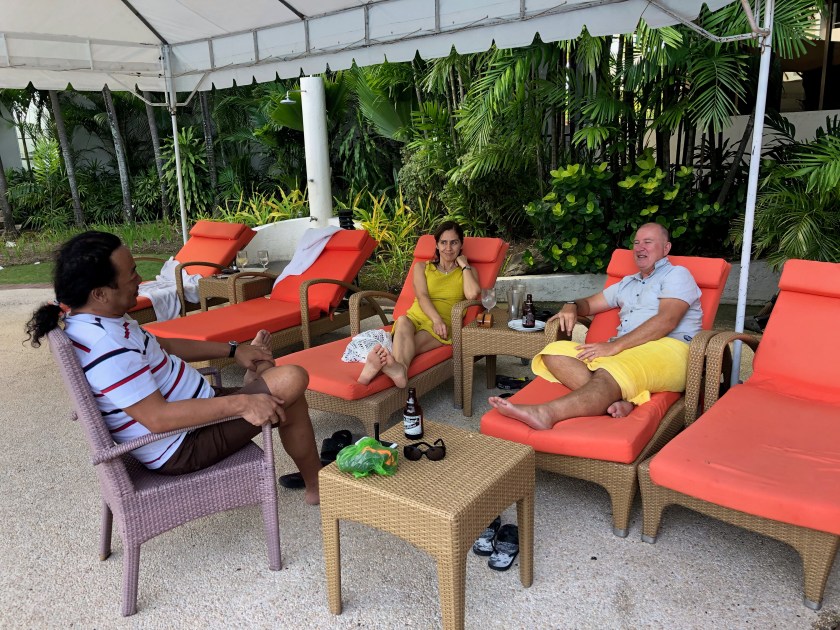
After a few hours hanging around at Manila airport on New Year’s Day, we got our connection to Cebu and arrived late at night and headed straight for the hotel and went to bed. Next day after a quick breakfast we headed off to a very nice hotel to hang out by the pool, eat pizza and drink beer with Ali’s sister Shirley and her husband Oliver, who live in Cebu and had treated themselves and the kids to New Year in a 5 star hotel. So, as a result it was a day or so before we got to see much of Cebu city.

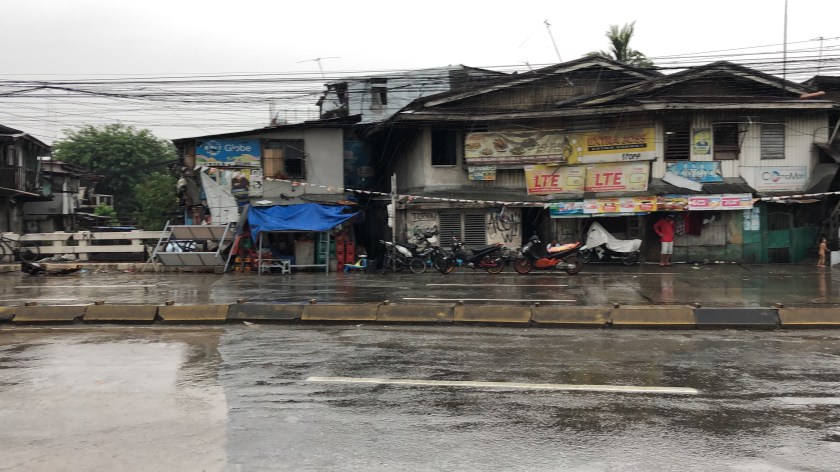
The next day Shirley took us to the Mall, for coffee and supermarket shopping. Could have been in Australia. It wasn’t until the day after that we started to see the real Cebu. We jumped on a Jeepney to head to Carbon market, and from there walked back towards the glitzy westernised shopping mall. The most striking thing about Cebu is the level of poverty that sits right next door to the opulent malls and hotels. To be honest, Cebu city hasn’t really grown on me. Unlike many other dirty Asian cities it doesn’t have the beautiful architecture, temples, palaces etc. or an enthralling river that carries he lifeblood of the city. What it does have is the unsettling contrast of mega rich and mega poor with little to redeem it. But, Cebu is just one city in an otherwise beautiful country.

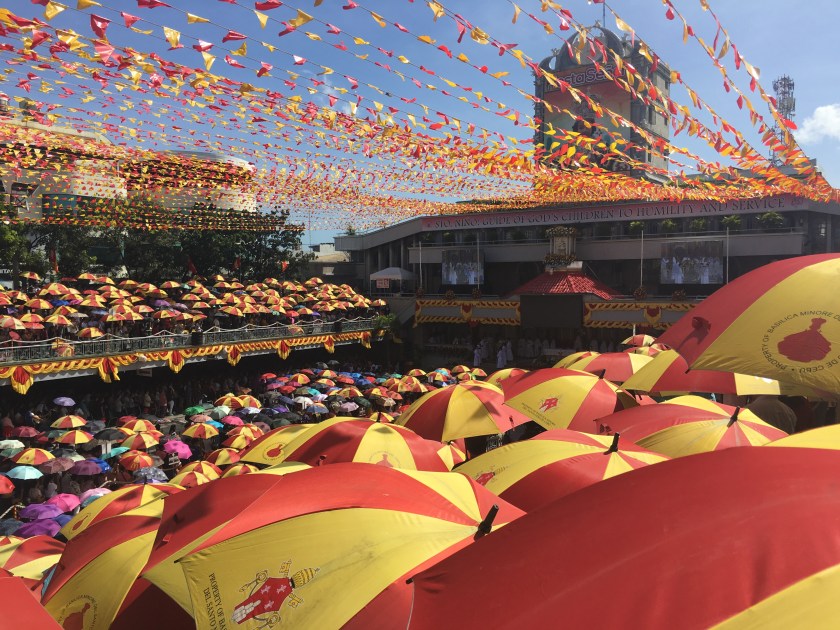
There was one cultural highlight however, and that was the day I walked down to the Basílica Minore del Santo Niño to check out what the upcoming Sinulog festival is all about. Apparently when Ferdinand Magellan arrived in 1521 he presented the local chieftain with a wooden image of the boy Jesus (Santo Niño). This original statue sits within a glass case in the Basílica. On the day I went there there was a queue of about an hour to touch the glass and make an offering. There was also a mass in progress. The Basílica was full to bursting point, the mass itself was in the courtyard out the front with thousands of devotees attending and it was televised on big screens in the Basílica itself and in the surrounding streets which were all closed to traffic. Every year on the third weekend in January pilgrims flock to Cebu to see this little statue and parade through the streets as part of the Sinulog festival. Fascinating.

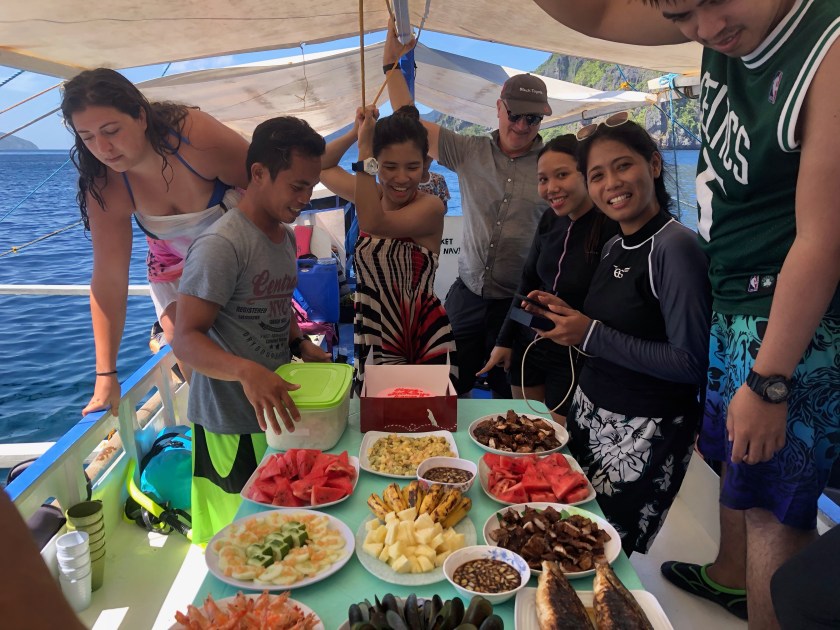
Pretty much all the Fillipeno’s we have met have been friendly and helpful. At no time have I been concerned for my safety or felt like they are trying to rip me off. At El Nido on the island of Palawan we booked a boat tour and were lucky enough to have a boat with no backpackers but with a group of 6 local Fillipeno’s. We had a great day with them, exchanged phone numbers, and then they sent me a list of recommended things to do in Puerto Princesa and also negotiated the ‘locals price’ for us on a tour of the Underground River National Park which was awesome.

And what is it with the backpackers of today? One night while I was trying to sleep I had to listen to an Italian telling everyone where he had been and how much it cost and how many Pesos/Rupees/Bhat/Dong etc. he is getting to the Euro. Well, mate, I went there before you were born, long before you exchanged Lira for Euros and I didn’t feel the need to plat my beard, put my hair in a top knot or wear those ridiculous looking tie dyed trousers that you think are so cool. Really? Just shut up and go to bed. I hate to admit it, but I think I am too old for backpacking. Oh well, that just means it’s time to look for $30 rooms instead of $10 ones.

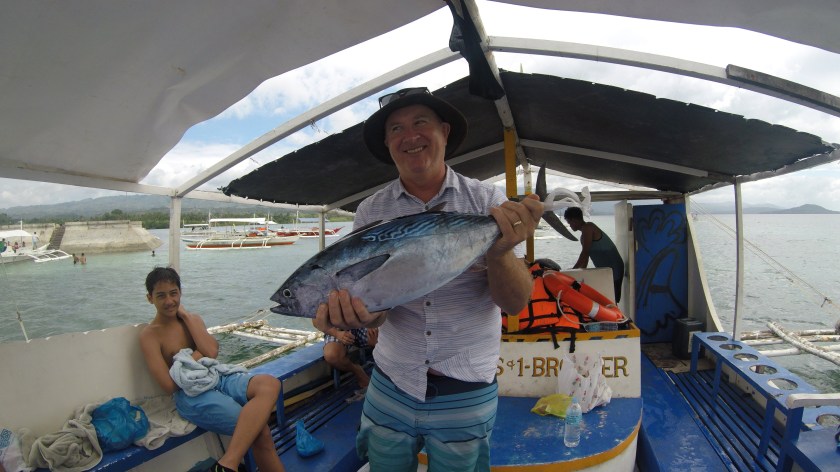
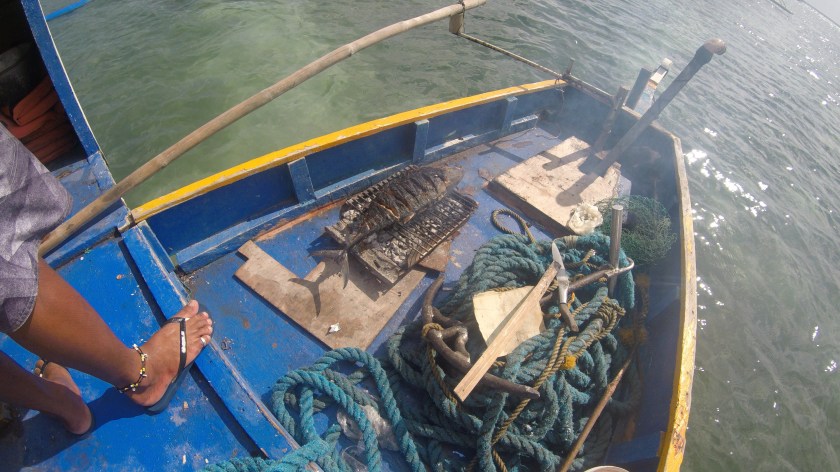
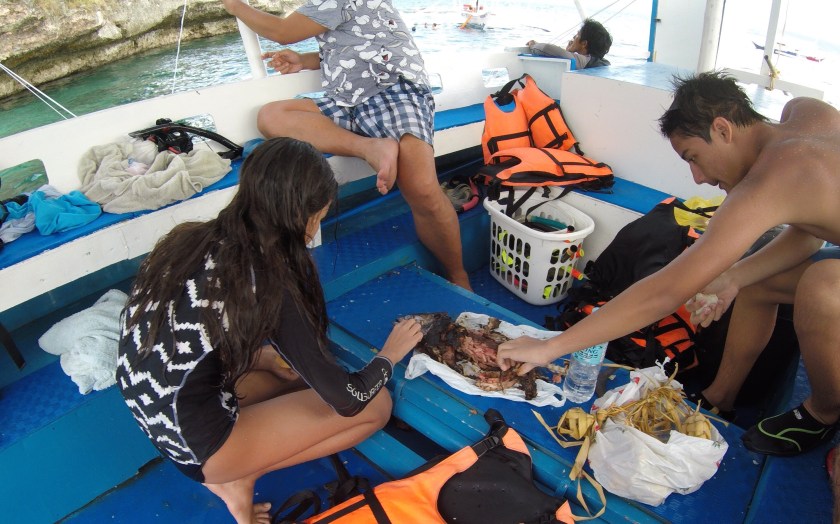
After Palawan we returned to Cebu island and headed off for a weekend break with Shirley, Oliver and family to a lovely little beach resort at Moalboal. All pretty casual and relaxed, great snorkelling just off the beach, nice views etc. On the Sunday Oliver organised a boat trip for the day to take us out to a little island offshore. As it seems with everything in the Phillipines, there is a huge contrast in attitudes towards safety. I found it highly amusing that I had to wear a life jacket but it was ok to store the fuel for the boat in a plastic water bottle and run the motor while people were in the water near the propeller. This attitude was also evident when we hired a motorbike. I think I was the only person in the Phillipines riding with enclosed shoes on. At one point I actually got stopped by the police and told to take my helmet off. In fairness though this was at the airport. Anyway, back to the boat trip. We stopped at the fish market and picked an awesome fish that looked very much like an undersized Tuna. This was cooked on a charcoal BBQ (next to the plastic bottle of petrol).

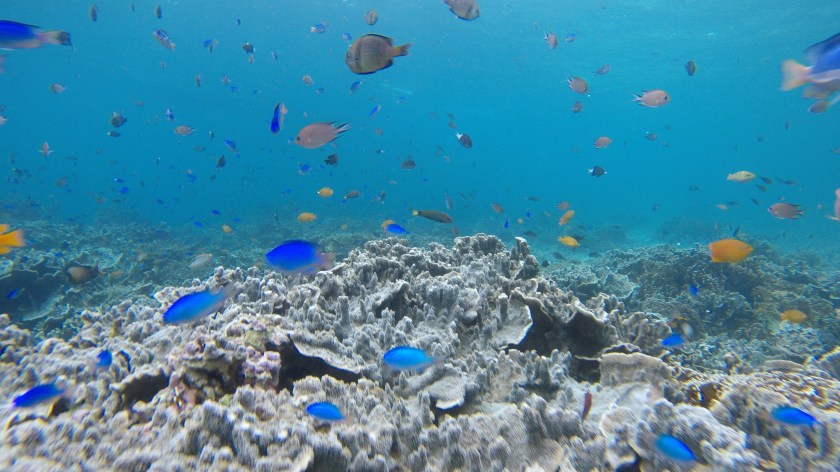
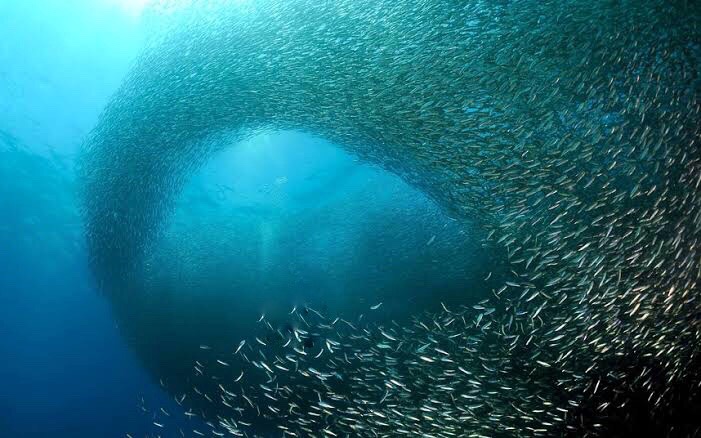
Before the fish was cooked however, our boat broke down. After drifting for a while another boat turned up to tow us back to shore and once ashore passengers and half cooked fish were transferred to a replacement boat and off we went again. The fish was delicious and was just eaten by pulling apart with our hands accompanied with a bit of sticky rice. The snorkelling was also pretty cool, including getting to swim through a swarm of sardines.

After leaving Cebu island we headed back to the capital Manila on Luzon island. Manila is surprisingly different from Cebu city. The traffic is pretty extreme but there is far more order to it than there is in Cebu. In fact Manila is a modern, relatively clean and well ordered city. I am sure it has its areas where the poverty is apparent but it certainly isn’t as obvious as in other cities. It also has an old city where the Spanish city walls are still largely intact and where the Spanish heritage is clearly visible. Well worth a visit.

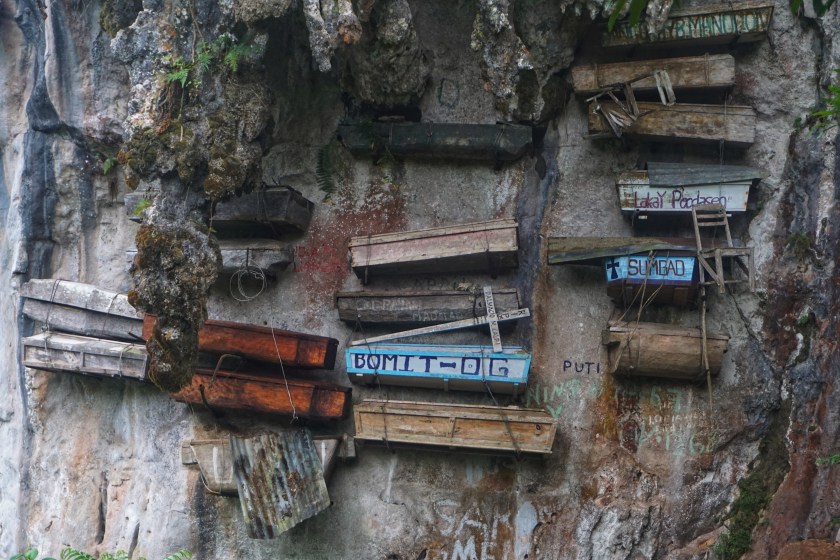
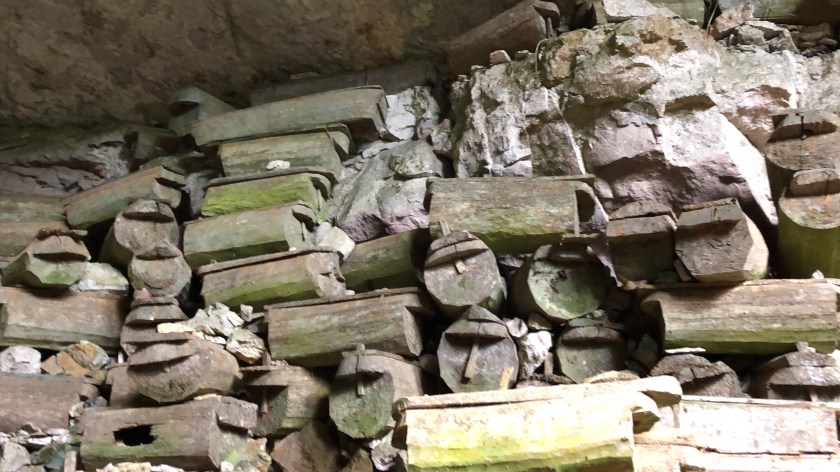
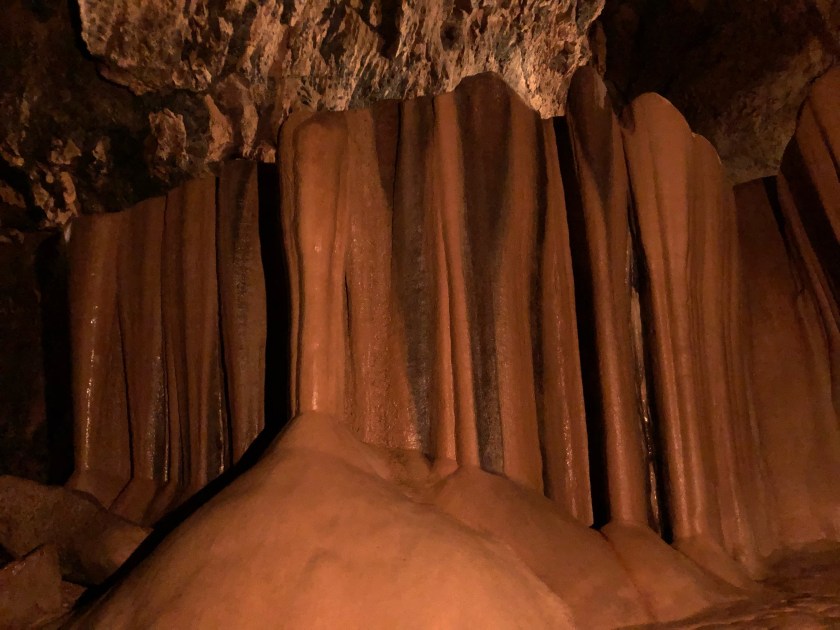
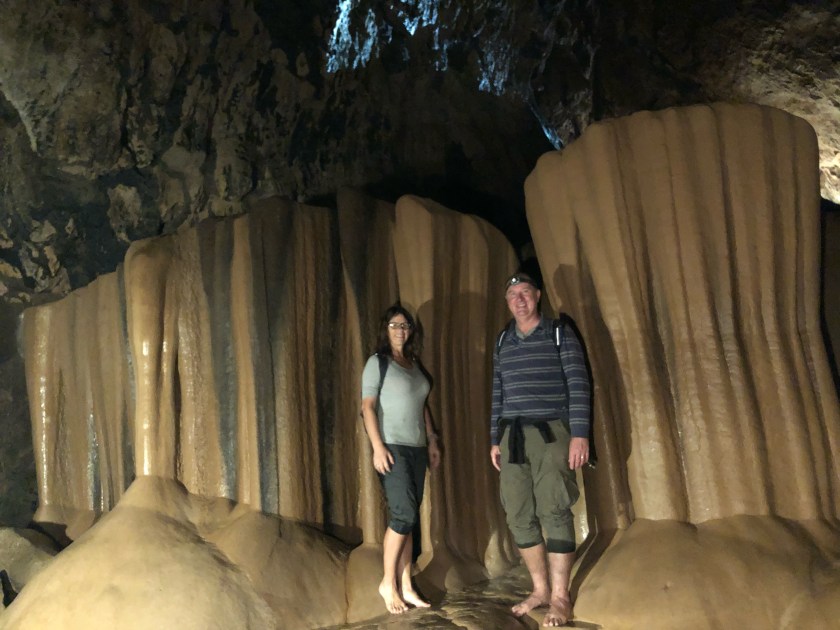
After Manila we headed north to the ‘Cordillera’ which is the mountainous part of Luzon. In a little place called Segada we got to see the hanging coffins…yes, they are pretty much as the name implies. Coffins (occupied), hanging from the side of the cliff. We also got to go caving, which included a cave full of coffins, but more impressive was the climb down into the cave and the formations we saw once down there. Segada really is a must visit destination for the caves, well worth the 10 hour bus ride from Manila.

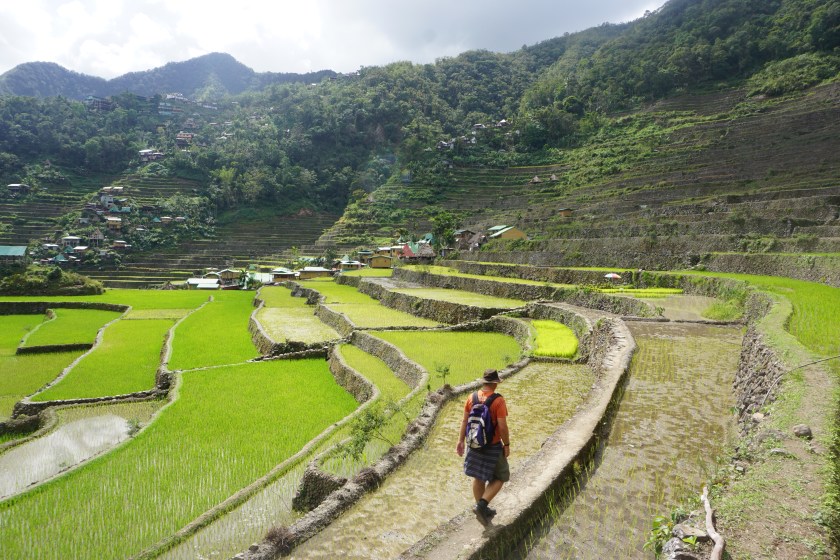
After Segada, next stop was Banaue. This is the area that is surrounded by world heritage listed rice terraces, and they are pretty amazing to see. While we were there we headed out for a day trip to a little village called Batad. There is no road into Batad and the only way in is on foot. This place is amazing to behold. It sits at the bottom of an amphitheater of rice terraces and it is a tough walk into the village, and an even tougher one back out. If you ever find yourself in this part of the world, do yourself a favour and do the walk, including the extra hour each way to Tappiyah falls, even if it is the last thing you ever do…….and it might be if you have a weak heart! Toughest walk I have done in a while.

Food in the Phillipines isn’t much to write home about really but there are a couple of exceptions worth a mention.

The first is a local delicacy called balut. It looks like and ordinary egg, and if fact it tastes pretty eggy too. What it actually is though is a fertilised duck egg. I believe the one I tried was a ’12 day’ egg. Apparently you can get them more formed than that but I think the feathers might just be a bit too off putting for my liking.

Another item worth a mention is binatog. This is basically boiled corn served with coconut, sugar and condensed milk poured over it. This is delicious.
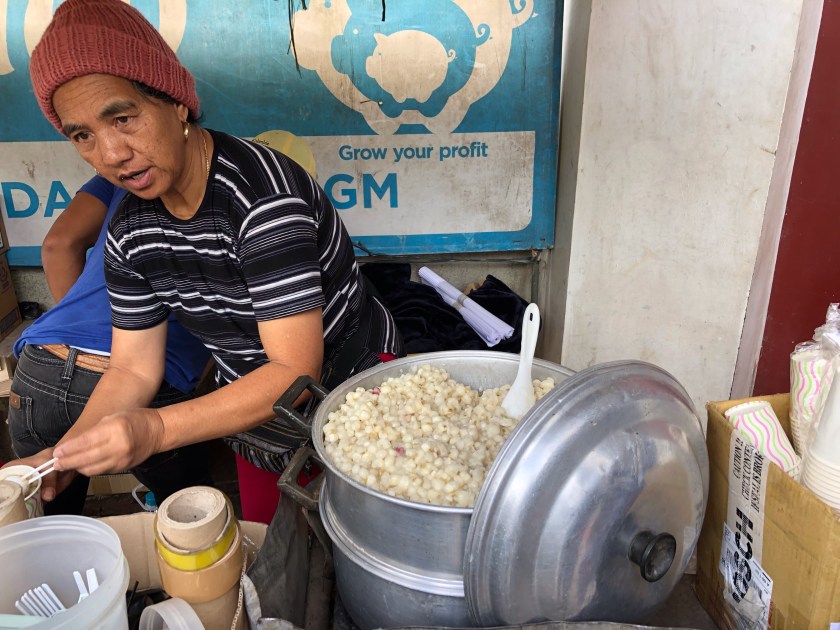
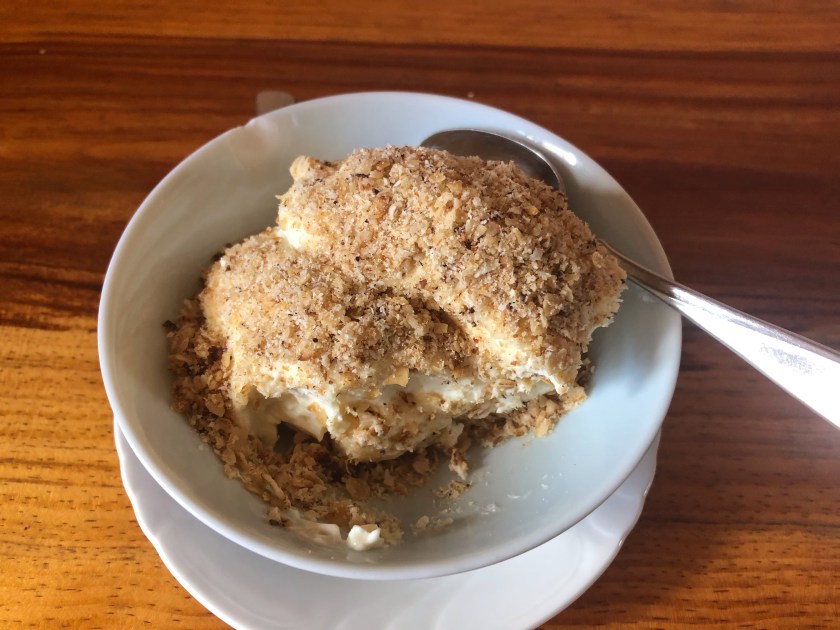
And finally, if you do find yourself somewhere north of Manila, try the yoghurt. It is so thick and creamy it looks like ice cream when scooped into a bowl. We had it with banana and granola sprinkled on top. Not quite sure what sort of milk they make it from though as a never saw a cow in the Phillipines. I’m guessing buffalo milk as there are plenty of them.

Next stop Vietnam. Still not ready to go back to work yet.

Driving Home for Christmas

Yeah, I know, it’s not original, Chris Rea did it in the 80’s, but it’s true, we are driving home for Christmas, and a wedding and a graduation too.

Australia is pretty big, it’s not until you try to drive across it as quickly as possible that you realise just how big it is. We left Esperance in WA five days ago to start heading back to the East Coast and we are still only as far as outback New South Wales. OK, so we haven’t exactly driven non stop, but today was a 700k day, yesterday 600ks, and the three previous days over 500ks each. That’s getting on for 3,000 and we aren’t there yet. In fact still another couple of days driving to go at least.

We have certainly covered a lot more k’s than that on the whole trip, in fact we are up to over 30,000ks now, but that has all been at a fairly steady pace with not many days over 500ks and rarely a week with 1,000. This week though is going to end up being over 4,000.

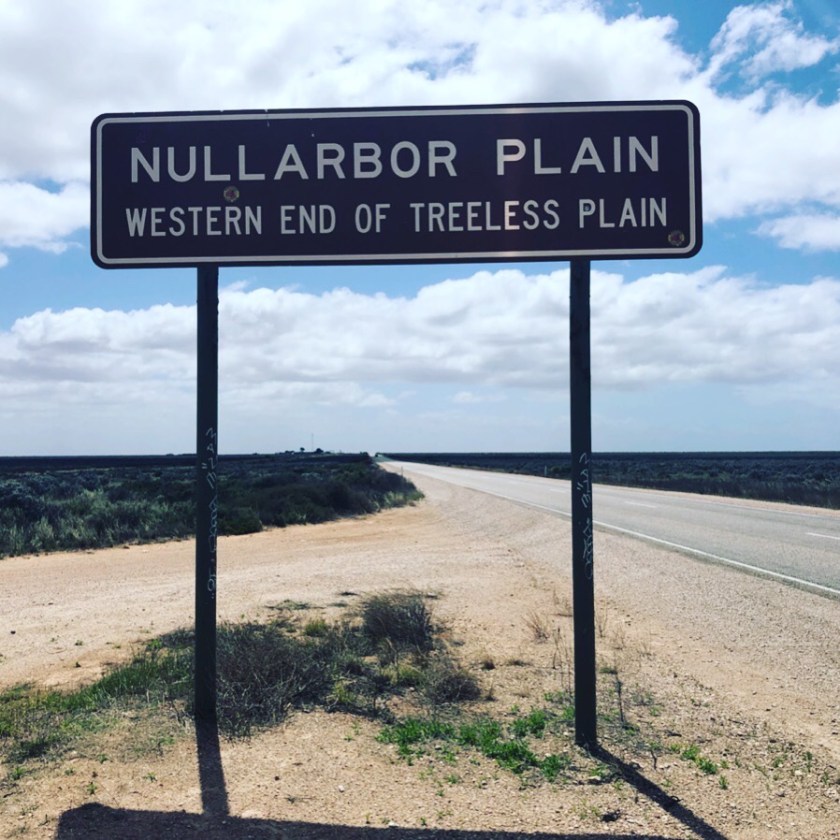
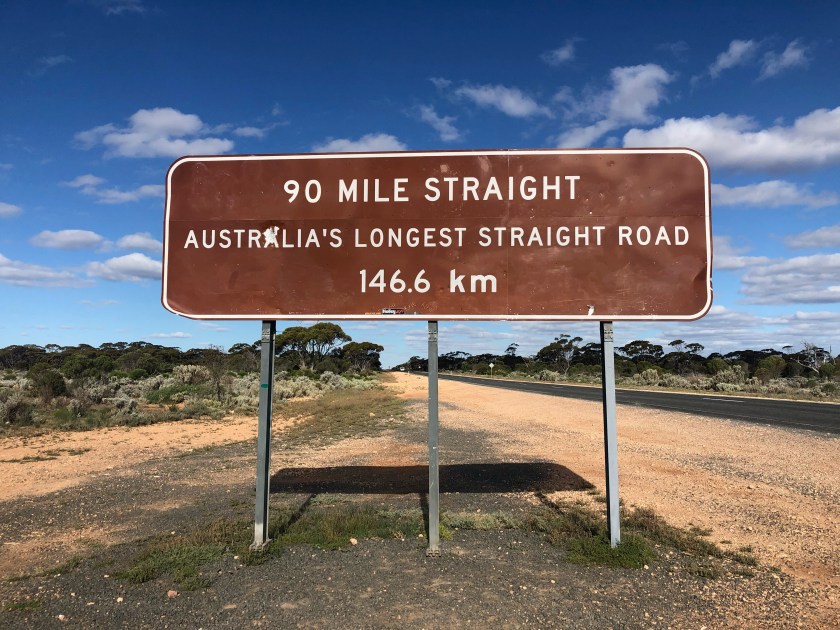
So, what else have I learnt since my last blog post? Well, the most boring highway in Australia is the Eyre Highway, all 1,670ks of it from Norseman to Port Augusta. There are a few tracks off to go and see cool views of cliffs and sand dunes along the Bight, but essentially, although crossing the Nullarbor is a bit of an iconic Australian adventure, it is pretty boring in reality. We did meet a man who was driving a Tesla (electric car) around Australia. That was pretty cool.

I have learnt a bit of history too, I love history, it’s nearly as cool as science. I think many people have this idea that Australia was ‘discovered’ by Captain Cook in 1770, and the the first European settlement occurred with the first fleet in 1788. Both of these facts are of course incorrect.

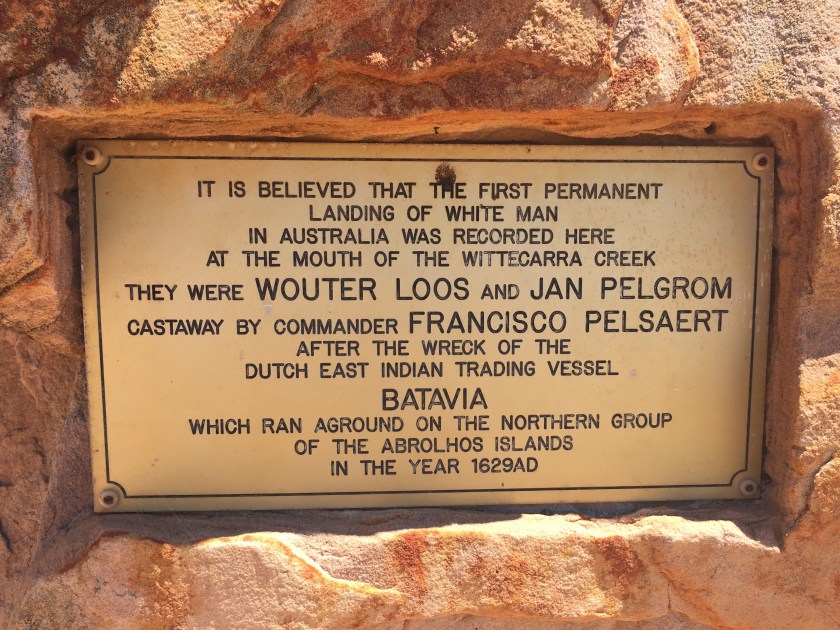
The ‘discovery’ and settlement of Australia occurred around 60,000 years ago and the original inhabitants had a far more advanced understanding of the land and how to mange and get the best out of it than we do today. As for European discovery and settlement, well this happened long before Cook was even born. By the early 1600’s the Dutch were sailing up the West coast on a regular basis on their way to Batavia (Jakarta). The first recorded European landing was by Dirk Hartog in 1616. In fact by the time Cook arrived on the east coast the whole west coast had been so accurately charted that these early maps were essentially still in use into the 20th century. Also interesting to note that the WA coast is littered with Dutch shipwrecks and many place names come from Dutch (and French) ships and explorers.

Two of the most interesting are the Batavia and the Zuytdorp.

The Batavia was wrecked on the Abrolhos islands off the coast of Kalbarri in 1629 and apart from being a fascinating tale of mutiny, murder, slavery and survival it also provided Australia with its first two European residents who were marooned on the mainland rather than executed with their fellow mutineers because of their young age. That is over 150 years before the first fleet arrived.

Then in 1712 The Zuytdorp was wrecked on the mainland a little further north. Nothing was known of the fate of the Zuytdorp and its passengers and crew until the wreck and evidence of the survivors was found in 20th century. The cliffs where the ship was wrecked now bear its name. At the top of the cliffs and further inland artefacts from the Zuytdorp have been discovered and the evidence would suggest that the survivors were taken in by the local aboriginal inhabitants, making them the second wave of European settlers. As further evidence of this settlement later European explorers in this area noted with surprise that some of the local aboriginal people had blue eyes, and more recent DNA testing shows evidence of Dutch and German decent in the indigenous population.

Ok, enough of the history lesson, this is supposed to be a travel blog after all.

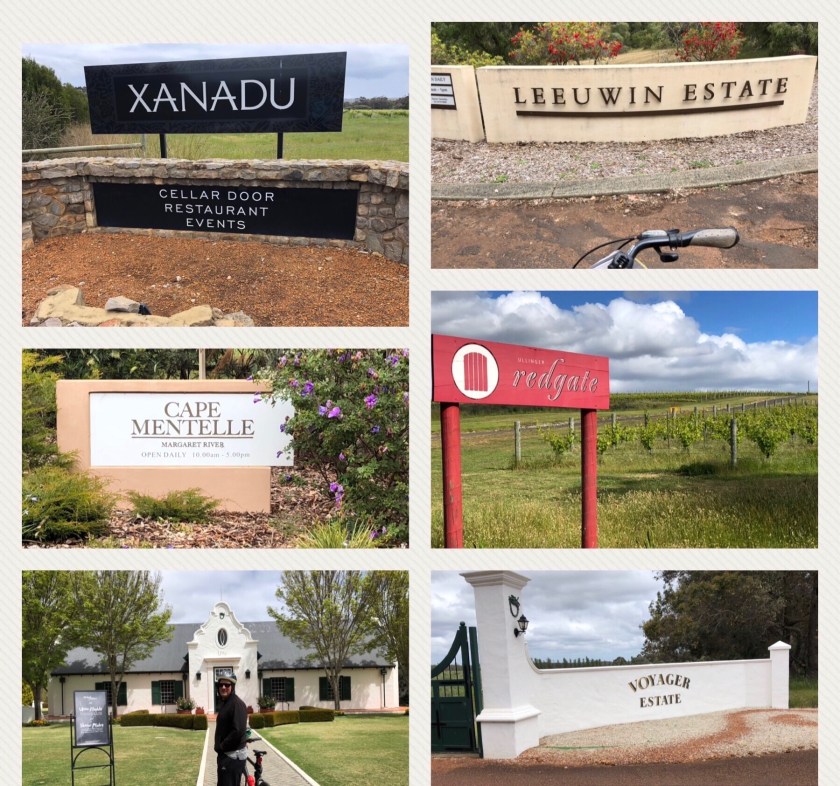
After extensive research in the Margaret River region of WA I have learnt that their Shiraz is not as good as that from the Barossa but that their Cabernet Sauvignon is better. This was after a number of days of sampling across numerous wineries. We took to our bikes for one of these days of sampling and I can thoroughly recommend this as a very enjoyable day out when in Margaret River.

The South West corner of WA does also have plenty more on other than just wine tasting. It is in fact stunningly beautiful with amazing beaches and national parks, but, for a Queenslander it could perhaps do with being a few degrees warmer before I would consider venturing into the water.

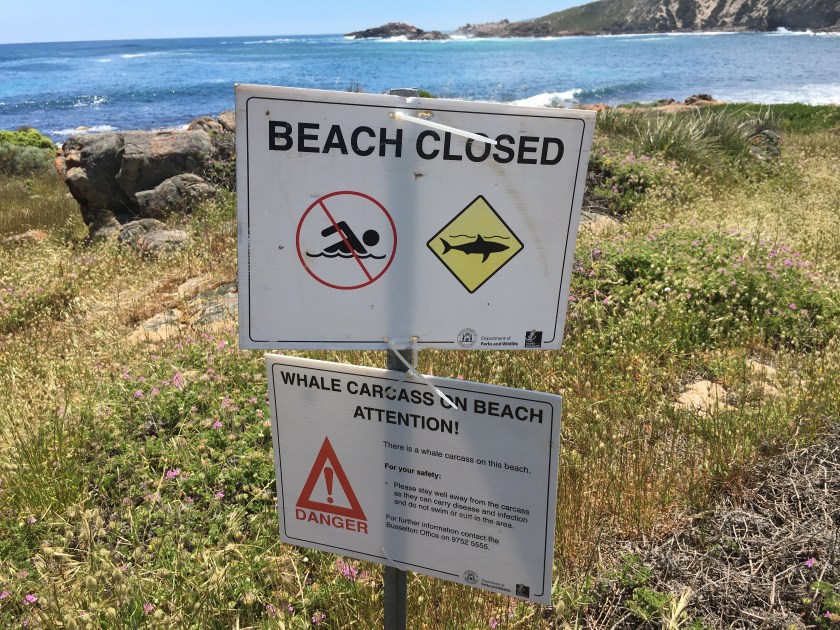
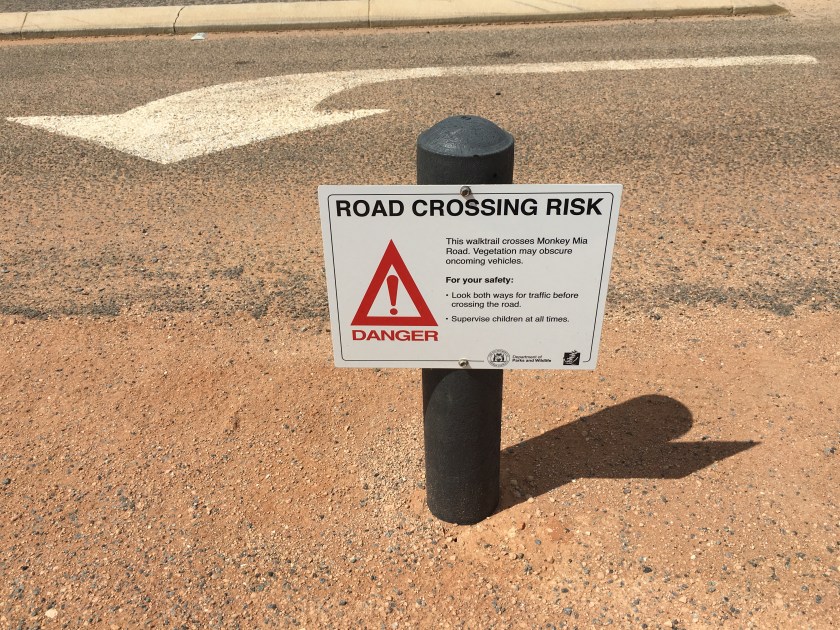
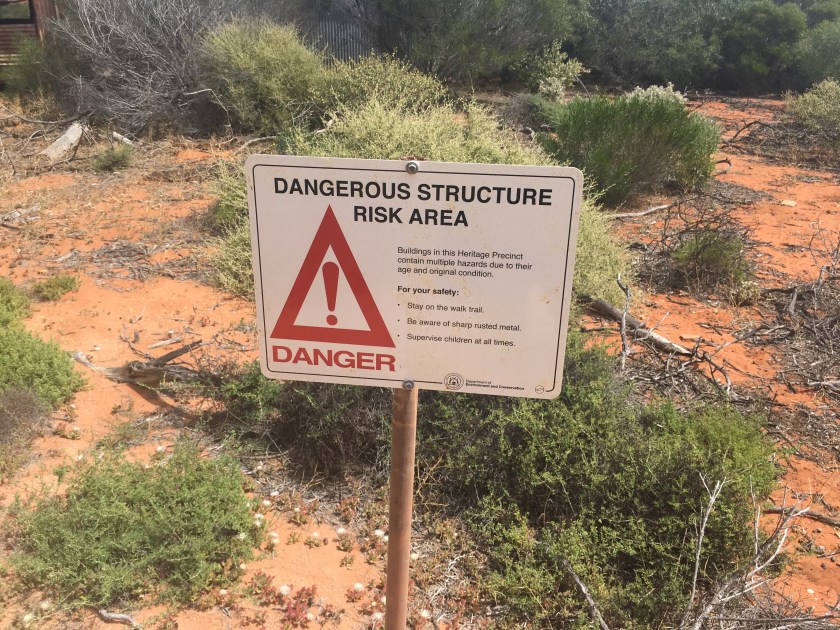
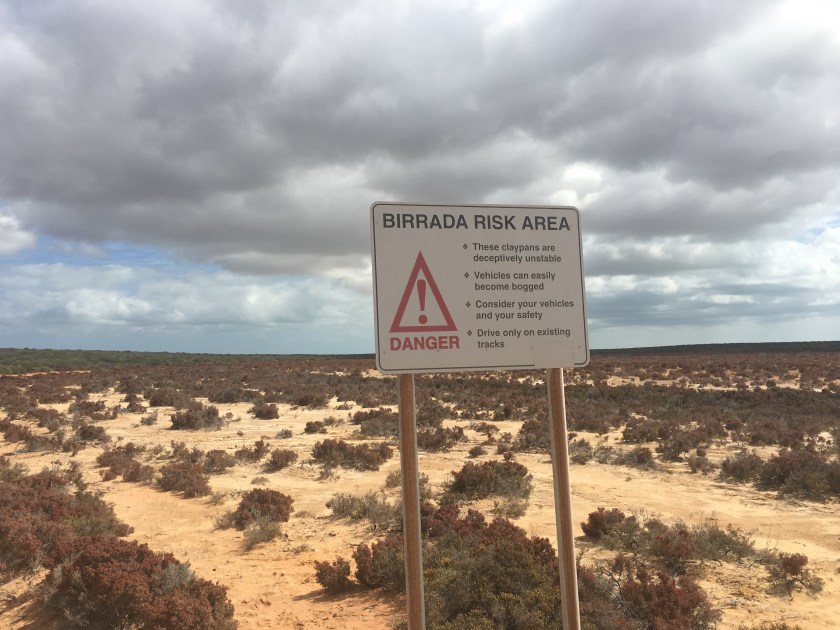
I can also confirm that WA is the most safety conscious state in Australia. There are warning signs for just about everything!

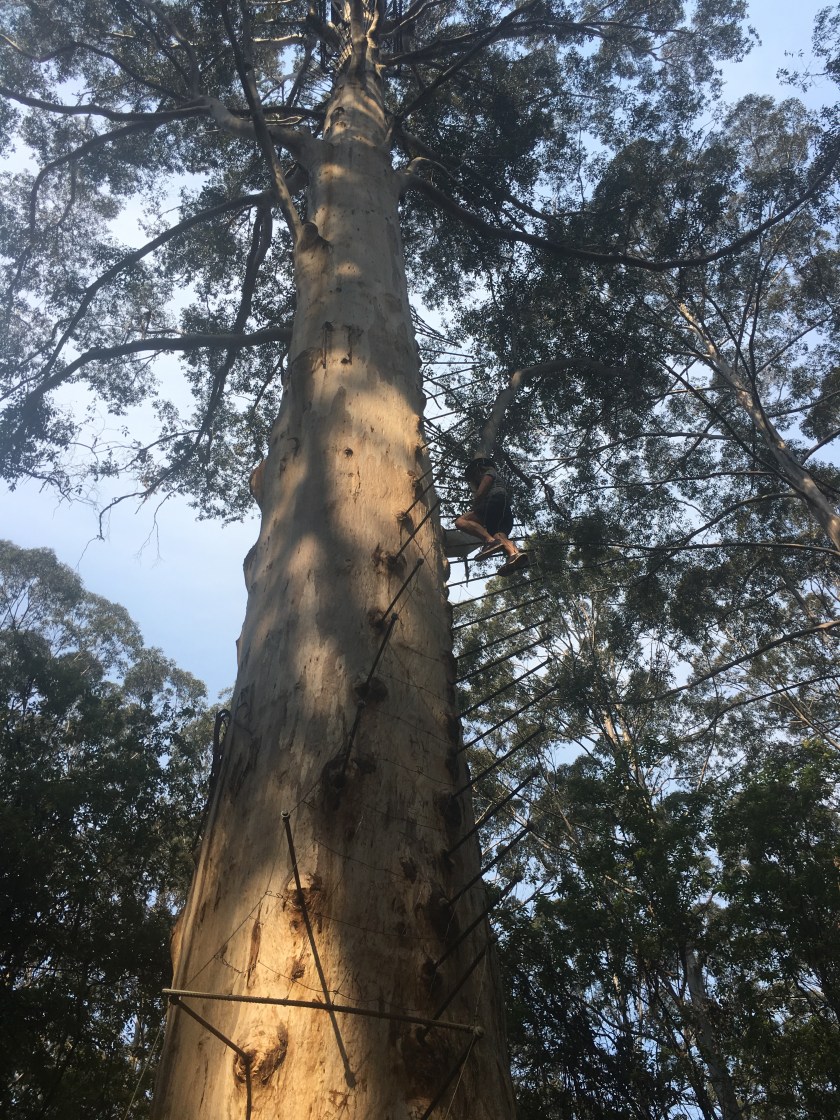
But despite this you can still climb a 160 metre high tree in Pemberton that has no real safety barriers or fall protection other that a little bit of chicken wire that probably wouldn’t even stop a chicken.

And finally, we are nearing the end of the Australian leg of our adventure, and in the 7 months that we have been on the road I have never felt concerned for my safety (apart from when wine tasting on a pushbike) or concerned about theft…….until Fremantle that is. 100 campsites with the van left unlocked and possessions left outside, and nothing went missing. One week in Fremantle with the van locked up outside our friends house and it gets broken into and the tv nicked! And on the same day the pump nicked off my push bike! Dodgy place Freo. Apart from that, it is actually a really lovely place and it was really great to catch up with and spend some time with old school mates Alex and Pat and their lovely wives, Justine and Margaret.

Phillipines here we come.

On the Road

So, after five months on the road am I ready to return to the real world yet? Well, the short answer is no, but I will give you the long answer otherwise there isn’t really much point to this blog entry is there?

Ok, so every once in a while it might be a little longer between hot showers than I would like, and sometimes it might be nice to have a little more space to move around in. Would I trade that for living to a daily schedule, going to meetings and having the general stress of going to a place of employment? Nope, not ready yet (the money would be nice though. Still haven’t found anyone willing to sponsor me to become a professional traveller). And anyway I can always have a cold shower or a swim and as for space, well, Australia is pretty big, and most of it is pretty empty.

Travel is supposed to be a great learning experience, so what have I learnt so far? Well for starters, I have learnt to live with less ‘stuff’ and actually feel that I could get rid of half of what we still have and still be fine with it. I have also learnt to break the attachment with my phone/technology and life is so much better for that. Most days I am not even sure where it is which is actually very liberating.

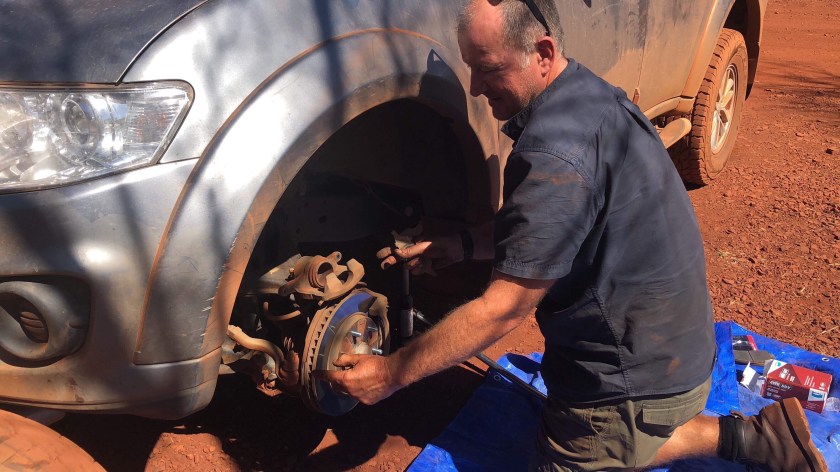
I have learnt how to fix most things on a Jayco Swift and a Mitsubishi Challenger with a bit of tape, glue and a couple of screws! I have even changed all the brake pads on the Mitsi (too hard to book in to a garage when you are on the move, and saved about $500).

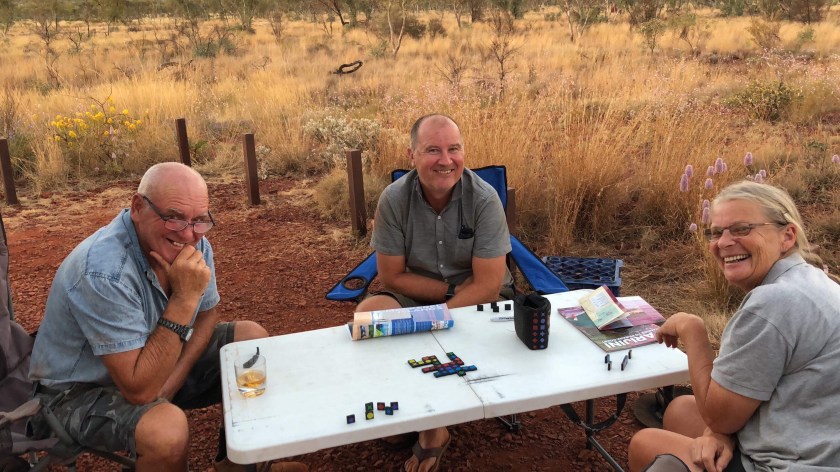
I have also learnt that people are generally pretty nice and very helpful. We have met some pretty cool people on our travels, exchanged contact details with quite a a few, and so far have invitations to stay in various locations around Australia and overseas. We have shared many a tale of travels around a campfire or over a beer and sampled a few dampers and shared a few of ours. We have even played the occasional game of Qwerkle.

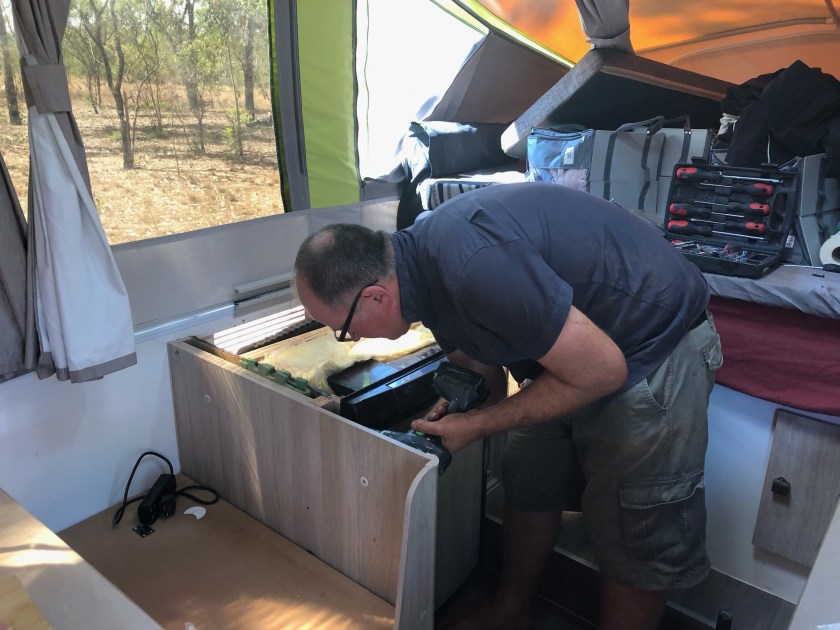
The best thing though is the way fellow travellers are willing to help each other out when there is a problem. Yesterday I was wiring a little fan into the back of the fridge and the guy camped next to us (Pat from Perth), came over with a soldering iron and a couple of beers and helped me do the job. What a legend.

When we were in Millstream National Park the bracket that holds Lucy’s spare wheel on broke. I was chatting to the camp host and asked on the off chance if he had any welding equipment. Well, turned out that over at the park rangers headquarters there was a whole workshop. However, due to workplace health and safety I wouldn’t be able to use it…..but they could, so the camp host and a couple of rangers fixed it for me.

When the corrugations shook Lucy’s cabinets apart a fellow camper gave me his bucket of screws and said ‘use what you need’ and also offered me the use of his electric screwdriver (got my own one of those though).

Every puncture has been accompanied by fellow travellers stopping to lend a hand.

In short, people are lovely, especially when you take them away from their work stresses and out of the busy cities, and if there is no phone service, then even better because people learn how to talk to each other again without all the distractions.

Ali has been keeping a few stats on our trip so I will share a few here as some are pretty interesting:

Kilometres driven – 21,581 (and still going)

Set ups/pack downs – 81

Most expensive coffee – $6.00. (Greenock in The Barossa SA. The wine tasting was free though).

Longest between food shopping – 4 weeks (Port Augusta to Alice Springs).

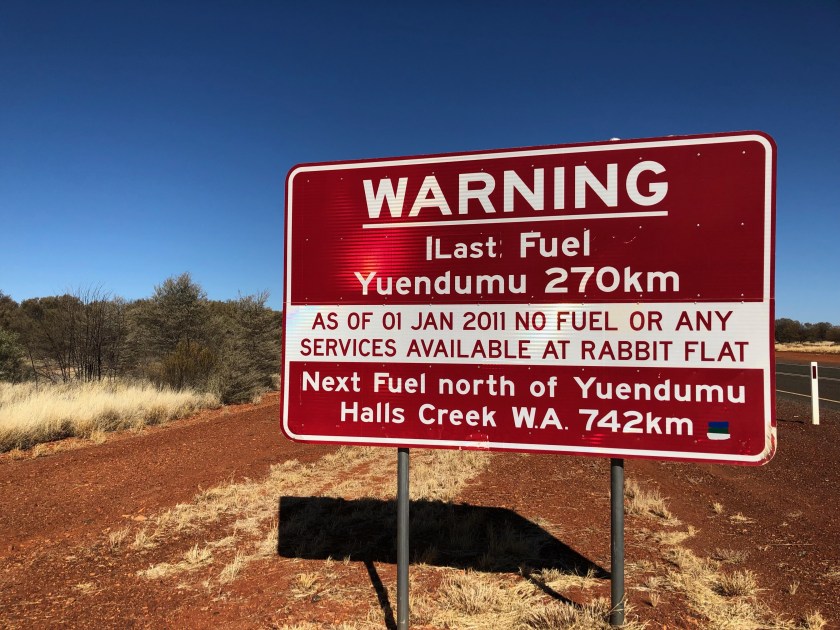
Longest stretch without a fuel stop – 861ks (across the Tanami with a side trip to Wolfe Creek).

Rainy days – 5

Most expensive camp site – $45 (El Questro WA).

Cheapest camp site -well we have had plenty of free ones, but the cheapest we have actually had to pay for was Keep River National Park, NT at $6.60

Nights not spent in Lucy – 9, two in a tent and seven at a house sit.

Times I have wanted to throw things at Ali – well, annoying as she can be, actually none really, apart from perhaps the time she woke me up in the middle of the night because the possums/Roos/dingos etc. freaked her out. I think I will keep her as my travelling companion.

Times I have thought ‘I wish I was at work’ – 0.

So, final words of wisdom….take some time off and hit the road for a little while if you can, it’s good for the soul and it helps to put life into perspective a bit. We have been living on around $700 per week all up but there are some out there doing it for less, so it doesn’t need to cost your life savings. Just do it (I think that slogan belongs to someone else…hope I don’t get sued……they will have to find me first).

The Kimberly

Having spent the past few weeks in the Kimberly, I can safely say that it is one of the most beautiful parts of Australia and is well worth a visit if you ever have the opportunity.

Although we did spend a bit of time here in 91, we really only experienced the area around Kununurra and Lake Argyle, but this time around although we have spent less time here we have ventured over a larger geographical area.

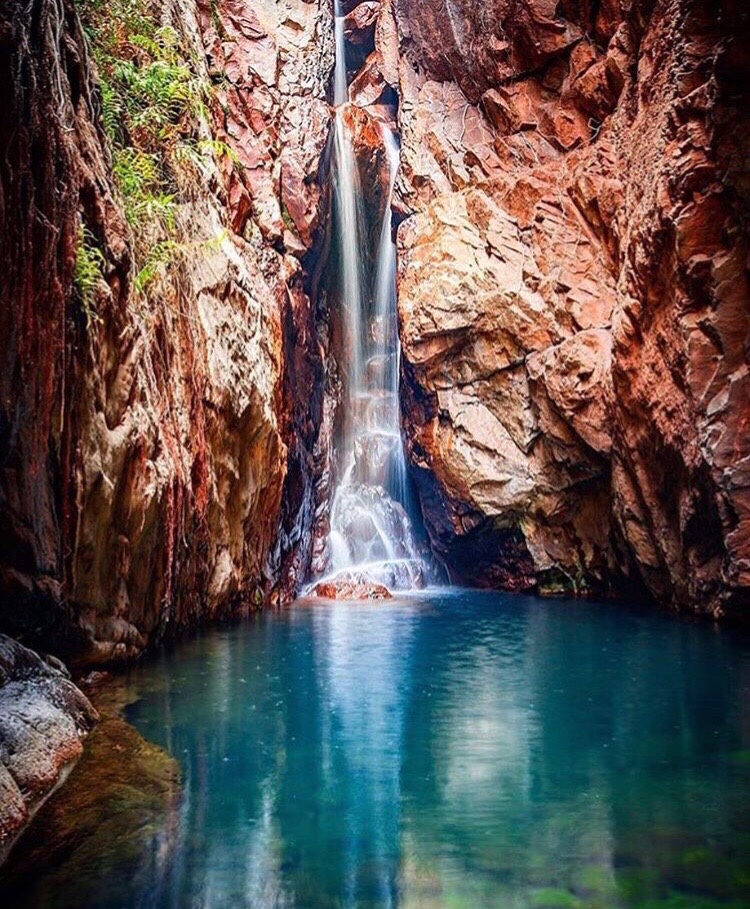
The scenery is absolutely stunning, Aboriginal culture seems to be alive and well, plenty of wildlife, the Boab trees are very impressive and as long as you are careful to avoid the crocodiles there are plenty of swimming holes to enjoy in the numerous gorges that are the centrepiece of the Kimberly.

The ranger in Keep River National Park (which technically isn’t in the Kimberly as it is just over the border in the Northern Territory) told me that once upon a time the Kimberly was not part of the Australian mainland and actually sits on its own tectonic plate or something. I haven’t checked this fact yet so it may not be true, but it would certainly make sense if it is. Some of the rock formations and gorges are quite unlike anything else in Australia.

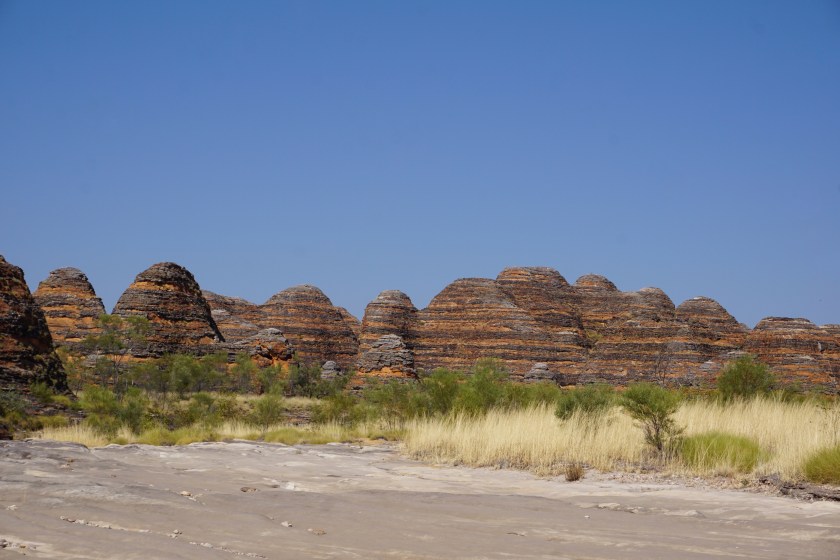
Take the formations in the Bungle Bungle range for example. These beehive looking formations are pretty cool to say the least. And then there is the Devonian reef at Winjana gorge and Tunnel Creek. Once a coral reef under a tropical sea it now towers a hundred metres above the surrounding plain with a croc filled river running through the middle of it. It is just stunning to see.

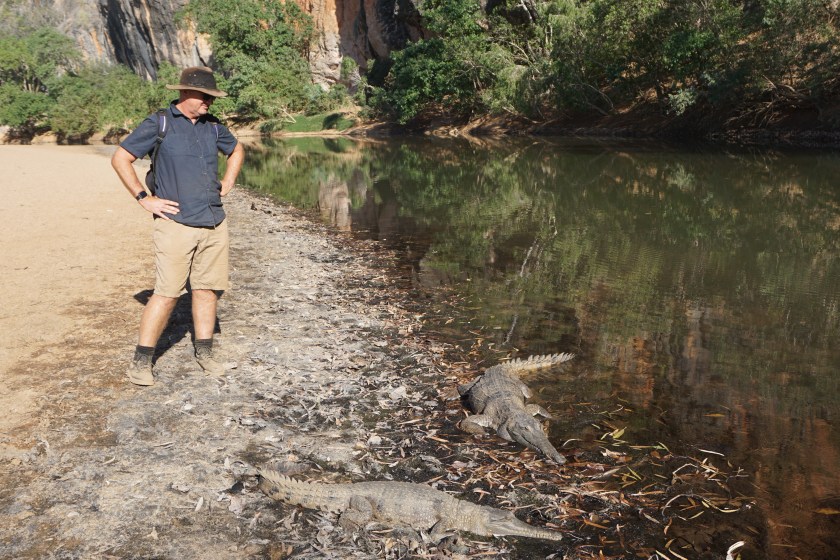
On the subject of crocs, the Kimberly certainly has its fair share of those. Fortunately most of the waterholes that are cool, clear and inviting for a swim are only inhabited by freshwater crocs. Freshies are pretty placid and non threatening things that have no interest in eating people, and are generally happy to share their waterhole with you as long as you leave them alone.

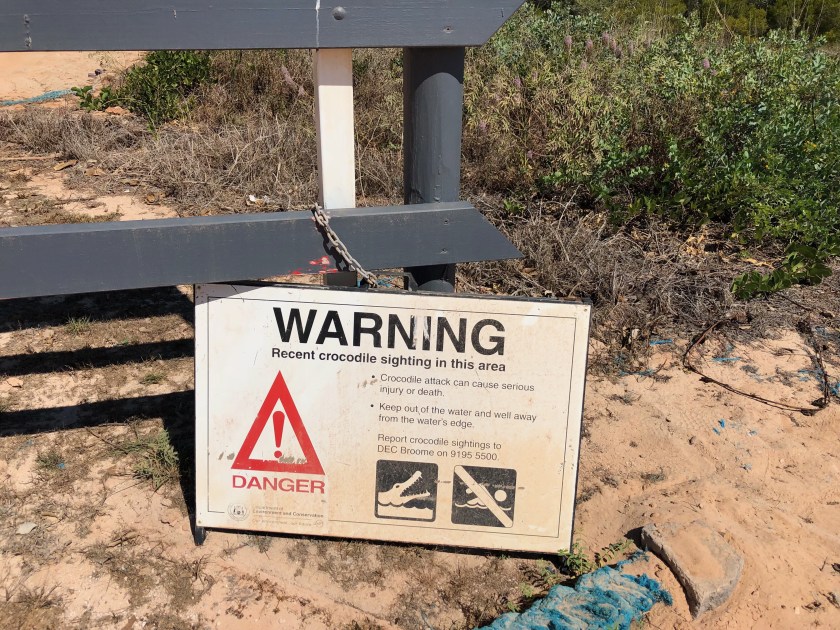
Saltwater crocs on the other hand are not to be messed with. Salties would like nothing more than to eat you for dinner, so if there is even a slight chance that a saltie might be around then swimming, or even getting too close to the waters edge is off the agenda.

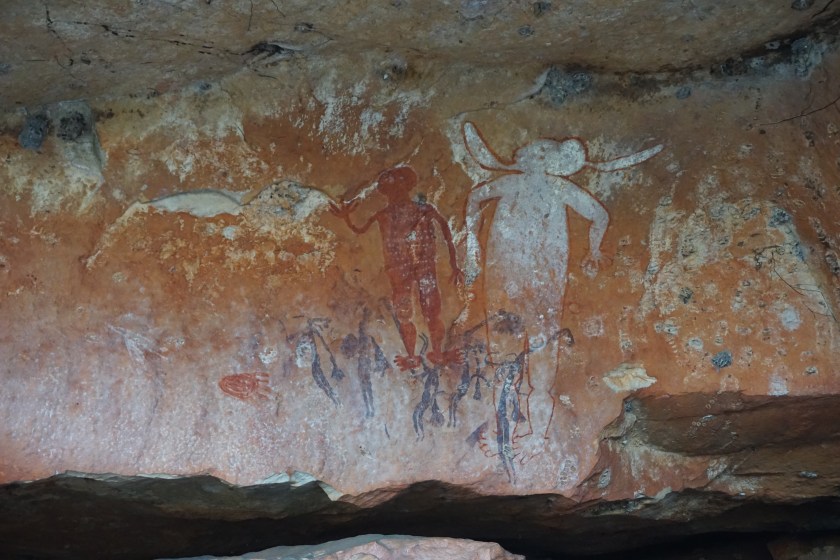
There seems to also be some extremely good examples of ancient Aboriginal rock art in the Kimberly. The age of some is these is mind blowing and the fact that you can just walk right up to them (no fences, barriers, entry fees). Some of the artwork is dated at more than 20,000 years old. Pretty sure that anything of that sort of age elsewhere in the world in under lock and key.

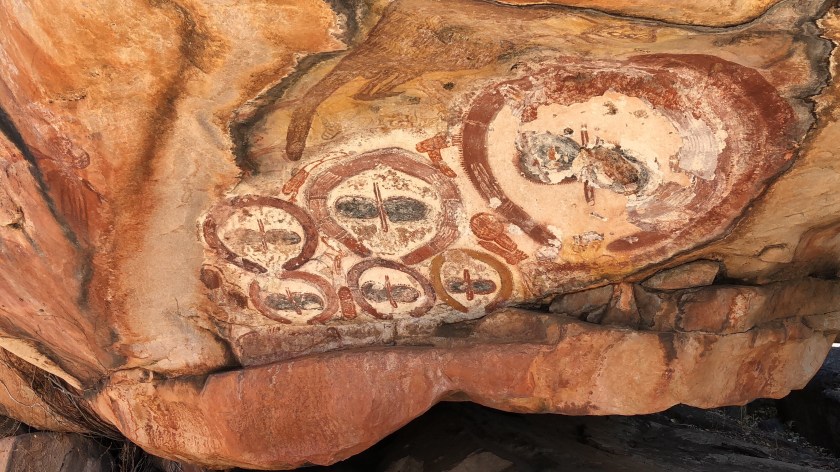
One of the most interesting paintings that seems to appear all over the Kimberly is the Wandjina. These spirit beings started appearing around 4,000 years ago and were apparently repainted over the top of the original every decade or so. The Wandjina are painted with a round white face, big round eyes, what appears to be a halo or helmet of some kind and a nose but no mouth. The story that goes with them is that they came down from the sky and shaped the land and the rivers and looked after the people. Apparently they realised this was a pretty big job so they sent for reinforcements and more of them arrived later. When they left, some went back into the sky and some went into the earth and live at the source of natural springs.
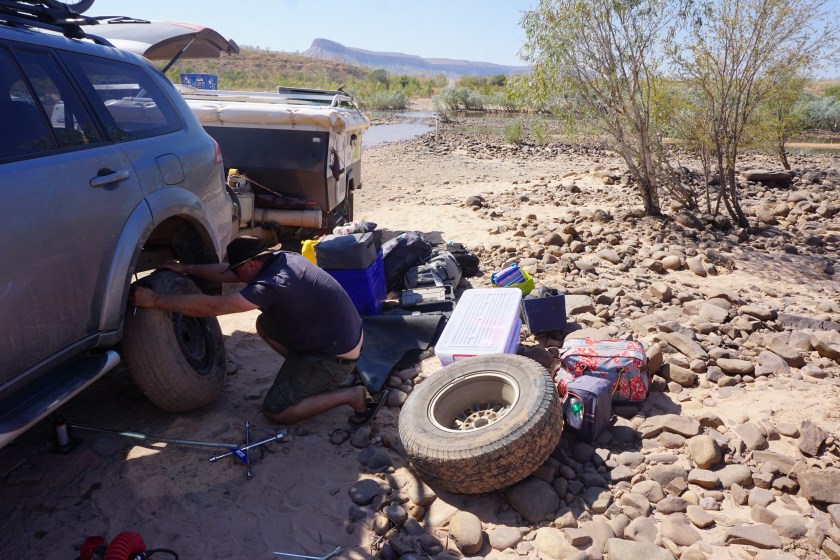
I have to say though, that the roads (if you can call them roads) in this part of the world are pretty poor to say the least. I guess that is part of the appeal though and it is part of what keeps this region remote as without a four wheel drive you really are not going to get very far. But, I am a bit over dust and corrugations now. The Kimberly roads have given us three punctures, a cracked windscreen, one cabinet rebuild in Lucy (our little camper) numerous loose screws, nuts and bolts and five fridge explosions. Not the actual fridge exploding but the contents making a bit for freedom and ending up all over the floor. We have had scrambled eggs, yoghurt, salad dressing and sun dried tomatoes in oil decorating the inside of the van.
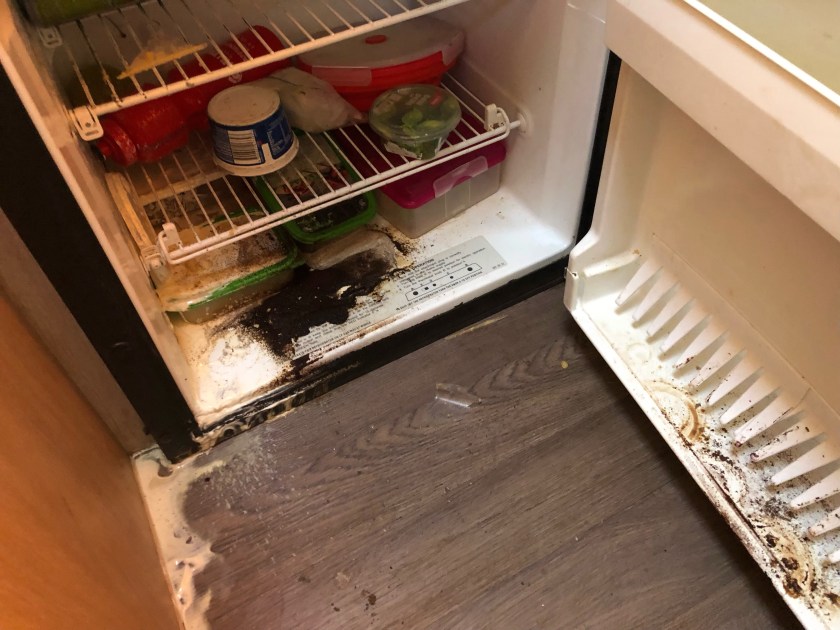
Just recently though, we have hit the coast and we are currently camped in a little slice of paradise (over 100ks on sand tracks and one fridge explosion to get here though). Now, living in South East Queensland we are pretty spoiled when it comes to beaches, but I have to say that what we have found here on the Dampier Peninsula north of Broome are as good as Queensland, unless you are a serious surfer that is. And there is always the concern that there could be a random croc swimming by even though the locals (this is all Aboriginal land) assure us that there are none around. Actually what the guy at our current camping spot said was ‘no crocs or stingers…..but don’t let your guard down though’. Still, I have had a swim everyday and I am not writing this from the belly of a saltie.

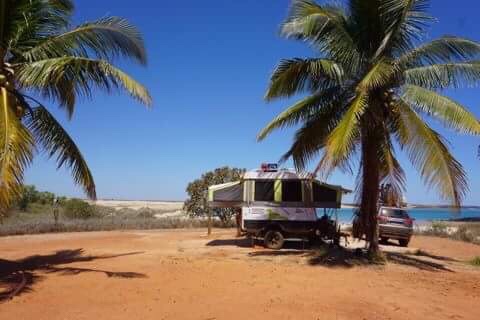
Our current camping spot really deserves a mention as it really is pretty special. We are at a little place called Middle Lagoon which is on extremely well managed Aboriginal land. There are toilets and hot showers (bonus) and we have a camping spot overlooking a beautiful lagoon. We are shaded by coconut laden palms and our own little beach shelter where we can sit and watch the whales swim by during the day and sit by the camp fire and wonder at the stars at night.

Dust, Deserts and Diesel.

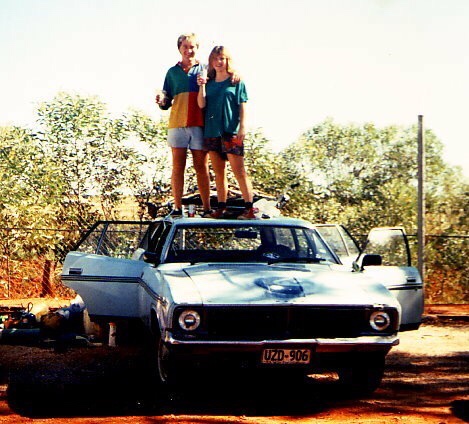
Twenty seven years ago when I first arrived in Australia, I bought an old Ford Falcon station wagon off a backpacker in a pub in Brisbane for $500.00. In our trusty wagon we got three quarters of the way round Oz before it died somewhere near Broome in WA. We then bought a Ford Falcon sedan off another backpacker in Kununurra where we worked for three months, which then completed our figure of eight (up the east coast, up the west coast and down the middle twice). On that trip we saw a lot of the country but we mostly stuck to the bitumen and there is a lot of Australia that you can only get to by heading off the bitumen.

So, for this trip then, getting off the beaten track was most definitely on the agenda, and in fact I wanted to tackle some of those iconic dirt roads not just because of where they go to but just because they are there.

So far on this trip along with hundreds of k’s on non specific gravel roads we have ticked three major ones off the bucket list and lived to tell the tale, and still have at least one on the agenda to do in the next few weeks.

I have already written about the Birdsville track but since then we have ‘conquered’ the Plenty Highway and the Tanami Track and next week we will be heading out onto the Gibb River Road through the heart of the Kimberly.

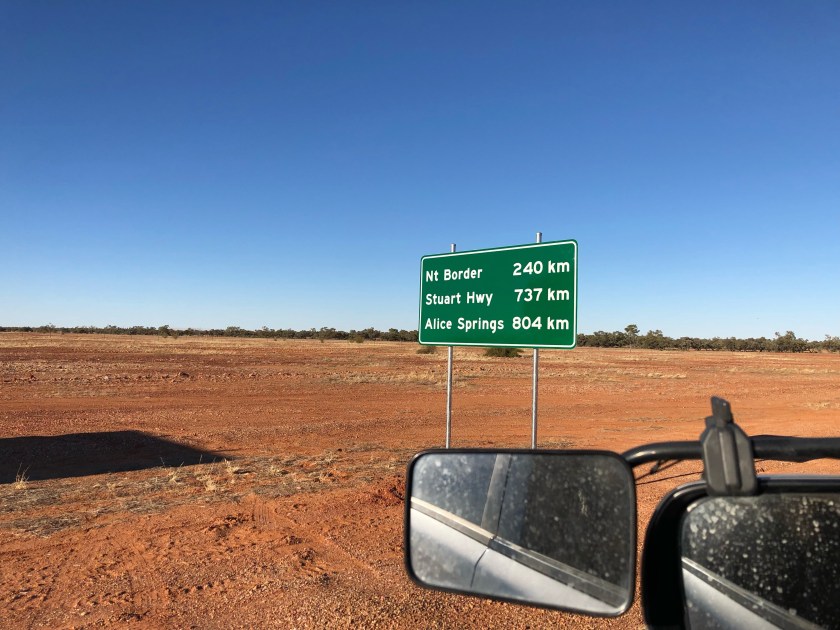
The Plenty Highway actually starts off as the Donahue Highway at Boulia in Queensland but changes its name when it crosses the Border into the Northern Territory. It skirts around the edge of the Simpson Desert and comes out 800ks later on the Stuart Highway just a few k’s north of Alice Springs.

The thing about these long stretches of dirt road is that the conditions can vary so much and change so quickly that the only way to really get an idea of what you are in for is talk to someone who has just driven it. You can research online or hear about what it was like a week ago, but if there has been rain, lots of traffic using the road or if the graders have been through in the past few days then things can change dramatically.

So, all the information that we gathered about the Plenty Highway beforehand was bad. We were told about terrible corrugations, pot holes, washouts, bull dust. In short it was apparently in appalling condition and best avoided. When I asked at the information centre in Boulia I was told that there had been three caravan rollovers that week but if you ‘drive to the conditions’ you should make it across OK.

Still in two minds but really wanting to avoid going the long way round to Alice (about double the distance on the bitumen), we got chatting to another couple in the Boulia caravan park who had the same dilemma as us and we decided to go in convoy so we could help each other out if we had any dramas.

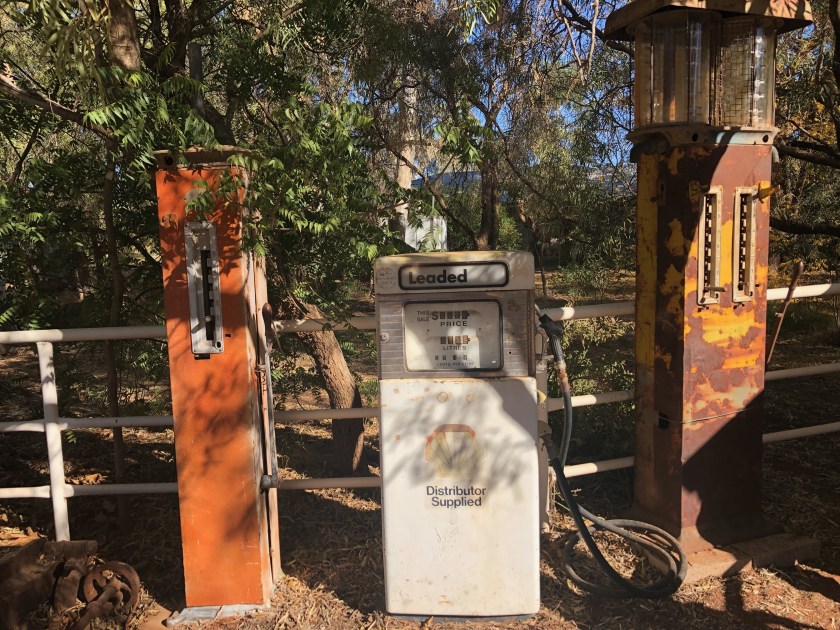
For the first couple of hundred kms I was wondering what all the fuss was about. There were actually long stretches of bitumen and the gravel sections were well formed and mostly corrugation free. But then we hit the NT border. There was actually a fuel stop at a cattle station on the border and as we filled up I asked the lady there about road conditions. She smiled knowingly and said ‘you won’t be driving at the same speed as you were in Queensland’.

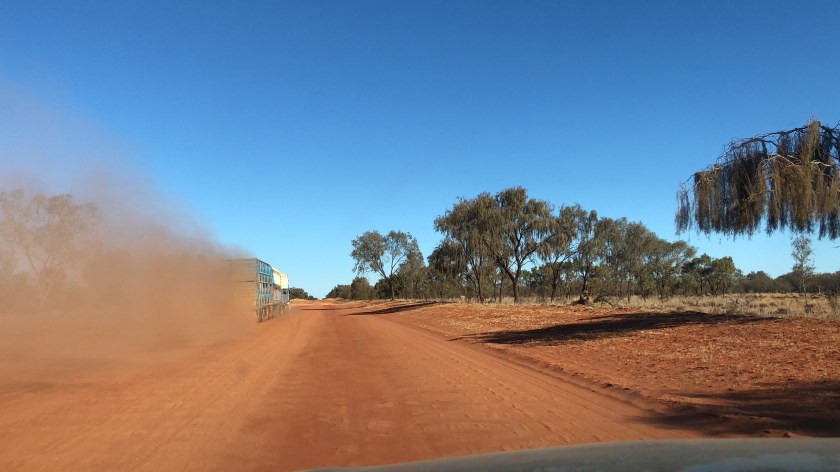
The corrugations were so bad it feels like your fillings are going to come loose along with all the nuts and bolts holding the car together. And poor Lucy (our little campervan) being bounced along behind us. Then we got to the bull dust and soft sand bits. So much dust in the air you can’t see a thing when there are any other vehicles around and the main problem with the bull dust is the big suspension wrecking and tyre shredding potholes that it hides.

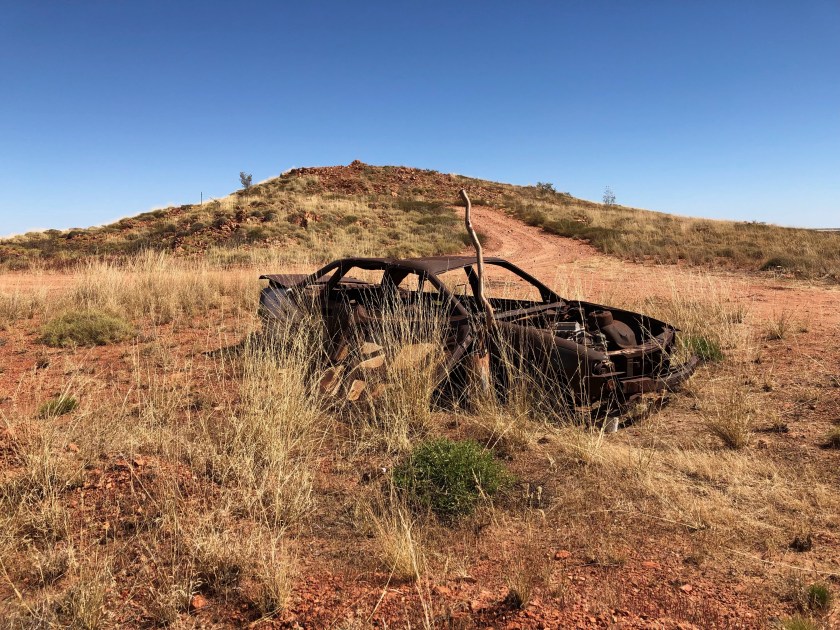
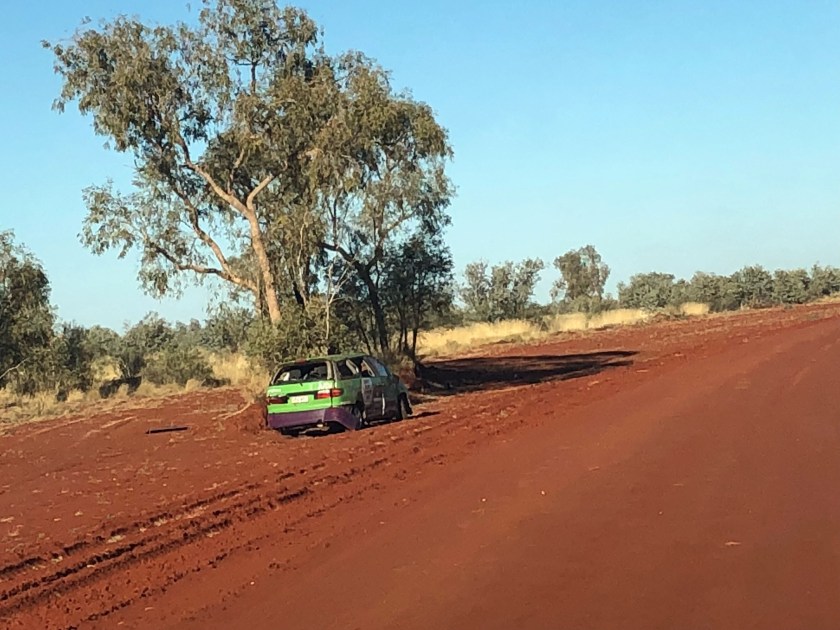
Ali was trying to keep a count of shredded tyres by the roadside but gave up after a while. There were also three very recently abandoned camper trailers and quite a few cars that didn’t make it and have been abandoned over the years. There was in fact one pretty recent looking Juicy rental left on the side of the road that looked like it had rolled. I bet that was an expensive experience for the hirer.

When we camped up at the end of day one Lucy was full of dust but other than that, nothing was out of place. Got to hand it to Jayco (not sponsored), they do know how to make a tough off road camper, poor little Lucy has taken a beating and is still in one piece. Our fellow travelling companions didn’t fair quite so well and suffered a broken microwave and broken tv mount (serves them right for having a microwave and a mounted tv I say).

Day two was more of the same until we hit the bitumen again and shook out some of the dust. I assume that the Plenty Highway is so called as it loosely follows the Plenty River (river!, that’s a laugh, not much water in that part of the world), but we decided it is so called because there are plenty of corrugations, shredded tyres, abandoned vehicles etc.

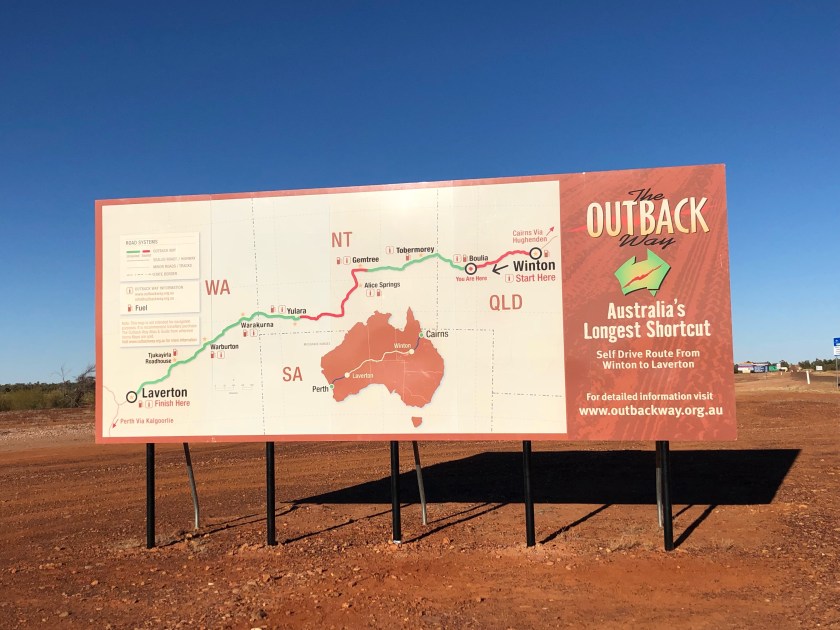
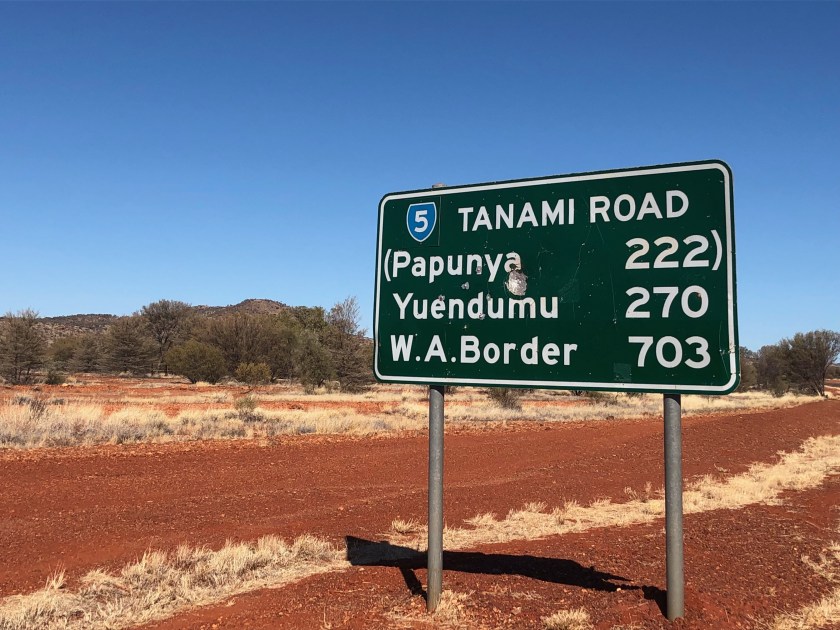
After a bit of a respite in Alice and surrounding area, we then set off across the Tanami track which is a shortcut from Alice to the Kimberly in Western Australia (if you can call 1,050ks a short cut). The Tanami crosses the desert of the same name and is extremely remote with the longest distance between fuel stops being over 700ks.

This time all the research suggested that the road was in reasonably good condition with just a few heavily corrugated sections. In fact the first 200ks or so was bitumen. We had a leisurely first day and camped at Tilmouth Well before we hit the dirt.

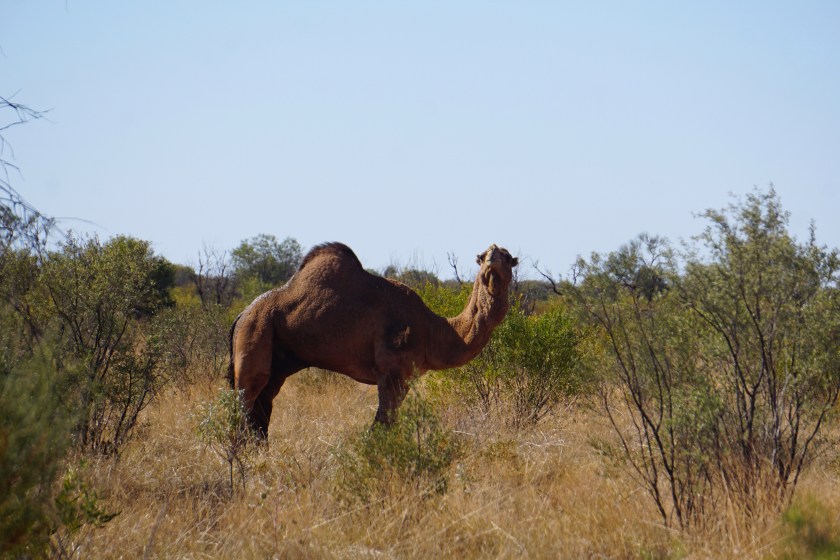
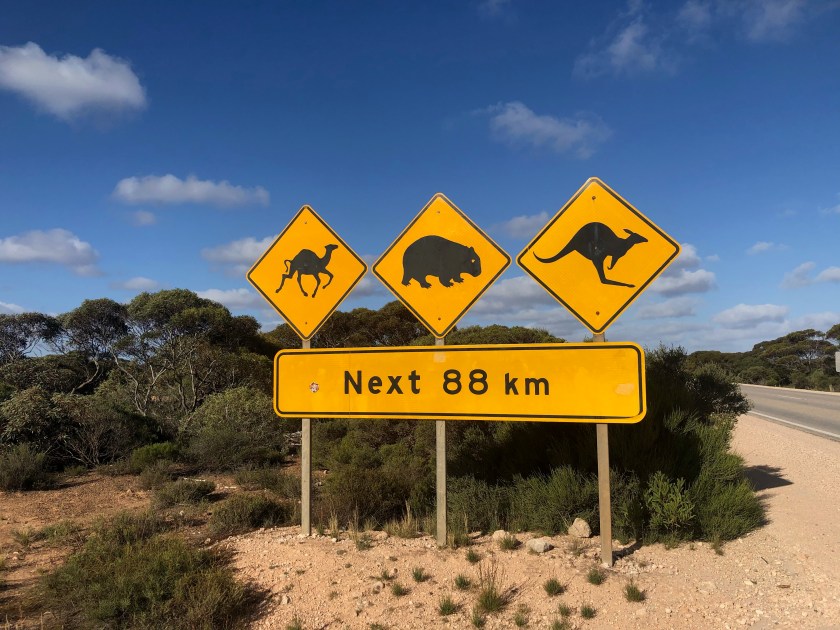
Next morning we set off again and within a few ks spotted a feral camel just strolling along by the side of the road. This made Ali’s day as she has been hanging out to see some wild camels. A few kms later we spotted three more, but they were distinctly dead and a little bit smelly (come to think of it, the live one was a bit smelly too.

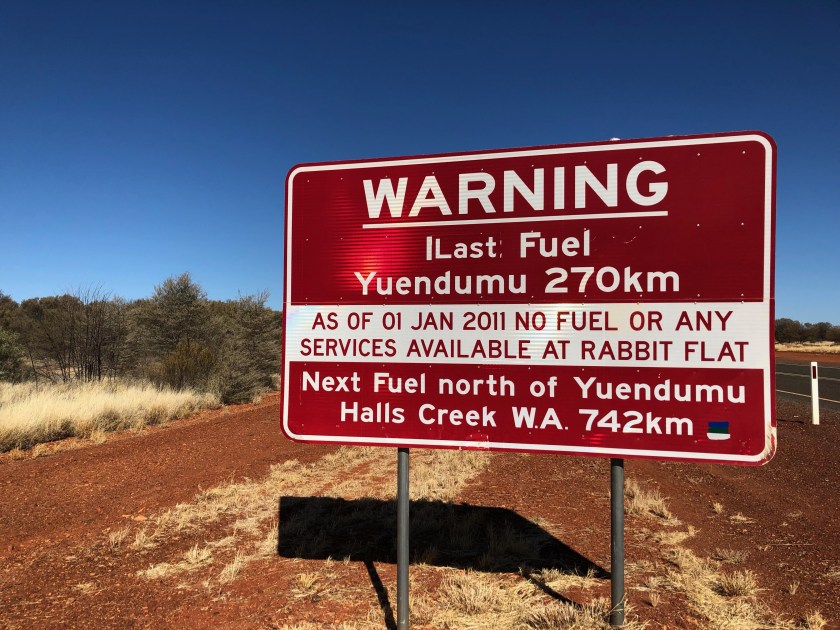
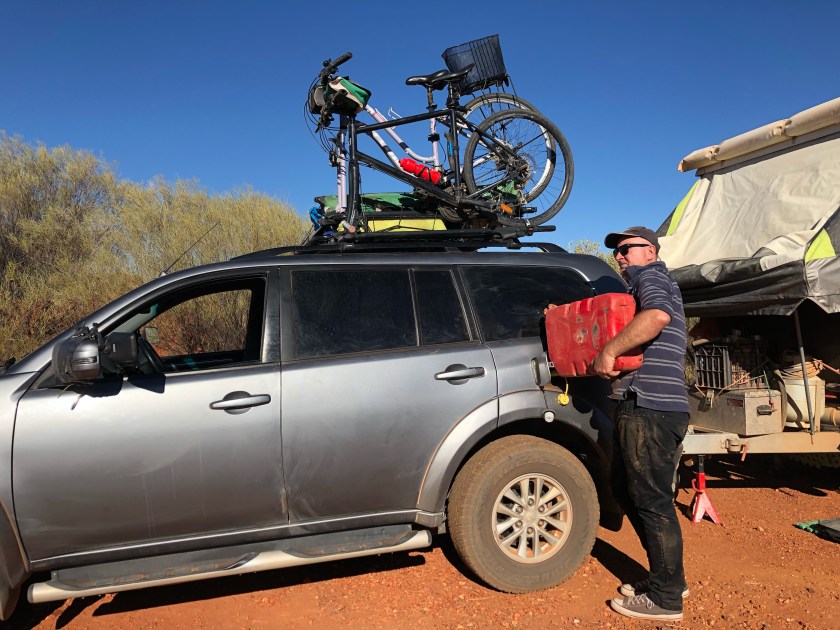
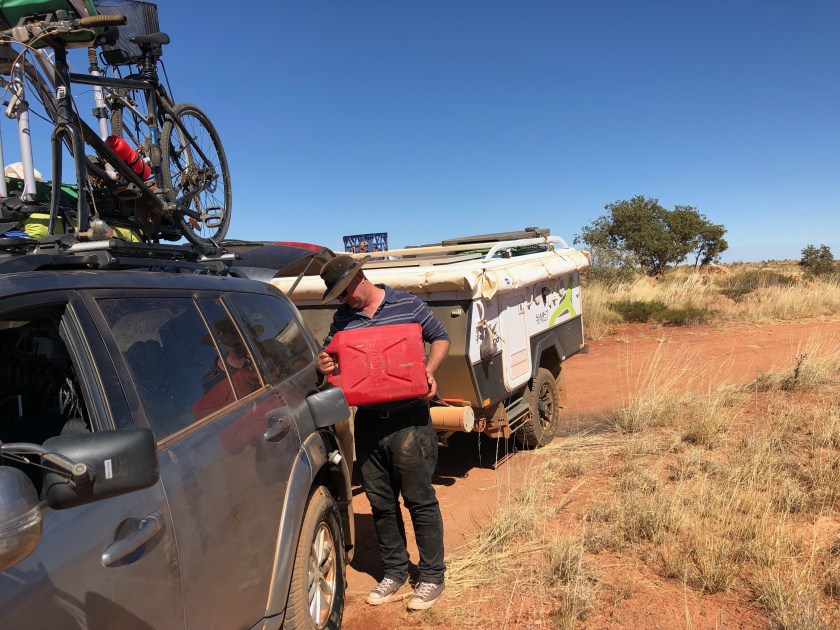
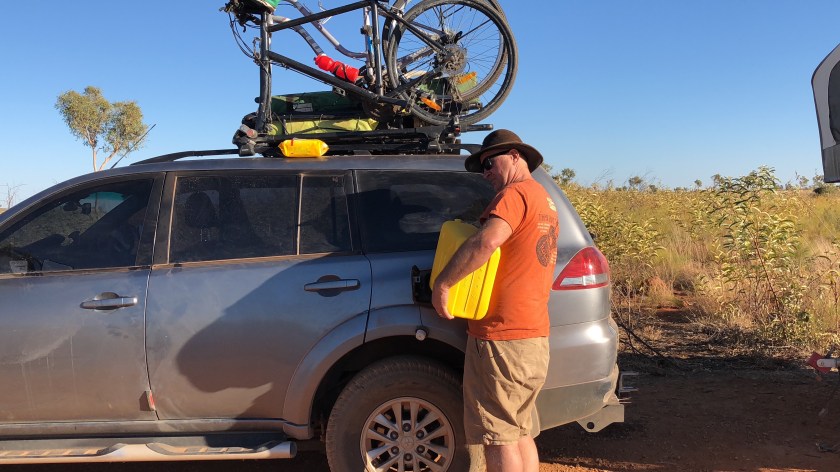
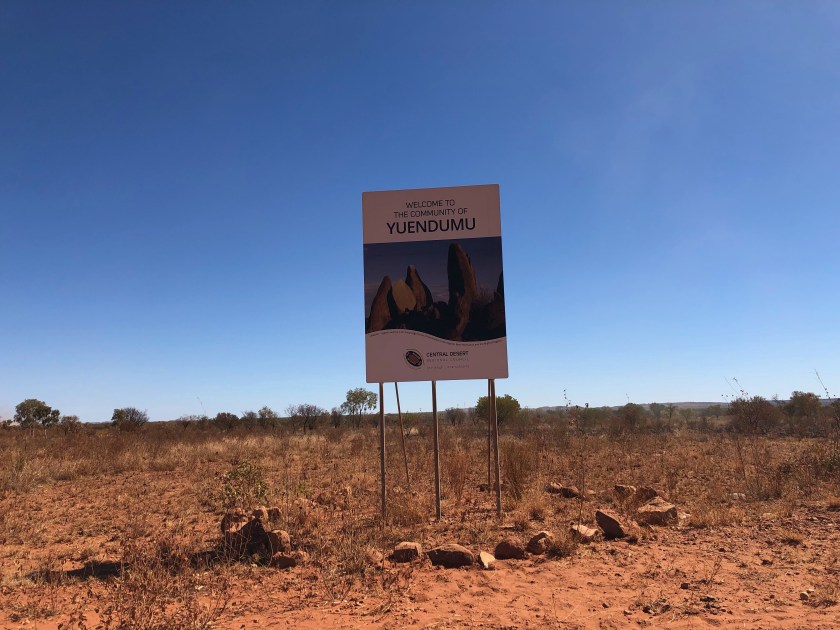
Our next stop was to top up the the tank in a small Aboriginal community called Yuendumu. We were already carrying three full 20lt jerry cans of diesel but we needed to be able to cover just over 800ks before the next fuel stop to allow for a side trip to Wolfe Creek.

Driving into Yuendumu was a bit of an experience in itself. I can’t quite get my head around why an Aboriginal community in a modern and wealthy first world country looks more like a village in a third world country. It really was like entering a foreign country within Australia. Run down buildings, stray dogs and litter strewn streets. You need a permit to do anything more than drive in and refuel and drive back out again, and these communities are all ‘dry’ as in no alcohol permitted and there are fines for bringing any in.

Back on the road again and the corrugations were real bone shakers, until we saw three graders coming our way. That made my day as for the next 100 ks or so the road was smooth and beautiful to drive on.

Obviously the Tanami is a desert, so it is pretty remote, not much traffic, dry and flat. Despite that we did manage to find a hill to camp behind for our second night. Bizarrely enough it turned out that we were actually camped near a mining operation and so although it felt like we were alone in the middle of nowhere we actually had phone service and an internet connection. A bit weird being in the desert and being able to check your Facebook.

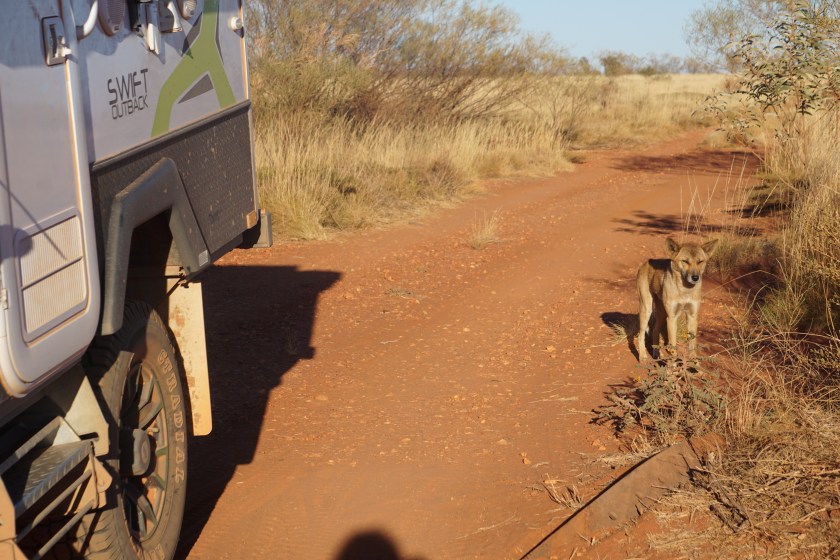
Our little campsite also had a resident dingo who was actually pretty cute and friendly. In fact when we left in the morning he followed us all the way down to the road to see us off on our way.

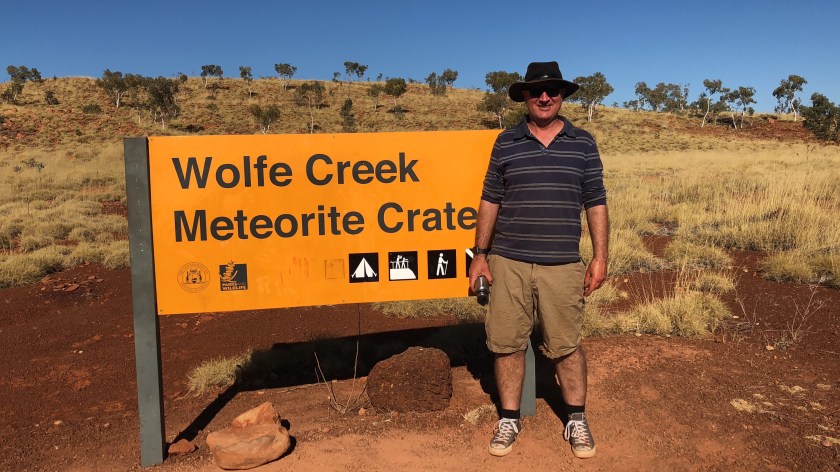
Our third night was spent at Wolfe Creek Meteorite crater. This is an amazing place, the site of a meteor impact a few million years ago, but most famous probably (sadly) for the movie of the same name.

The road into Wolfe Creek was probably the most heavily corrugated we had encountered up to that point, but as it was only 25ks on the main track we persevered and it was well worth the effort.

The very last 100ks or so before getting back on the bitumen at Halls Creek was by far the worst though. This was rocky, corrugated and just plain horrible. We got our first puncture just about 30ks short of getting back on the bitumen. I had actually invested in a puncture repair kit and a decent compressor for this trip so instead of jacking up the car and using the spare I actually had a go at plugging the hole in the tire. It just so happened that this was inspired by a guy who was there just at the right time to help. This fella had just come up the Canning stock route (more remote than anything we have done so far) and had a few punctures so he was experienced at dealing with them. So, with his guidance I fixed my first puncture and we were back on our way in less than half an hour.

We finally rolled into Halls Creek with diesel to spare and looking forward to a few days rest before our next adventure.

Birdsville, ‘The Bash’ and the Simpson Desert.

Birdsville is pretty much in the middle of nowhere, and yet every year it hosts a music festival in July and a racing carnival in September, both of which attract thousands from all over Australia. This is pretty impressive for a town that has a listed population of 120 and takes days to get to from anywhere in the civilised world.

Birdsville sits on the edge of the Simpson desert in the South West corner of Queensland. If you come into town from the east, the last 130k is dirt road and the state capital, Brisbane is almost 1,500ks away.

Coming from the south is worse. Sydney, Melbourne and Adelaide are all between 1,000 and 1,500ks away and the last 500ks to town are up the Birdsville track which is 500ks of dirt, sand and stones (more on the stones later).

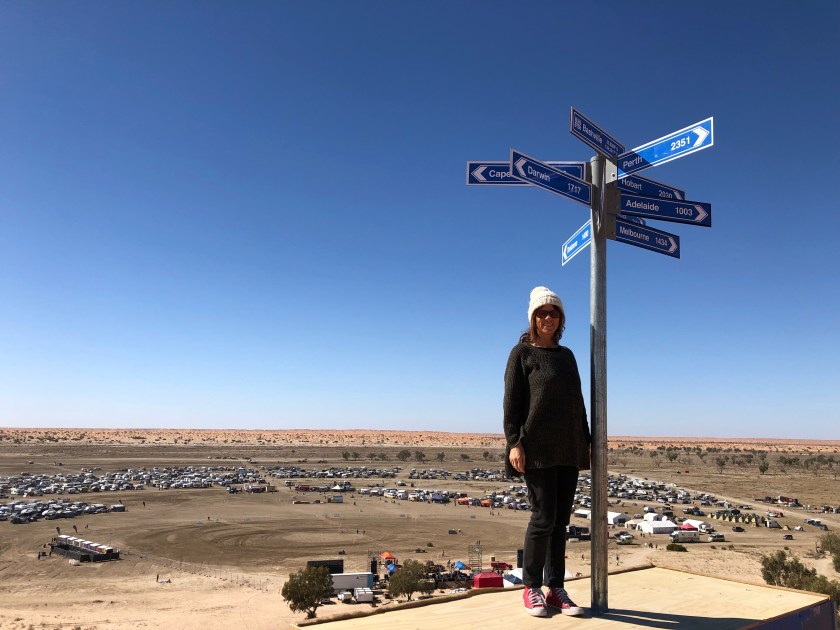
Coming from the west, the only option is to cross the Simpson Desert. No road as such, just a four wheel drive track that crosses over 1,000 sand dunes in just over 500ks. If you are heading west and want to get to Perth, keep going for another 2,000ks at the last sand dune.

And coming from the North isn’t much better. The next town with a population anywhere near 100 is over 300ks away, Alice Springs is just over 1,000ks if you take the short cut via more dirt roads and Darwin another 1,000 beyond that.

In short, it really is a long way from anywhere. We brought the kids here once a few years ago and they still shake their heads and wonder why. We have now been back twice since then, both times for the ‘Big Red Bash’ which is the music festival that is held at the base of ‘Big Red’, the 50 metre high sand dune that sits on the eastern edge of the desert.

On this trip we came into town via the Birdsville track which starts at Marree, which is also arguably pretty close to the middle of nowhere as the bitumen runs out about 100ks short of there too. This was after a little side trip of 100ks each way to see, and walk on, Lake Eyre. This is where Donald Campbell set the land speed record back in the 60’s in his jet propelled ‘Bluebird’. It is also the lowest part of Australia at 15m below sea level and is vast and pretty impressive. It is pretty cool to walk out onto the salt and see nothing but a huge expanse of dead flat whiteness as far as the eye can see.

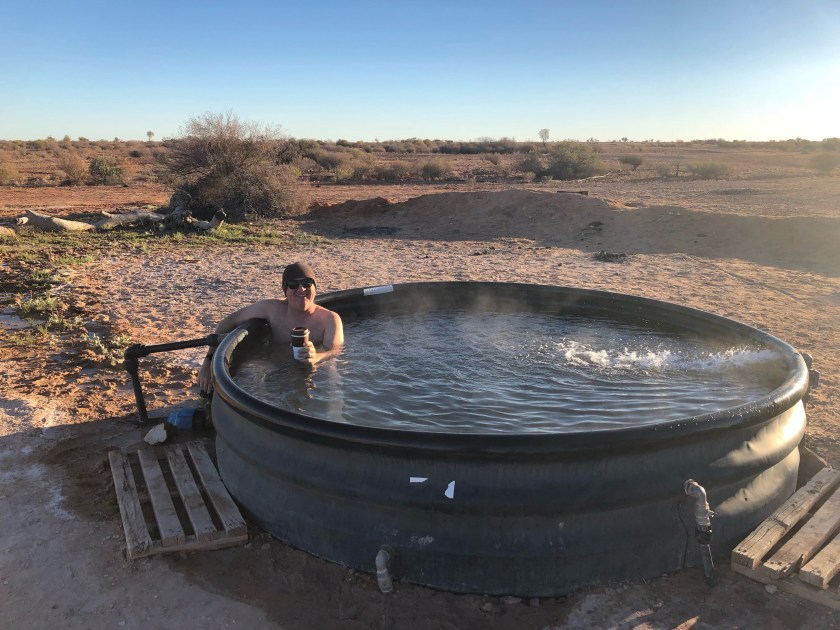
The Birdsville track isn’t quite the challenge that it used to be, but it does still do its best to destroy windscreens, tyres and caravans whenever possible. Fifty years or so ago it still took almost a couple of weeks to drive from Marree to Birdsville but these days you can drive it in a day or two. We weren’t in a rush so we did it with a couple of overnight camps along the way, and the only damage sustained was a stone smashing a pipe coming out of the water tank under the van. Didn’t notice it until we set up camp and found we had no water! Nothing a bit of glue and tape couldn’t fix though and fortunately we camped at a place that had water to refill the tank with. In fact one of our stops was by a bore where water from the Great Artesian Basin comes out hot enough for a nice relaxing spa in the thoughtfully provided plastic pool, and afterwards for a hot shower in the equally thoughtfully provided tin shed.
As mentioned previously, Birdsville sits in the South West corner of Queensland, very close to where Queensland, South Australia and the Northern Territory all meet at Poeppel corner. Now visiting Poeppel corner has been on my bucket list for a while now after getting to know a bit more about it on my previous Birdsville visits. Only problem is it lies 170ks west of Birdsville which, if you have been paying attention, will realise is somewhere in the middle of the desert. In fact, 150 sand dunes in to be precise. So this time we came prepared for a trip into the desert before the Bash started. Even with a two way radio, Emergency locator beacon, plenty of spare water, food and fuel though, there is still a slight concern that things could go wrong. Even the best RACQ cover isn’t going to help out there and vehicle recovery is very expensive. Clutch failure would be extremely awkward.
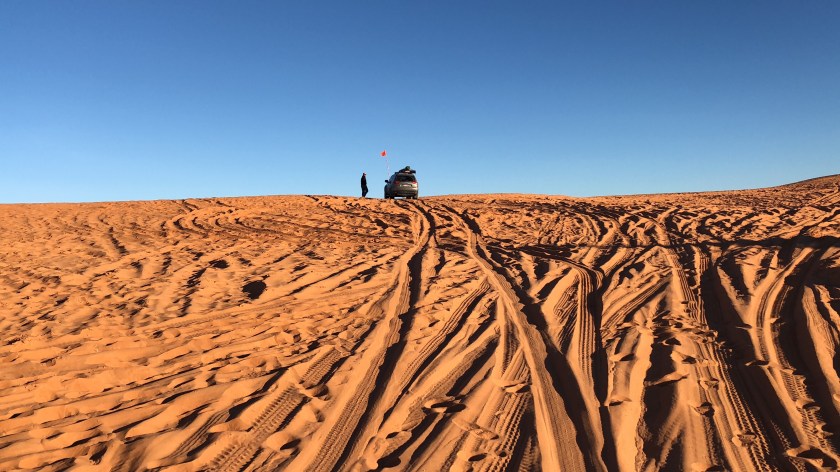
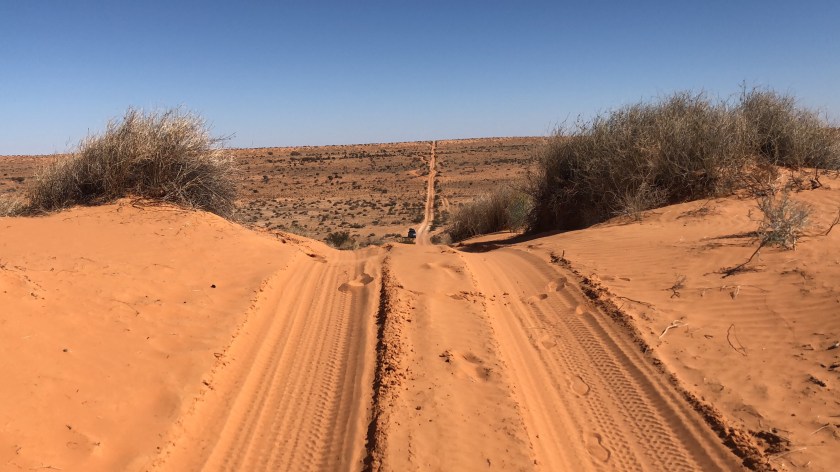
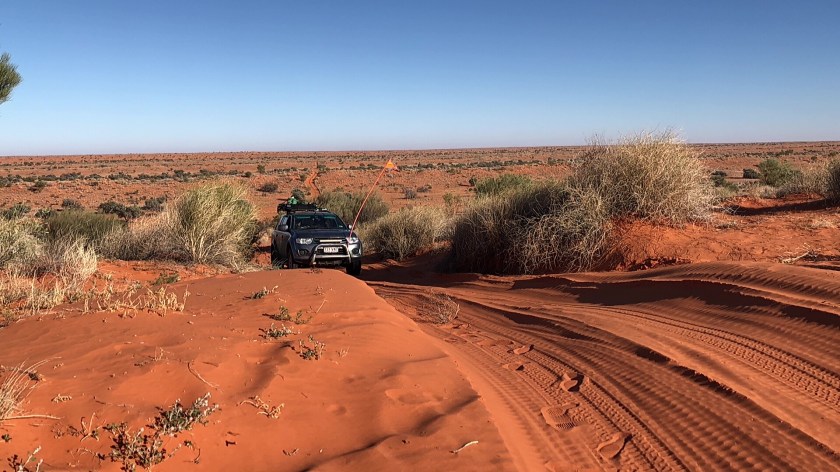
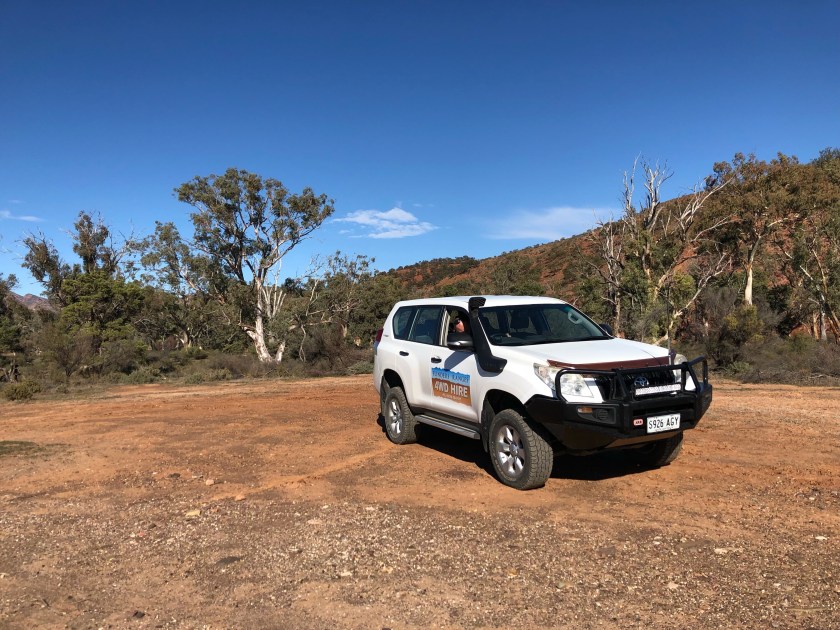
Needless to say, as I am able to write this we survived. Our Mitsubishi Challenger ate up those dunes there and back with relative ease. There were a couple of particularly soft and steep ones that I had to have a second go at to get over, but nothing too drastic.

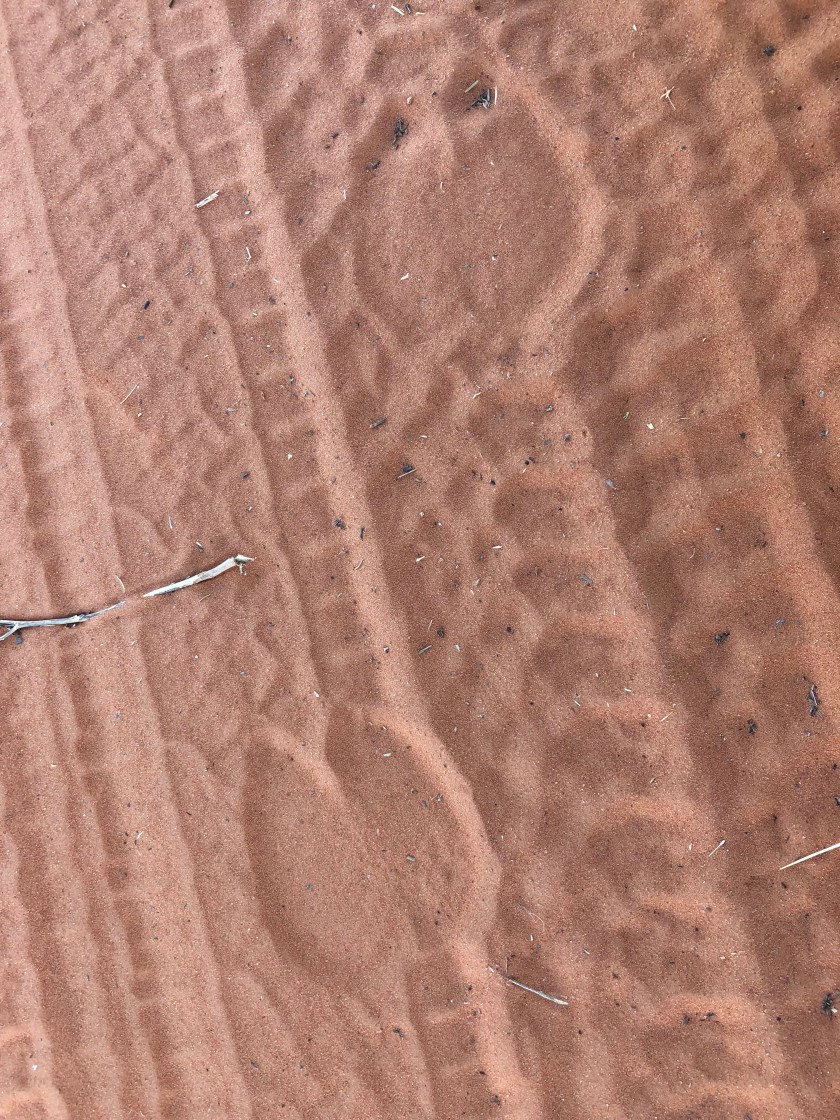
What can I tell you about the desert itself, other than if you ever get the chance you really night to spend a night out there to get it. It is awesome. The sky, the sunset, the stars and the sense of isolation is just ‘wow’. We didn’t actually see any dingos or camels out there but we did see plenty of evidence of them in terms of foot prints. Probably glad not to see any dingos once we were camped but I would have loved to have seen a camel or two.
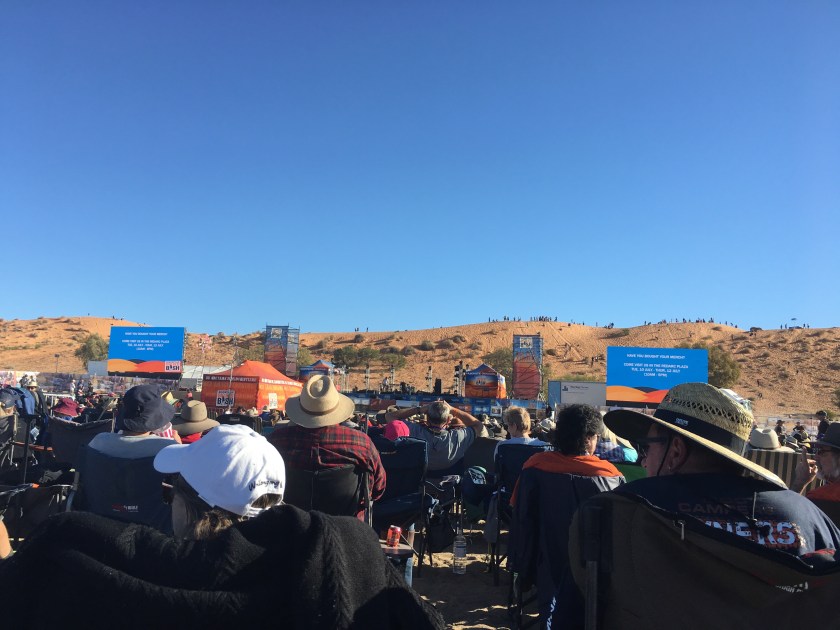
Now as I write this I am camped up at the Big Red Bash. From where I sit I can see kids sand surfing down the dune and can hear music drifting over from the main stage which is only about 100 metres away. The Bash is billed as the most remote music festival on the planet and it would certainly be hard to argue with that. It is much like any other music festival in many mays but the uniqueness of a big red sand dune as the back drop to the main stage and the fact that everyone here has a tale to tell of their travels makes it something special. There is nothing quite like a desert sunset and watching a band as the sun sets and lights up the red sand setting the horizon alight with a deep orange glow makes it even more special. And then there are the stars, not the ones on the stage, but the ones that fill the clear and unpolluted night sky. Just awesome.

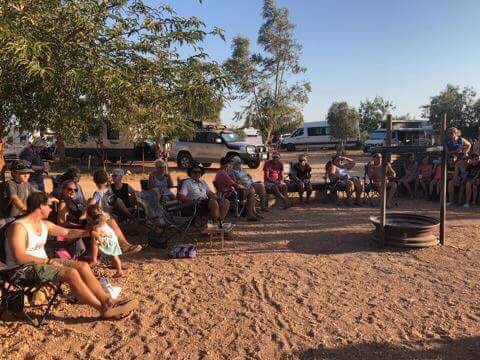
The camaraderie around the campfire is also pretty cool. We have our own little campfire group where fellow campers drop in and out throughout the evening between events or at the end of the night to share tales, drinks, food and even one camper who is making scarves and hats for anyone who wants one. Yesterday they found out that I am a chef so I was nominated to make morning tea. Lemonade scones provided by me and homemade jam from one of the other campers.

Today is last day of the festival and I need to get myself together to get over and see the Black Sorrows shortly. Rather fitting after getting up at 3.30am to watch England getting eliminated from the World Cup. Tomorrow, us and a few thousand other fellow festival goers will be heading up to Bedourie for the camel races. After that we should once again escape the crowds until we reach Alice Springs.
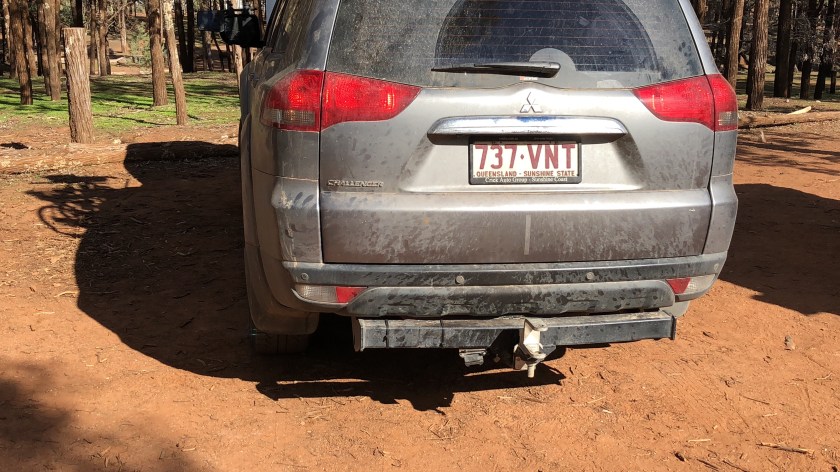
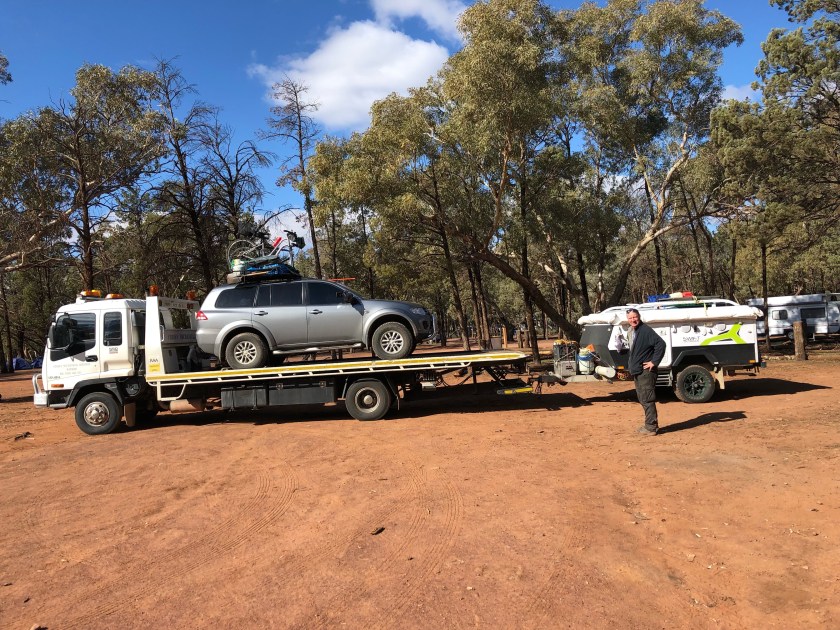
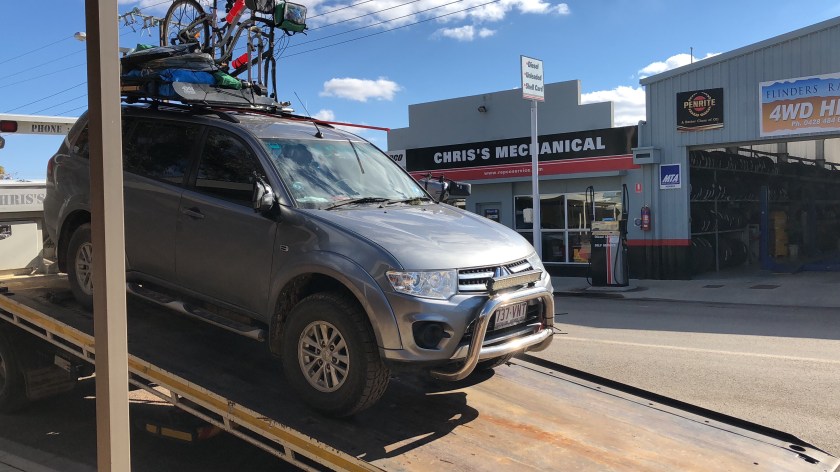
Mechanical Failure

Things break down. No matter how prepared and well maintained it is, sometimes things just happen. And what makes it worse is that only the day before it happened Ali expressed a concern about breaking down in the middle of nowhere, and my response was something like, ‘it’s a two year old diesel that has been serviced regularly, it will go on forever’. Needless to say I am being reminded of that at least three times a day and I am quite sure that I will be reminded of it on a regular basis for the rest of my life.

So, what happened? Well, to start with, we were descending a fairly steep hill coming out of the southern Flinders Ranges heading for Port Augusta when I realised that we had no brakes on the caravan.

Fortunately this turned out to be a loose wire in the trailer plug. Fifteen minutes and a bit of electrical tape later, normality was restored and we were back on the road. After over two months on the road and a few thousand k’s, a loose wire seemed very minor. But, little did I know how the rest of the day would pan out.

Later in the day we made a lunch stop on the way to camp at Wilpena Pound and noticed what looked like some sort of oil over the back of the car and the front of the camper. My first thought was that the jerry can full of diesel on the front of the camper must have sprung a leak. Turned out to be full and leak free. I looked around and couldn’t see anything else amiss so put it down to a can of spray oil in the toolbox going off. So, after lunch, we jumped back in and carried on up the road.

On arriving at Wilpena campground, the clutch started to feel a bit ‘sticky’, and by the time we had stopped to pay our camping fees, we had no clutch left and I couldn’t get the car into gear at all. It was only then that it dawned on me the that oil on the back of the car and all over the caravan now was our clutch fluid, and for the non mechanically minded, a clutch works better with the fluid in the hydraulic system rather than spread across the front of whatever you are towing.

We managed to get the caravan into a camping spot and were able to unhitch the car and move it out of the way, but after that it was going nowhere.

Fortunately we still had mobile phone coverage, so after a call to the RACQ, a tow truck was organised to come and get us the following day around lunchtime and take us to Hawker, only about 50ks away, for repairs. This was an excellent result as it still gave us time to get up early the next morning and do a walk into Wilpena Pound.

Early morning walk completed, and as promised the tow truck turned up and carted us away. RACQ covered the cost of the tow plus our accomodation in Hawker and even for a hire vehicle while we waited for the required part to be shipped in from Melbourne.

Now, I hope I am not jinxing myself here as we are still waiting for the part to arrive as I write this, but so far so good. I consider myself to be very much a ‘glass half full person’, so I like to take to positives out of every situation rather than ponder the negatives. So, the positives as I see them are:

  • We could have really been in the middle of nowhere with no phone service, but now we will be leaving here with a newly serviced clutch.
  • We got up earlier than we would have to do our walk. It was awesome, no one else around, sun only just coming up, frost on the ground when we got up the hill, beautiful.

  • We got a refund on our camping fees.
  • We got three nights free accomodation in town.
  • We explored the area in our hire car and found the most awesome scenery that we would have otherwise have missed.

  • And finally I get to watch England v Belgium on the big TV instead of on the iPad in the caravan.

All is well, and if we break down again I hope the experience is as positive as this one.

So, update now a day later. Car is fixed and we will be on the road again in the morning. This morning though we met a couple from Tasmania in the cafe and got chatting. They had also broken down and their car was in the garage. Sadly their experience at the moment is slightly less positive than ours. They don’t have the same sort of cover that we do, so no free accomodation or car hire for them. Their mechanical failure is also rather more serious and expensive than ours and the vehicle needs to go to Adelaide to be repaired. That alone is a recovery fee of over $2k before they even open the bonnet.

Needless to say we are counting our lucky stars that that isn’t us.

Moral of the story: get the best breakdown recovery you can before leaving home. You might still breakdown, but at least they will get you home.

Eat, drink, and be merry.

After two months on the road, living on a fairly;, tight budget, and cooking on a little gas stove or on a BBQ, am I sick of ‘camp food’?

F

Food and drink means far more to me than just filling my belly (although clearly that is a side effect of enjoying my food). We bond over dining experiences. Food and drink is always a part of our social gatherings and it has far more meaning than just fuel for the body.

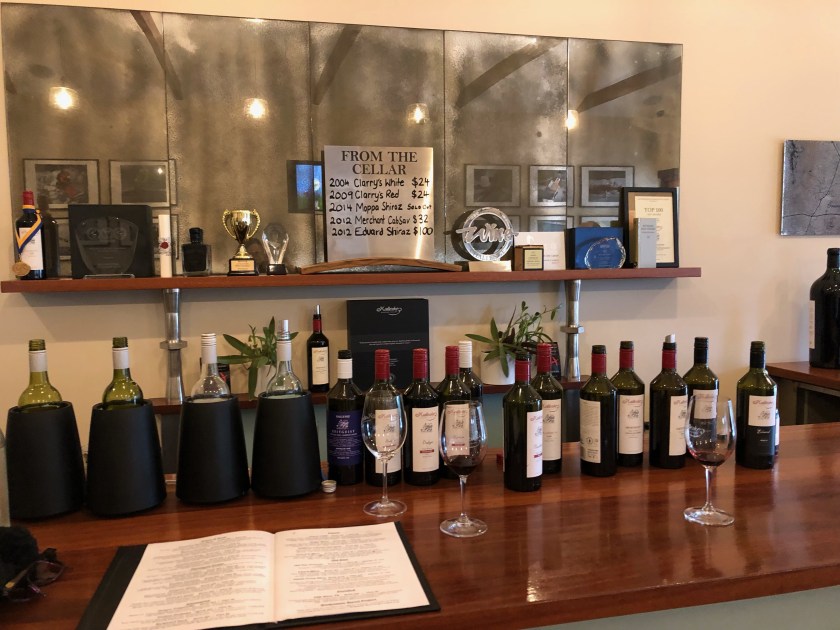
Why am I writing about this now? Well, a few days ago while wine tasting in the Barossa valley the conversation and the wine made me reflect on how social eating and drinking can be and how important it is. We found ourselves in a little place called Greenock, after already having been to the Wolf Blass winery for a bit of tasting. Set up camp at the free camp ($5.00 donation) in the middle of town, and set off in search of more wine.

We wandered into the first winery, and while tasting we learned not only about the wines but about the local community, produce and businesses. We then stumbled onto the next winery, where it turned out to be the owners birthday and he was already a few wines in and having a good time. We were welcomed in, and whilst sampling the wines he told us the history of the town and his family’s connection with the town going back over a hundred years. We also met two of his sisters, one of whom is married to the brewer/owner of the local craft brewery. So, of course, we had to make the brewery our next stop. We staggered the hundred yards or so up the street to the brewery and sat at the bar with a few locals and the brewer to sample the beers and learn more about the local area. They were very interested in what we were up to and so travelling tales were told and more beer was drunk. And very good beer it was too. So good in fact that our next stop was the pub for a highly recommended schnitzel and another locally brewed beer.

So, the point of this tale isn’t about drunken wanderings around a small town in South Australia’s Barossa Valley. It is about how food and drink socialises and inspires.

And, back to my initial question, the answer is no. We have not resorted to convenience or frozen foods at all. All of our meals have been freshly cooked using mostly fresh produce. It really isn’t that hard to cook good meals while camping if you use a bit of imagination and pre planning. And despite the fact that our limited budget does not allow for a great deal of eating out we have had some great dining experiences of our own making.

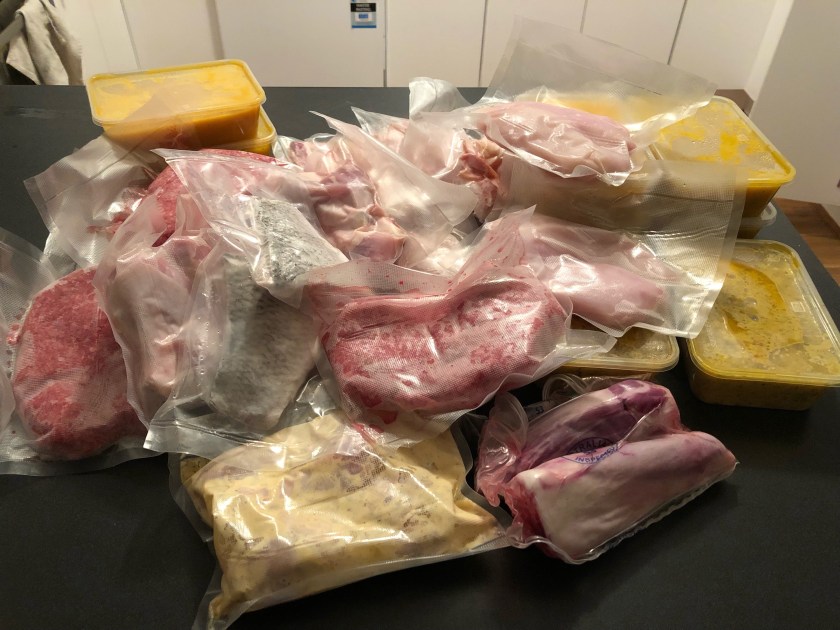
Our meal pre planning involves shopping in bulk when we can and then portioning, bagging and squeezing as much as we can into out little caravan fridge. This week I jammed the freezer so full that it is now all wedged in so tight and frozen solid that I can’t get anything out.

Every once in a while we do save a little from the weekly budget for a ‘splurge’, and seeing as Adelaide is such a centre of good food and wine we can’t leave here without giving ourselves a bit of a treat. So, tonight, we are heading into the city to drink local wines (again), and find some inspiring and imaginative local food and let someone else cook for us for a change. Hopefully we will meet and chat to some local characters or even fellow travellers and share our tales of food, drink and travel.

Lucy

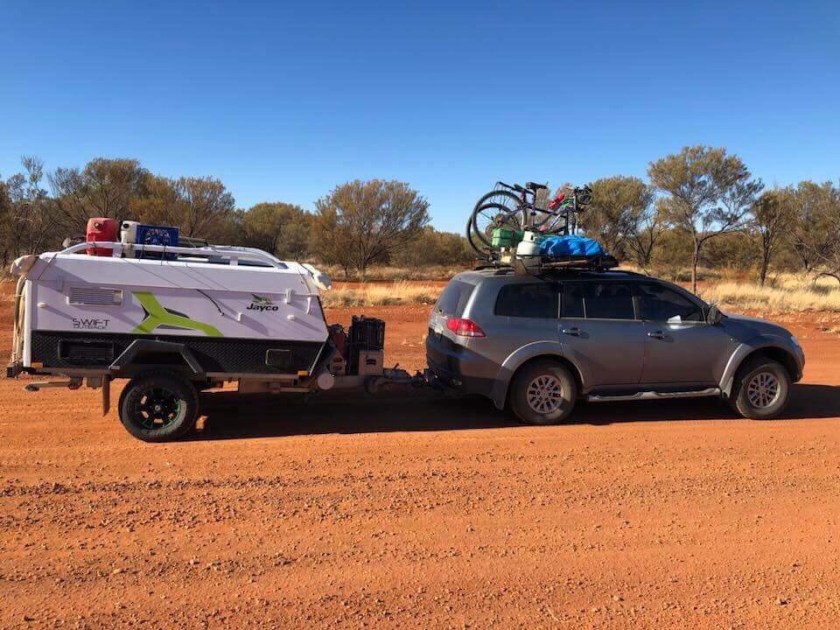
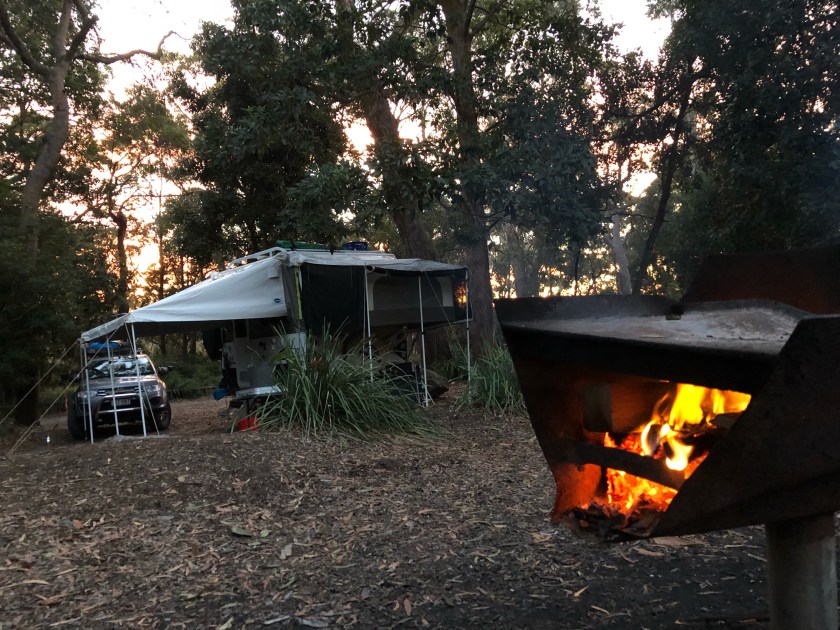
Just for clarity, Lucy is not a person, but is in fact our little Jayco Swift camper. Not quite a caravan, but more than a camper trailer and, in fact somewhat like Dr. Who’s tardis.

Now, you are probably thinking ‘who names their camper Lucy, how sad.’ So before I explain how cool Lucy is I will quickly explain why she has a name.

I am not a huge fan of naming inanimate objects, but there are exceptions when they lend themselves to being named. In Lucy’s case her rego ends in ‘UCY’, and sitting around the campfire one night on her first trip to Birdsville in 2016 there was a discussion about naming her (she was only a few weeks old then) and Lucy just stuck ever since.

I am not being sponsored by Jayco (but hey, Jayco, all donations gratefully received), but Lucy truly is an awesome piece of kit. She really is tiny, but after a month on the road (so far), I am not feeling claustrophobic at all.

For a quick overnight set up, we can be parked, set up and ready to climb into bed in about 15 minutes. For a longer stay when we set up the awning etc. half an hour is all it takes, and packing down is about the same.

Inside we have everything we need. A bed pulls out at either end, we sleep on one and use the other for storage. We have a fridge, tv, radio, lights, running water, gas stove and dining table all ready to go, and with the solar recharging the batteries during the day we don’t need to plug in very often, and the 70lt water tank also keeps us going for a while. This all makes camping very cheap, or often free.

And of course, because Lucy is so small, when you hit the road you would hardly notice that she is there. She also has some serious off road capability so basically if our four wheel drive can get there, then so can Lucy.

So what about ‘stuff’. Well, this is where we get to the bit where I tell you that you don’t ‘need’ stuff and that your life is being over complicated by having too much of it.

We are living with whatever fits in Lucy (although it is surprising how much you can actually get in there), and we still have stuff we don’t need.

In preparation for this trip, we spent quite a bit of time sorting out our stuff at home as we basically had to empty the house out. It is actually pretty scary how much superfluous and unnecessary junk you can accumulate after 15 years in the same house. I think that most of us tend to fill the space that we have given enough time, and our house is a fairly large house. Sorting out and getting rid of stuff and ‘minimilising’ was actually a very liberating experience, and living in Lucy for the past month has actually reaffirmed that life can be much simpler and more rewarding with less stuff to clutter our day to day lives. Maybe there is some sort of relationship between stuff and long term contentment? I haven’t finished my research yet, but I suspect that there is an inversely proportional relationship between accumulated clutter and long term contentment. I will report back on this hypothesis in later blogs (maybe).

One day perhaps I will write about the places we have been and the things we have experienced, but in the meantime if you follow us on Facebook at No Real Destination, you can follow the trip and see the photos.

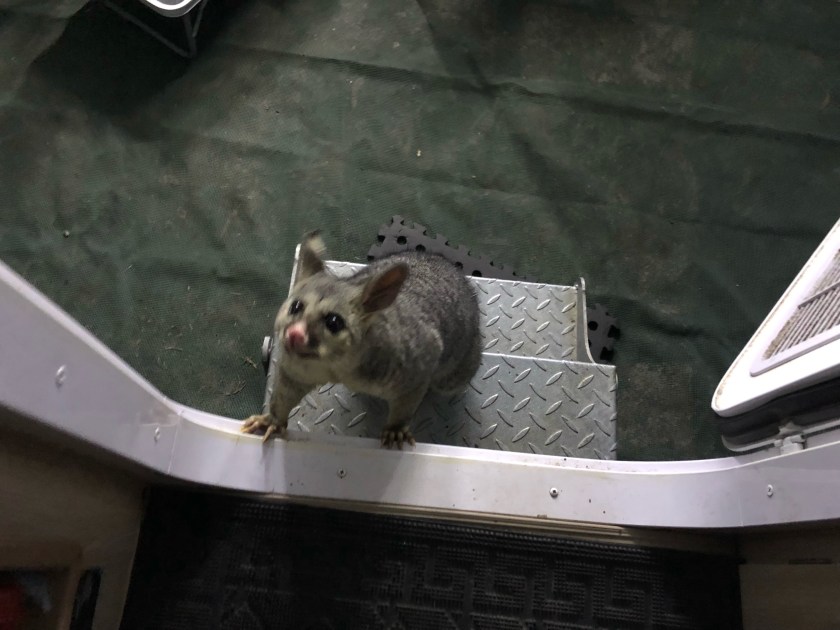
In the meantime, everyone loves Lucy, even the little fella below.