So, after 28 shifts, most of which were 12 hour days, a total of 3 days off, and a run of 18 days straight, my work at the athletes village is complete.
The hours that I worked were long and hard, but there were other chefs there who worked four weeks or more of 12-14 hour days with no day off at all, so my hours were pretty relaxed in comparison.
It has been a very long time, about 15 years, since I have worked full time in a kitchen, and although I used to do quite a bit of casual work for game days at Gold Coast and Brisbane stadiums it has been at least 5 years since I last did that. So, to say that I was physically unprepared for the rigours of being in a hot kitchen, on my feet constantly, day after day for 12 hours at a time is an understatement.
To tell the truth, until I got to the halfway point I didn’t think I was going to make it. Week one wasn’t that hard but I was still on my feet all day. Coming straight from an office job, that in itself was tough. Week two was when it really started to ramp up and I was physically exhausted by the end of each day. By the midway point though, I had found my grove back in the kitchen, knew what I was doing and my body (feet in particular) had got more used to my new environment.
18 months ago when I decided that I wanted to go back into the kitchen to work the games, it seemed like a good idea. Had I known how hard I would have to work and how many days it would be for I might have thought twice about it. I’m glad then that I didn’t really think it through, and consider that going back into the kitchen at 50, for a major event, cooking up to 18,000 meals per day, after a 15 year break was a stupid idea, as it was an awesome experience in the end.
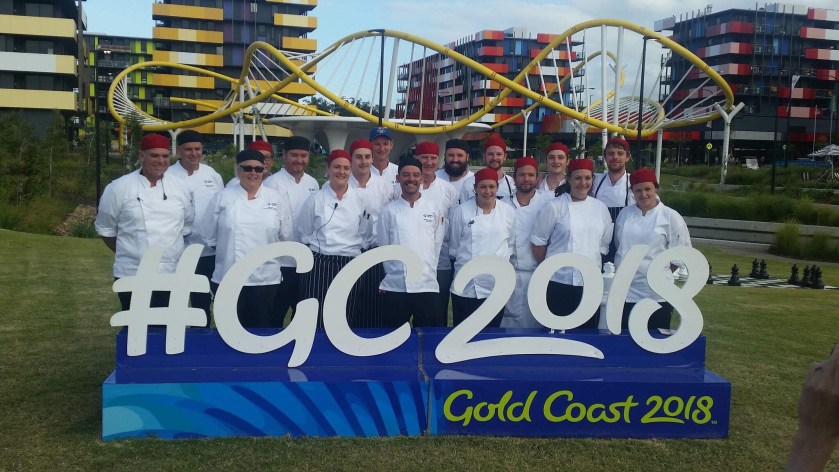
Why was it so awesome? Well to start with getting to work with a great bunch of people from all over the world, all focussed on the same goal was great. I worked with great people from Brazil, Chile, Spain, Phillipines, India, Ireland, England, Indonesia, a variety of African countries, and there were even a few Aussies there too!
I think that when you bring people together for a relatively short period of time for a high profile event it brings out the best in people and the team needs to gel together quite quickly to get things done. There is also the advantage that there isn’t time for the workplace politics to come into play that so often happens in a large workforce that is together for a longer period.
The atmosphere of the village was great, and although I spent most of my day in the kitchen it was a great place to be.
And, dare I say it, I actually enjoyed being back in the kitchen and not having to worry about budgets, board reports, performance evaluations or ASQA audits. So am I tempted to return to the kitchen full time? Not on your life, no way, I am not that delusional. Would I do another major event like the Com Games though, yes, absolutely, bring it on, where do I sign up?
So for anyone who has never been in a commercial kitchen or worked at a major event I will try to give you an idea of the scale of the operation.
Every morning I would start at 3am to cook breakfast for 6,000 hungry athletes. I would often be walking through the gate at the same time as some very drunk athletes returning from a night out in Surfers.
Breakfast prep consisted of around 200 litres of egg pulp for scrambled eggs, over 150 trays of bacon, 15 boxes of mushrooms and plenty of other breakfast staples such as gallons of porridge, countless tins of baked beans and more chipolatas than I ever want to see again.
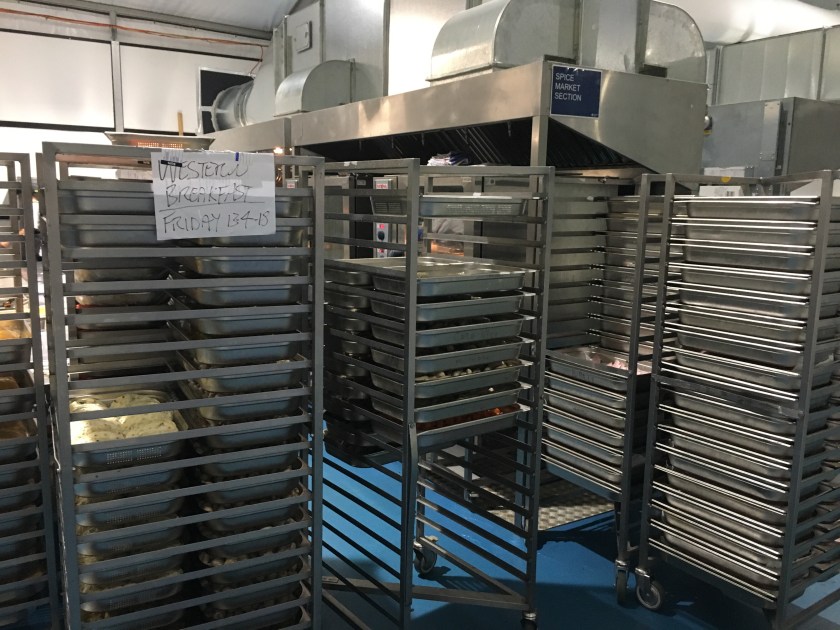 I never actually counted the number of chefs and cooks on the roster, but preparing, cooking and serving 6,000 breakfasts, lunches and dinners, with a few hundred ‘overnight’ meals as well requires quite a few sets of hands. Those of us cooking in the hot production kitchen essentially relied on the team in the cold production kitchen for all our ingredients to be supplied and prepped so we could do our job of suppling the team in the service area with cooked and ready to serve food, 24 hours a day, 7 days a week. There was never a time when food wasn’t available, with breakfast running into lunch, lunch into dinner, dinner into supper and supper into breakfast.
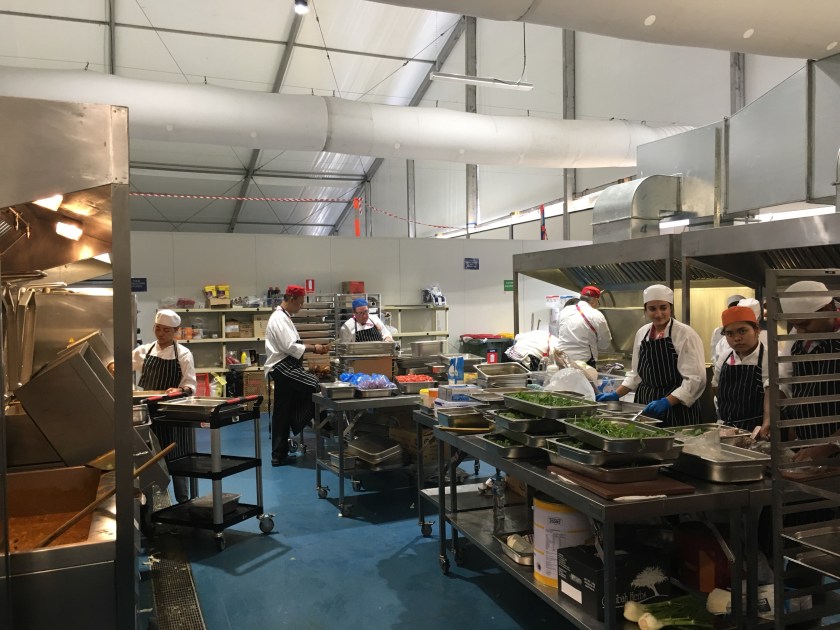
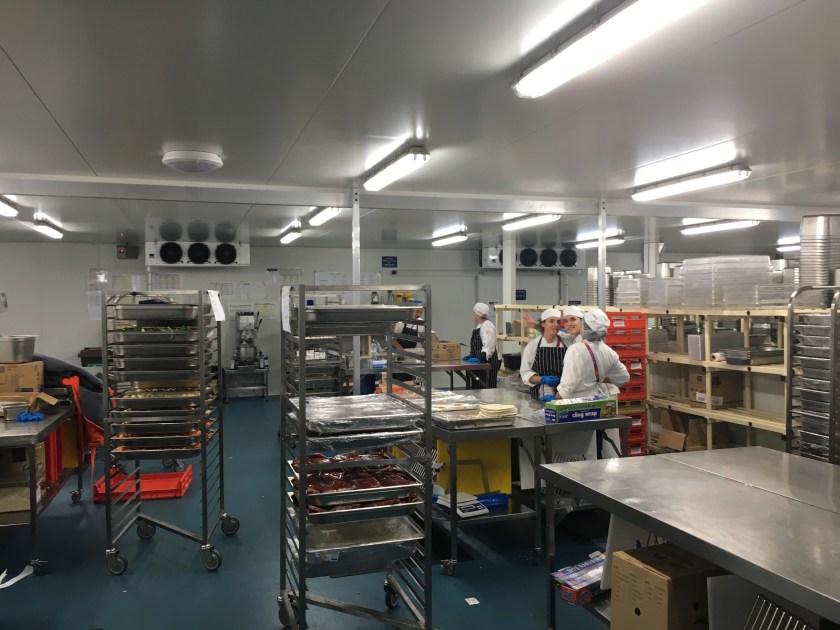
So while still cooking breakfast we would have to get lunch on the go, ready to be set up by 11am, and then towards the end of my shift we would have to have dinner ready to hand over to the night crew who started at 3pm.
The volume of food that we went through was mind boggling. You could walk into one of the cold rooms in the morning and see pallets of produce in there and go back in the afternoon and see it half empty.
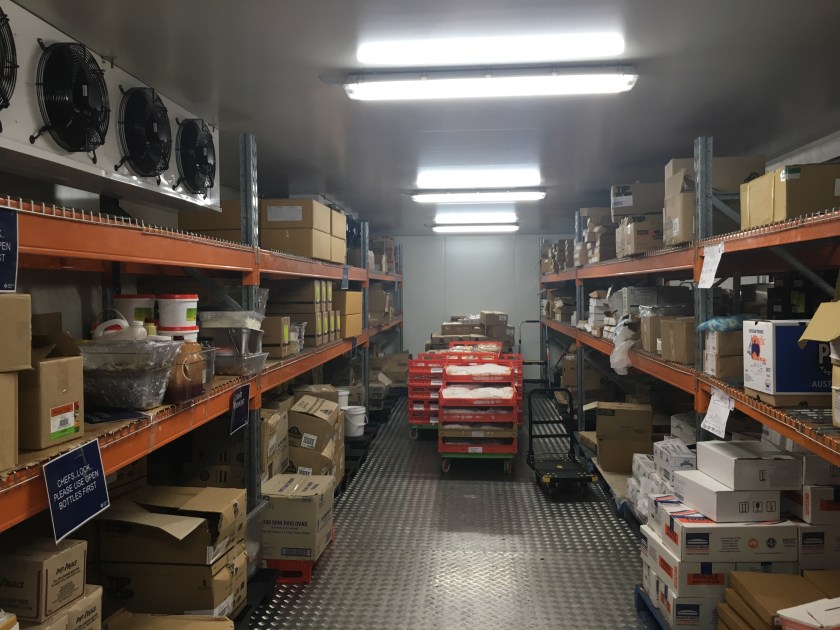
There were also daily challenges of running out of specific items and having to make menu changes and improvise to get around the issue. The day we ran out of egg pulp was the toughest as that meant cracking hundreds and hundreds of eggs to make the scrambled.
Most of the senior chefs were equipped with a radio, earpiece and mike so that we could be in constant communication. This was a practical necessity, but also created some amusing moments and allowed the opportunity for a bit of banter. I never knew what ugali was before (google it), but after hearing the head chef yelling into his radio at the African section every day that we need more of it, it became a bit of a standing joke.
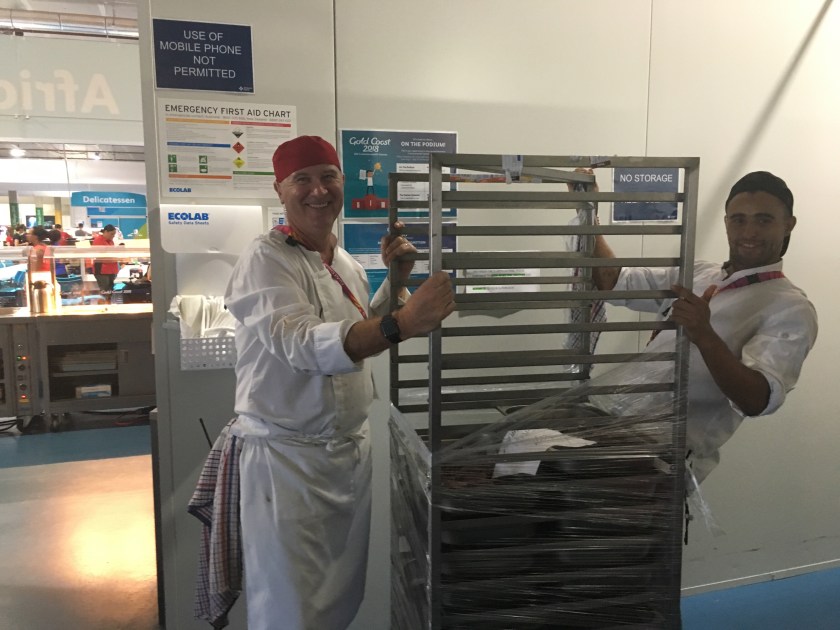
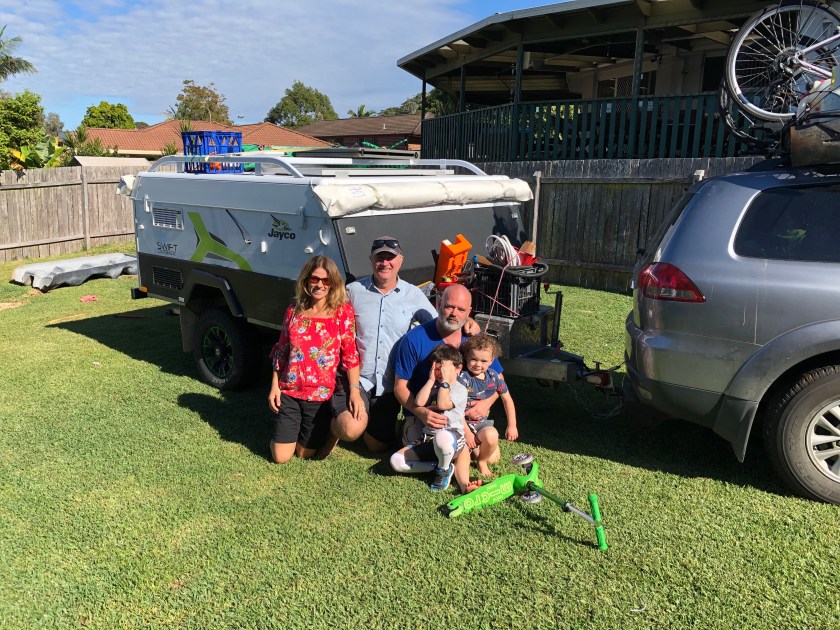
And so now, I need a lie in, a couple of days to recover from the experience, and next week we hit the road, and hopefully we can catch up along the way with a few of the people we have spent the last month working with.

 Take The Leap