After a few hours hanging around at Manila airport on New Year’s Day, we got our connection to Cebu and arrived late at night and headed straight for the hotel and went to bed. Next day after a quick breakfast we headed off to a very nice hotel to hang out by the pool, eat pizza and drink beer with Ali’s sister Shirley and her husband Oliver, who live in Cebu and had treated themselves and the kids to New Year in a 5 star hotel. So, as a result it was a day or so before we got to see much of Cebu city.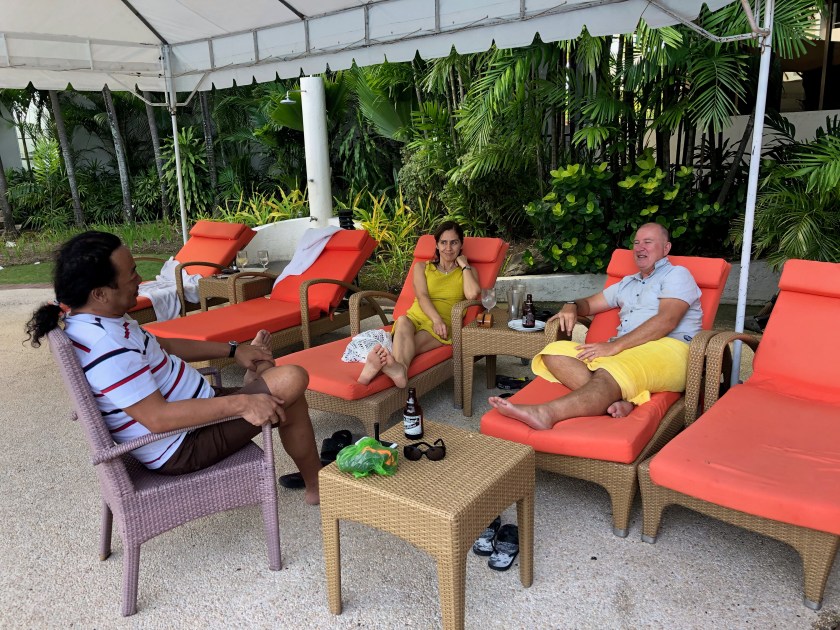
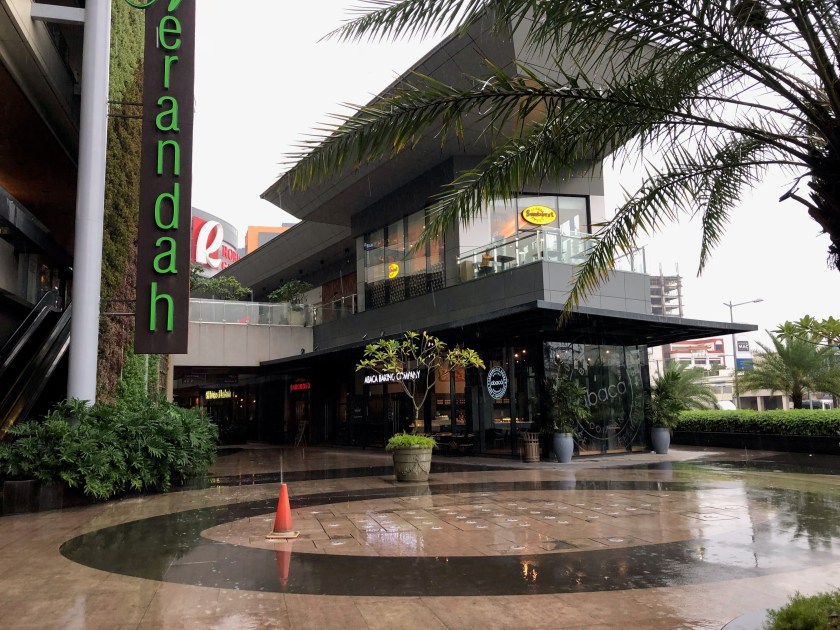
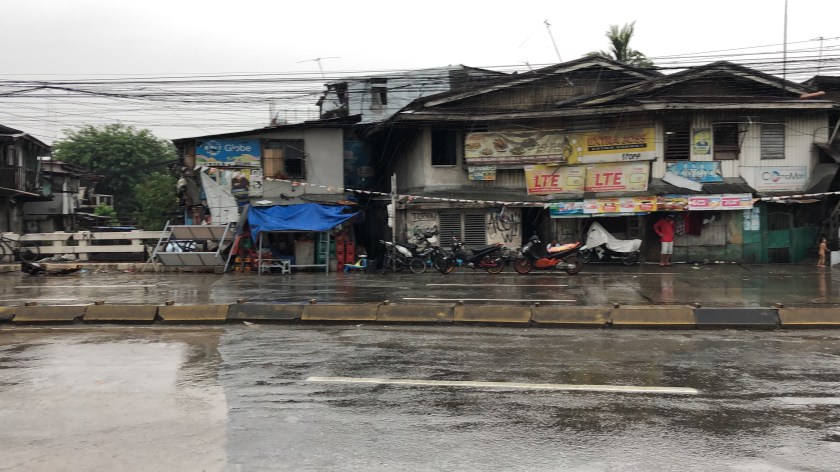
The next day Shirley took us to the Mall, for coffee and supermarket shopping. Could have been in Australia. It wasn’t until the day after that we started to see the real Cebu. We jumped on a Jeepney to head to Carbon market, and from there walked back towards the glitzy westernised shopping mall. The most striking thing about Cebu is the level of poverty that sits right next door to the opulent malls and hotels. To be honest, Cebu city hasn’t really grown on me. Unlike many other dirty Asian cities it doesn’t have the beautiful architecture, temples, palaces etc. or an enthralling river that carries he lifeblood of the city. What it does have is the unsettling contrast of mega rich and mega poor with little to redeem it. But, Cebu is just one city in an otherwise beautiful country.
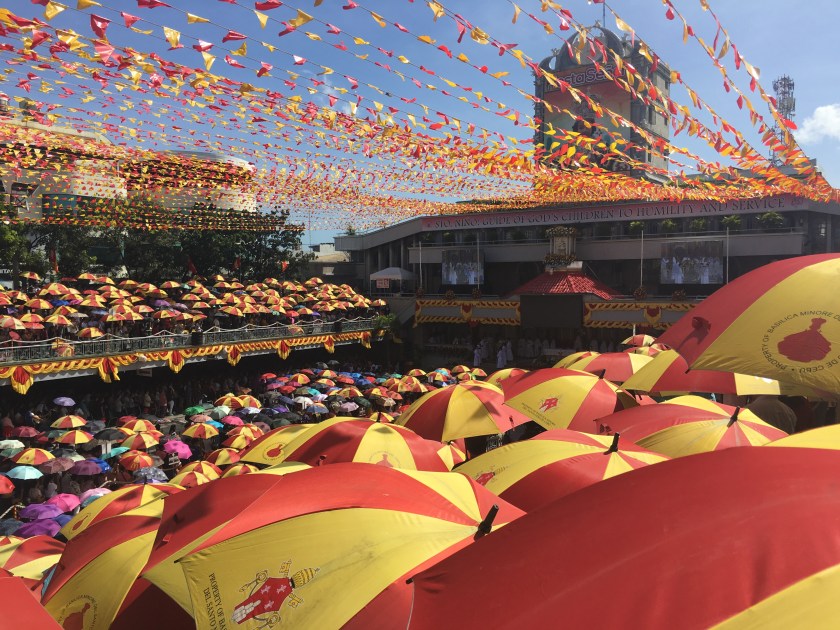
There was one cultural highlight however, and that was the day I walked down to the Basílica Minore del Santo Niño to check out what the upcoming Sinulog festival is all about. Apparently when Ferdinand Magellan arrived in 1521 he presented the local chieftain with a wooden image of the boy Jesus (Santo Niño). This original statue sits within a glass case in the Basílica. On the day I went there there was a queue of about an hour to touch the glass and make an offering. There was also a mass in progress. The Basílica was full to bursting point, the mass itself was in the courtyard out the front with thousands of devotees attending and it was televised on big screens in the Basílica itself and in the surrounding streets which were all closed to traffic. Every year on the third weekend in January pilgrims flock to Cebu to see this little statue and parade through the streets as part of the Sinulog festival. Fascinating.
Pretty much all the Fillipeno’s we have met have been friendly and helpful. At no time have I been concerned for my safety or felt like they are trying to rip me off. At El Nido on the island of Palawan we booked a boat tour and were lucky enough to have a boat with no backpackers but with a group of 6 local Fillipeno’s. We had a great day with them, exchanged phone numbers, and then they sent me a list of recommended things to do in Puerto Princesa and also negotiated the ‘locals price’ for us on a tour of the Underground River National Park which was awesome.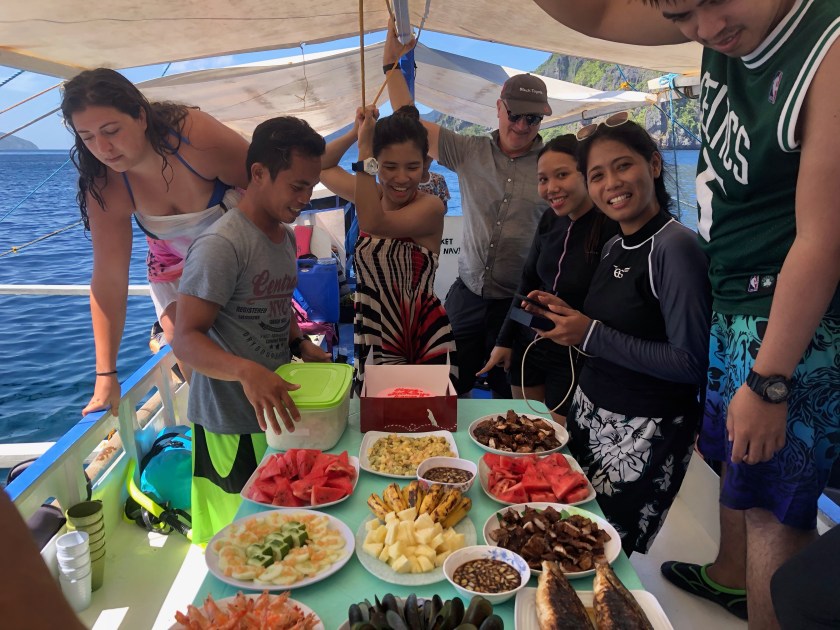
And what is it with the backpackers of today? One night while I was trying to sleep I had to listen to an Italian telling everyone where he had been and how much it cost and how many Pesos/Rupees/Bhat/Dong etc. he is getting to the Euro. Well, mate, I went there before you were born, long before you exchanged Lira for Euros and I didn’t feel the need to plat my beard, put my hair in a top knot or wear those ridiculous looking tie dyed trousers that you think are so cool. Really? Just shut up and go to bed. I hate to admit it, but I think I am too old for backpacking. Oh well, that just means it’s time to look for $30 rooms instead of $10 ones.
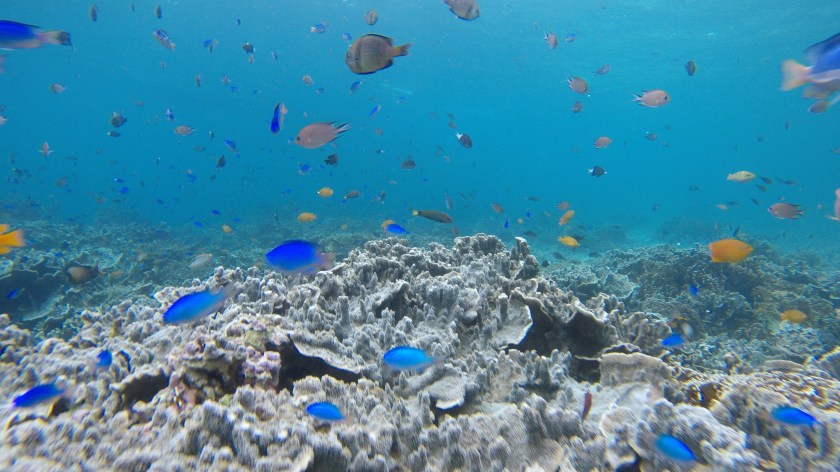
After Palawan we returned to Cebu island and headed off for a weekend break with Shirley, Oliver and family to a lovely little beach resort at Moalboal. All pretty casual and relaxed, great snorkelling just off the beach, nice views etc. On the Sunday Oliver organised a boat trip for the day to take us out to a little island offshore. As it seems with everything in the Phillipines, there is a huge contrast in attitudes towards safety. I found it highly amusing that I had to wear a life jacket but it was ok to store the fuel for the boat in a plastic water bottle and run the motor while people were in the water near the propeller. This attitude was also evident when we hired a motorbike. I think I was the only person in the Phillipines riding with enclosed shoes on. At one point I actually got stopped by the police and told to take my helmet off. In fairness though this was at the airport. Anyway, back to the boat trip. We stopped at the fish market and picked an awesome fish that looked very much like an undersized Tuna. This was cooked on a charcoal BBQ (next to the plastic bottle of petrol). 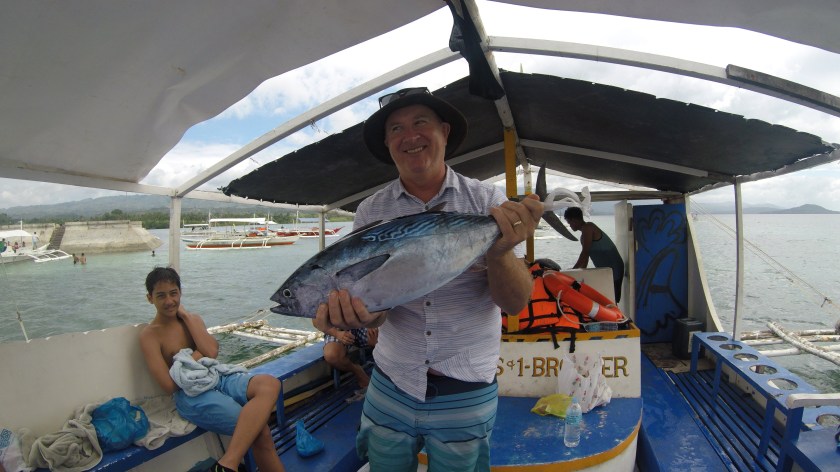
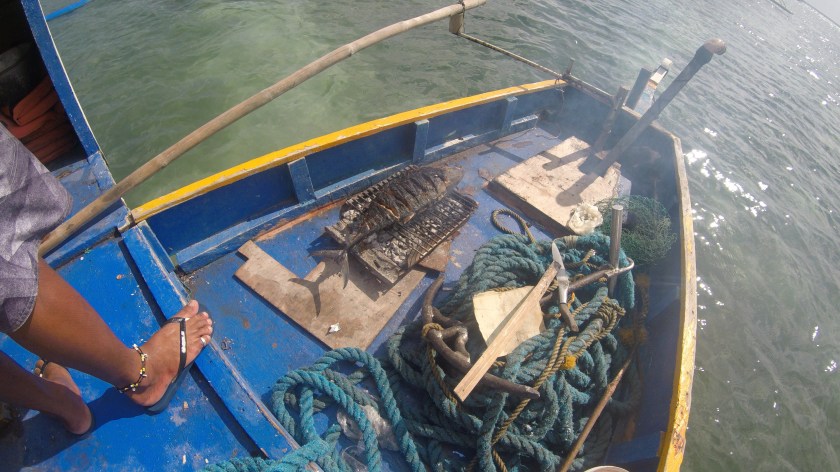
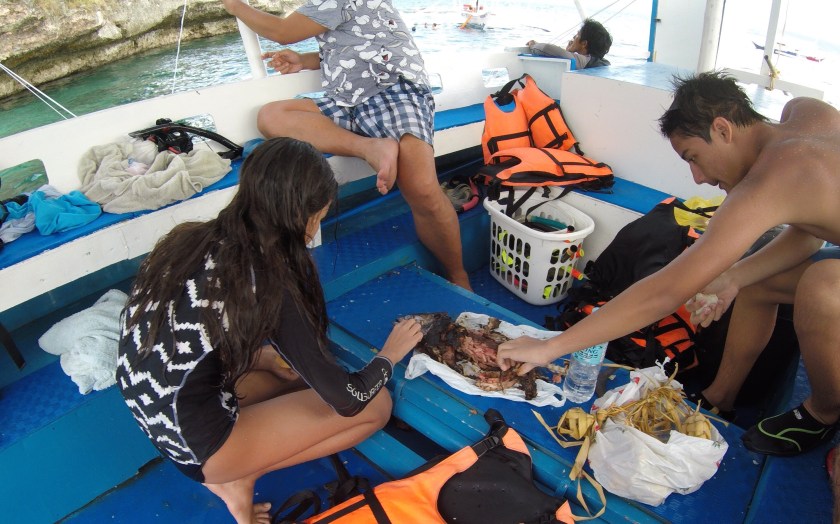
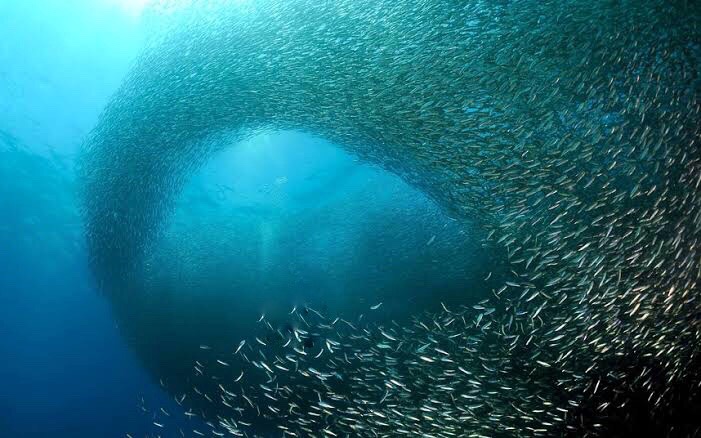
Before the fish was cooked however, our boat broke down. After drifting for a while another boat turned up to tow us back to shore and once ashore passengers and half cooked fish were transferred to a replacement boat and off we went again. The fish was delicious and was just eaten by pulling apart with our hands accompanied with a bit of sticky rice. The snorkelling was also pretty cool, including getting to swim through a swarm of sardines.
After leaving Cebu island we headed back to the capital Manila on Luzon island. Manila is surprisingly different from Cebu city. The traffic is pretty extreme but there is far more order to it than there is in Cebu. In fact Manila is a modern, relatively clean and well ordered city. I am sure it has its areas where the poverty is apparent but it certainly isn’t as obvious as in other cities. It also has an old city where the Spanish city walls are still largely intact and where the Spanish heritage is clearly visible. Well worth a visit.
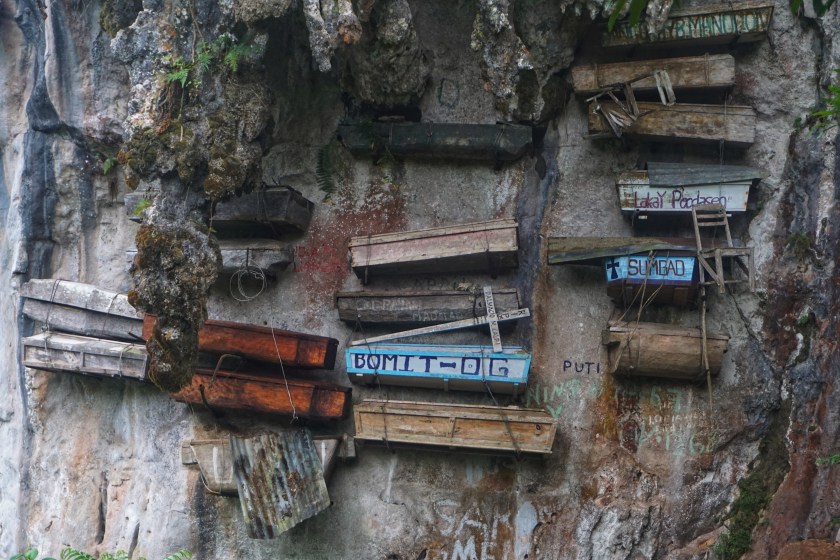
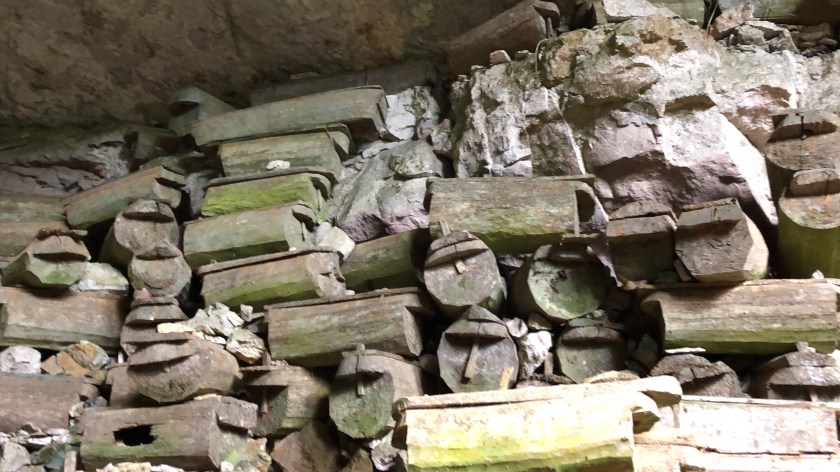
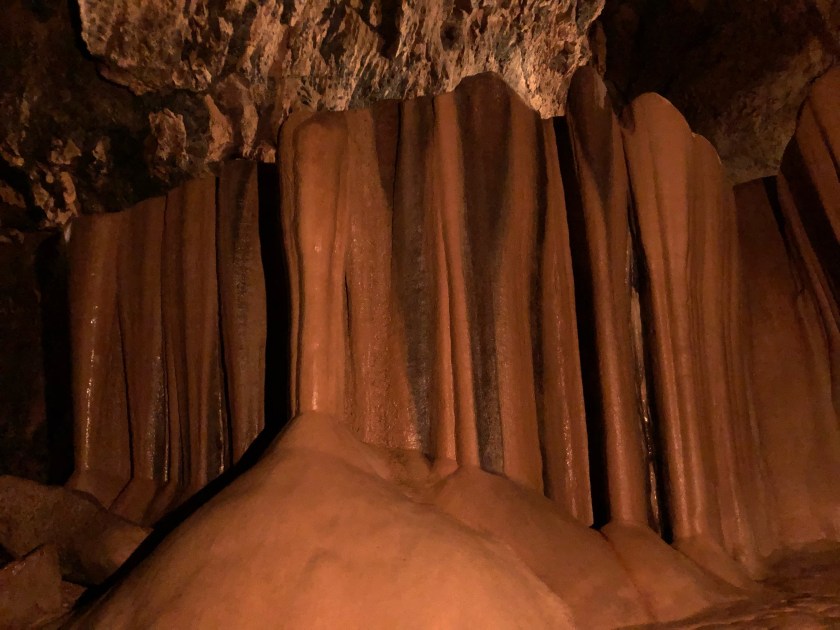
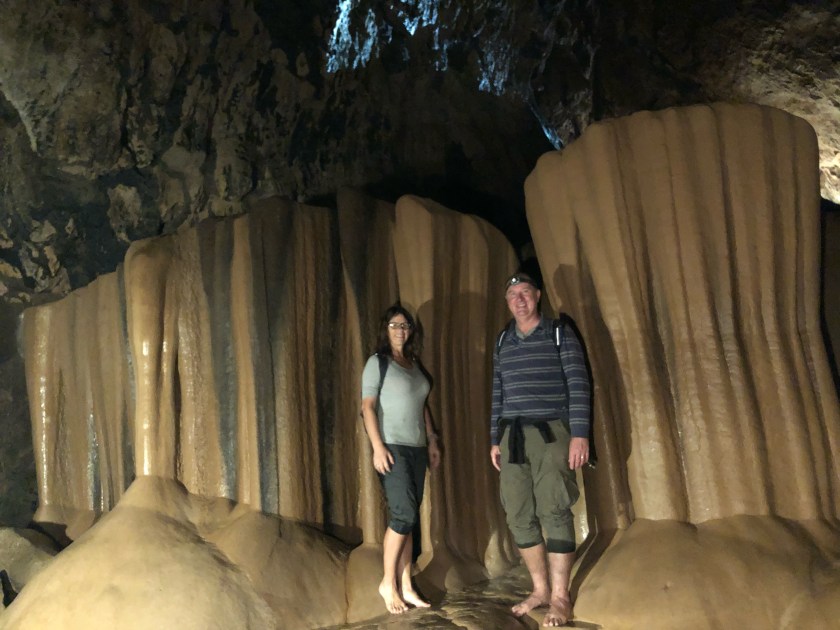
After Manila we headed north to the ‘Cordillera’ which is the mountainous part of Luzon. In a little place called Segada we got to see the hanging coffins…yes, they are pretty much as the name implies. Coffins (occupied), hanging from the side of the cliff. We also got to go caving, which included a cave full of coffins, but more impressive was the climb down into the cave and the formations we saw once down there. Segada really is a must visit destination for the caves, well worth the 10 hour bus ride from Manila.
After Segada, next stop was Banaue. This is the area that is surrounded by world heritage listed rice terraces, and they are pretty amazing to see. While we were there we headed out for a day trip to a little village called Batad. There is no road into Batad and the only way in is on foot. This place is amazing to behold. It sits at the bottom of an amphitheater of rice terraces and it is a tough walk into the village, and an even tougher one back out. If you ever find yourself in this part of the world, do yourself a favour and do the walk, including the extra hour each way to Tappiyah falls, even if it is the last thing you ever do…….and it might be if you have a weak heart! Toughest walk I have done in a while.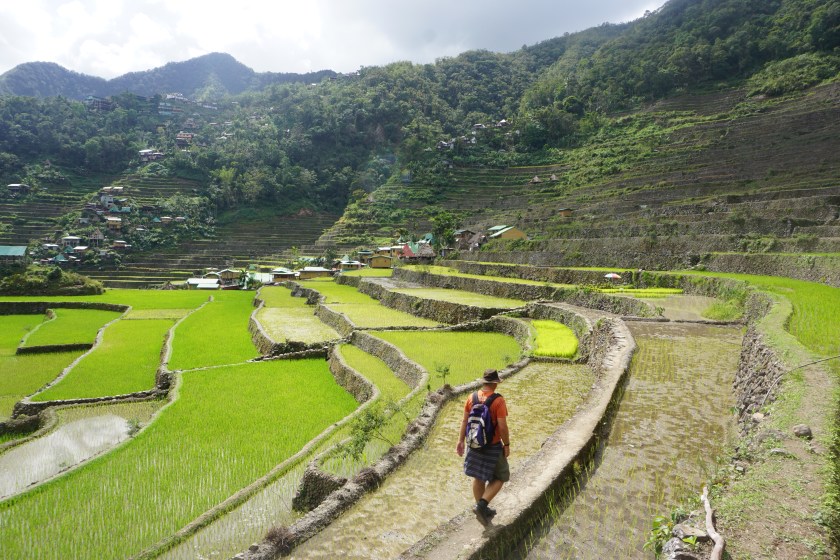

Food in the Phillipines isn’t much to write home about really but there are a couple of exceptions worth a mention.
The first is a local delicacy called balut. It looks like and ordinary egg, and if fact it tastes pretty eggy too. What it actually is though is a fertilised duck egg. I believe the one I tried was a ’12 day’ egg. Apparently you can get them more formed than that but I think the feathers might just be a bit too off putting for my liking.
 Another item worth a mention is binatog. This is basically boiled corn served with coconut, sugar and condensed milk poured over it. This is delicious.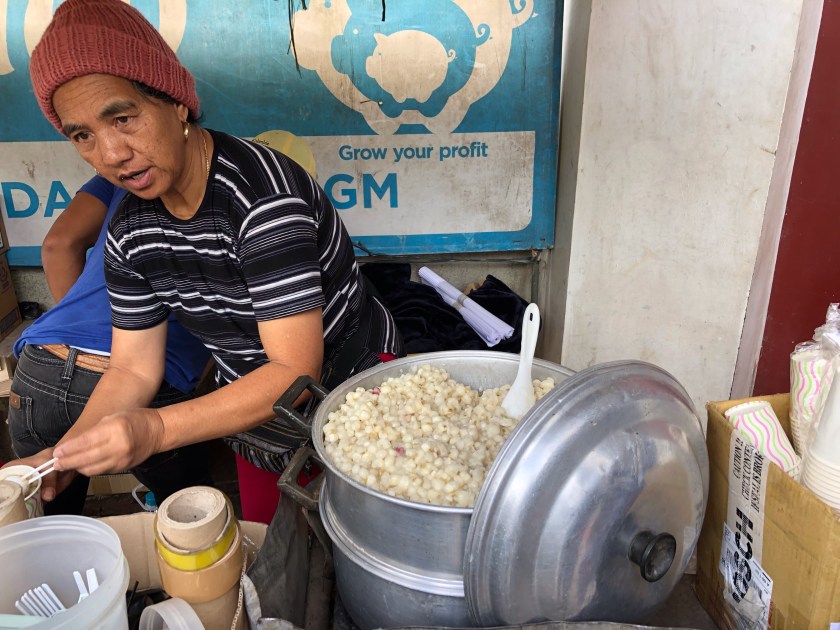
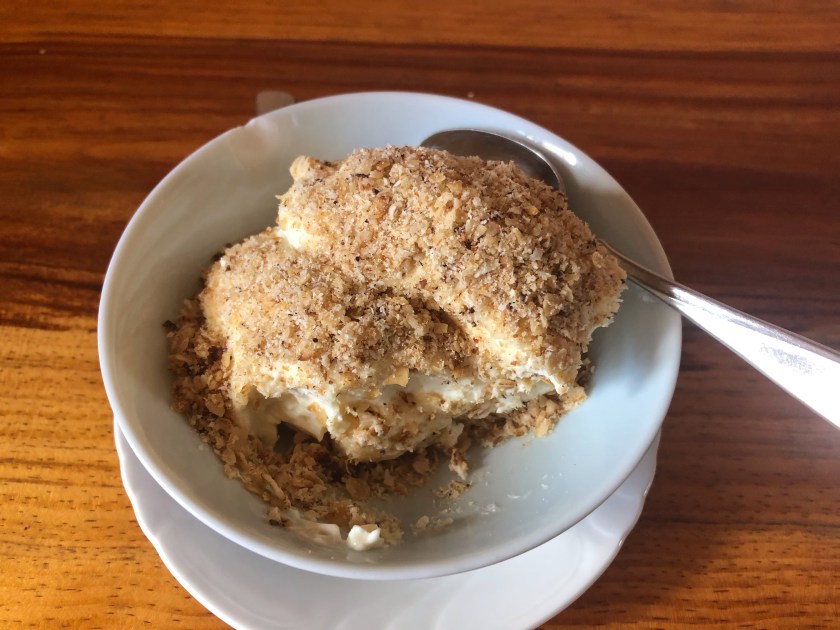
And finally, if you do find yourself somewhere north of Manila, try the yoghurt. It is so thick and creamy it looks like ice cream when scooped into a bowl. We had it with banana and granola sprinkled on top. Not quite sure what sort of milk they make it from though as a never saw a cow in the Phillipines. I’m guessing buffalo milk as there are plenty of them.
Next stop Vietnam. Still not ready to go back to work yet.
 Take The Leap